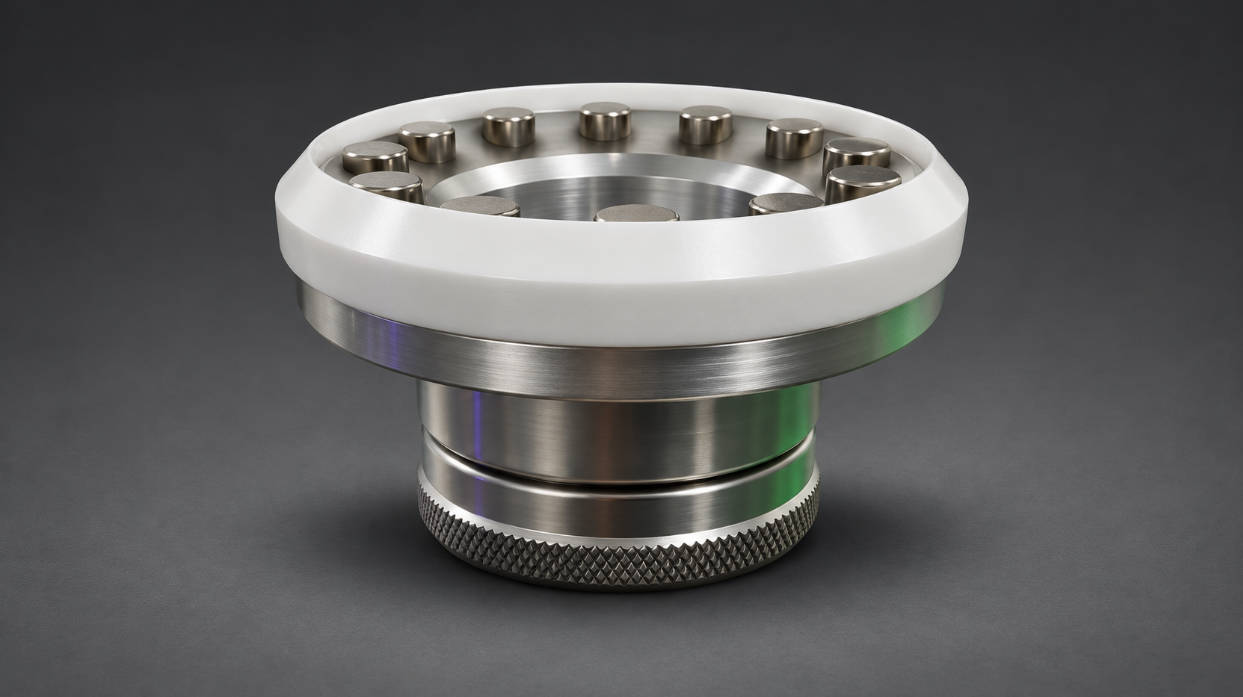
A ceramic ink cup ring is a small component, but its condition has a direct impact on pad printing quality, ink consumption, and machine reliability. Over time, repeated contact with the printing plate gradually wears down the ring’s working edge. Eventually, it may no longer remove excess ink cleanly, leading to streaks, smearing, and inconsistent printing results.
So, how long does a ceramic ink cup ring actually last?
A properly handled ceramic doctor ring can last several hundred thousand printing cycles, but its actual service life depends on production volume, ink abrasiveness, printing plate condition, contact pressure, and maintenance practices. There is no universal replacement interval that applies to every pad printing machine.
Rather than replacing rings after an arbitrary number of months, manufacturers should monitor edge wear, inspect printing results, and record the number of operating cycles.
This guide explains what affects ceramic ink cup ring lifespan, how to recognize wear, when reconditioning is possible, and when installing a new ring is the better choice.
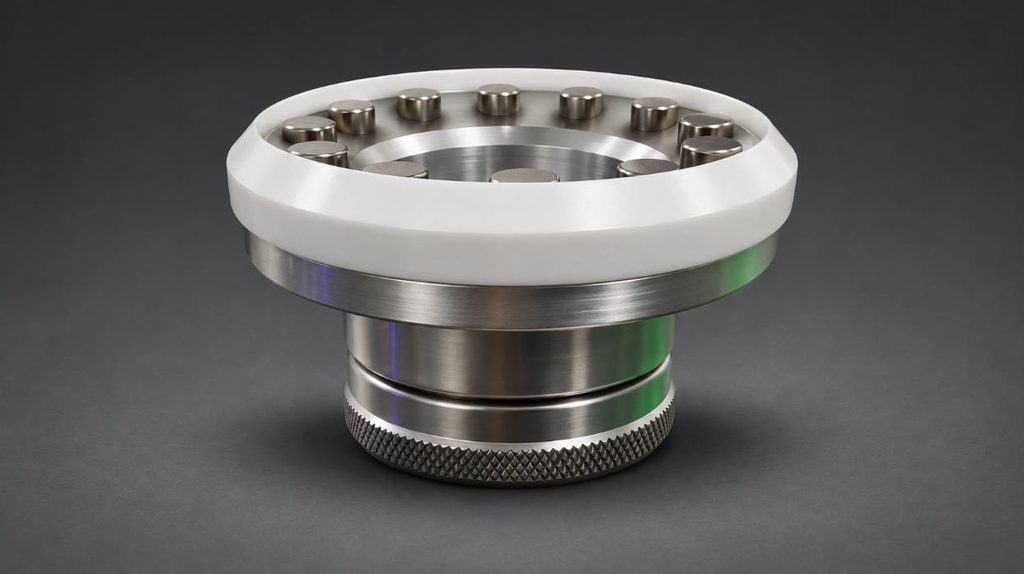
Table of Contents
- How Many Printing Cycles Can a Ceramic Ink Cup Ring Last?
- 5 Factors That Determine How Long a Ceramic Doctor Ring Lasts
- 6 Signs It’s Time to Replace a Ceramic Ink Cup Ring
- Can a Worn Ceramic Ink Cup Ring Be Reconditioned Instead of Replaced?
- Ceramic vs. Carbide: Would Switching Materials Extend Service Life?
- How to Build a Practical Ceramic Ring Replacement Schedule
- Frequently Asked Questions
- Keep Your Pad Printing Production Running with the Right Ink Cup Ring
How Many Printing Cycles Can a Ceramic Ink Cup Ring Last?
Ceramic doctor rings are designed for repeated contact with printing plates. Their hard, wear-resistant surfaces allow them to maintain a consistent scraping edge over extended production runs.
In properly maintained applications, industry guidance indicates that ceramic doctor rings can operate for several hundred thousand printing cycles before replacement becomes necessary.
However, this figure should be treated as a general industry reference rather than a guaranteed service-life rating.
Two factories using the same type of ceramic ring may experience significantly different replacement intervals.
For example, a manufacturer running short production batches with clean ink and well-maintained plates may achieve a longer service life than a factory operating continuously with abrasive pigments and frequent machine adjustments.
The following factors explain why.
| Operating Condition | Effect on Ring Lifespan |
|---|---|
| High production volume | Increases cumulative sliding contact and wear |
| Abrasive ink pigments | Can accelerate wear along the working edge |
| Damaged or rough printing plates | Increase the risk of localized wear and chipping |
| Excessive contact pressure | Can accelerate wear on the ring and cliché |
| Poor cleaning practices | Allow dried ink and particles to interfere with contact |
| Improper handling | Increases the risk of chips and cracks |
| Correct maintenance | Helps preserve edge condition and extend usable life |
For production managers, the important distinction is between the number of cycles a ring can theoretically withstand and the number of cycles it can maintain acceptable doctoring performance.
A ring may still look usable while already producing inconsistent scraping results.
5 Factors That Determine How Long a Ceramic Doctor Ring Lasts
1. Production Volume and Operating Speed
The more frequently an ink cup moves across the printing plate, the more sliding contact the ceramic ring experiences.
A machine operating continuously across multiple shifts accumulates wear much faster in calendar time than a machine used for occasional production batches.
Operating speed also affects the overall mechanical conditions of the system.
Higher speeds can increase vibration and expose existing alignment or contact problems. If the cup does not move smoothly, localized wear may develop along the ring’s working edge.
For this reason, production volume should be evaluated using actual cycle counts rather than simply counting months of operation.
A useful maintenance record includes:
- Machine operating hours.
- Total printing cycles.
- Production shifts per day.
- Date of the last ring inspection.
- Date of the last replacement or reconditioning.
These records help identify how quickly a particular ring wears under actual factory conditions.
2. Ink Type and Pigment Abrasiveness
Not all pad printing inks create the same wear conditions.
Certain formulations contain pigments or solid particles that can contribute to abrasive contact during the doctoring process.
When these particles repeatedly pass through the contact area between the ceramic ring and printing plate, they may accelerate wear of the working edge.
This is particularly important for manufacturers using specialized inks or changing ink formulations between production runs.
However, ink viscosity and pigment abrasiveness are different considerations.
High viscosity can affect doctoring performance, but it does not automatically mean the ink will wear out a ceramic ring faster.
The actual effect depends on the ink formulation, particle characteristics, and operating conditions.
How to reduce unnecessary wear:
- Use ink formulations compatible with the printing application.
- Filter ink when required by the ink manufacturer’s recommendations.
- Prevent dust and foreign particles from entering the ink cup.
- Maintain the recommended ink viscosity.
- Clean the cup and ring after production.
If the ring begins wearing unusually quickly after changing ink formulations, compare its edge condition with the previous production setup.
3. Printing Plate Material and Surface Condition
The printing plate is another important factor in determining ring lifespan.
During doctoring, the ceramic ring travels directly across the cliché surface. Any roughness, scratches, burrs, or localized damage can affect the contact between the two components.
A poorly finished or damaged plate may cause uneven wear or localized chipping.
Plate material also matters when selecting the ring.
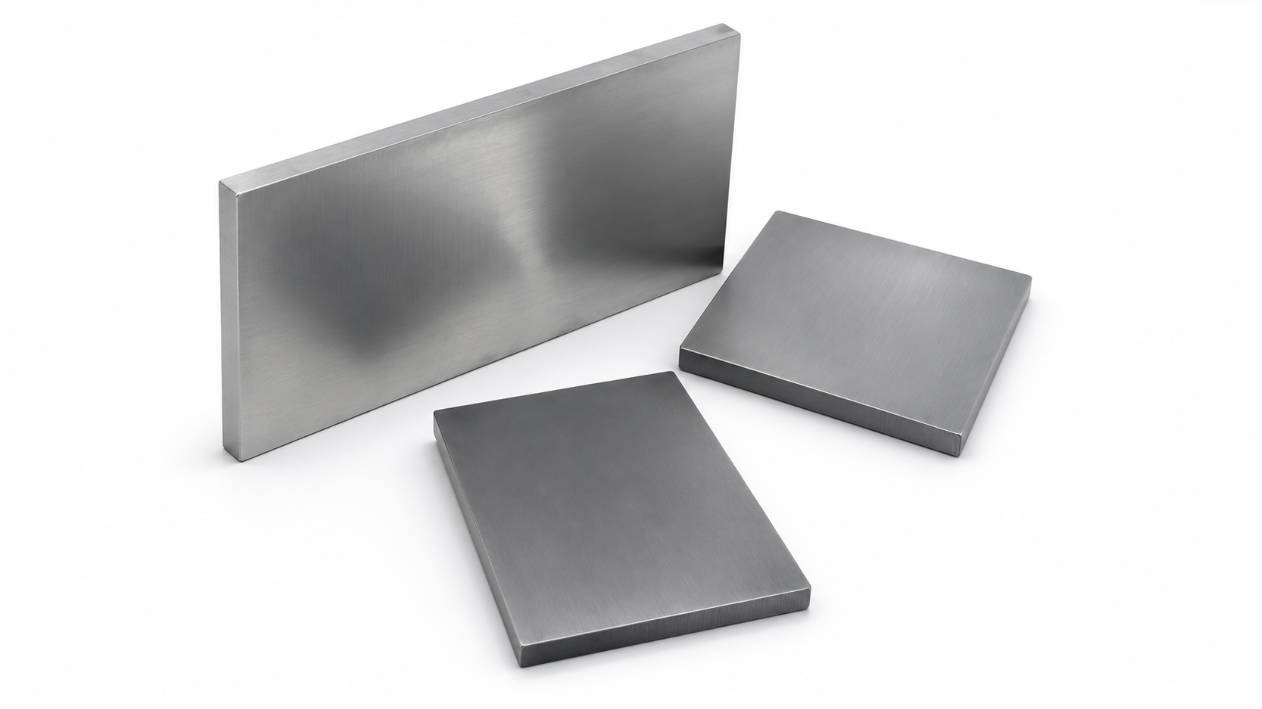
ENGYPRINT’s product guidance identifies ceramic rings as suitable for photo-polymer and laser-engraved clichés, while carbide rings are recommended for thin and thick steel clichés.
The correct combination depends on the machine design and application requirements.
If a ring is installed against an unsuitable plate surface, its wear characteristics and scraping performance may differ from expectations.
For manufacturers selecting a new printing plate, see ENGYPRINT’s guides to thin steel cliché plates and thick steel cliché plates.
4. Contact Pressure and Machine Alignment
A ceramic ring needs consistent contact with the printing plate to remove excess ink effectively.
However, more pressure does not necessarily produce better doctoring.
Excessive contact pressure increases friction between the ring and plate, potentially accelerating wear on both components.
Uneven pressure creates another problem: one section of the ring may experience more contact than another, resulting in uneven wear.
In magnetic ink cup systems, the positioning and condition of the magnets also influence how the ring contacts the plate.
If the cup holder is misaligned or the plate is not properly supported, the ring may experience abnormal contact during movement.
To maintain consistent operation:
- Follow the equipment manufacturer’s recommended contact settings.
- Check the ink cup holder for looseness or deformation.
- Inspect magnetic components where applicable.
- Ensure the printing plate is properly installed.
- Avoid increasing pressure to compensate for a worn or damaged ring.
Correct alignment helps prevent unnecessary wear and maintains more consistent scraping performance.
5. Cleaning, Storage, and Handling
Maintenance practices can have a significant impact on ceramic ring lifespan.
Although zirconia ceramic is hard and wear-resistant, it is also a brittle material. It can withstand normal operating contact but may chip or crack when subjected to concentrated impacts.
Improper cleaning is another common source of damage.
For example, using a metal screwdriver or razor blade to remove dried ink can scratch or chip the working edge.
Dropping the ring onto a hard surface can also create small defects that are difficult to notice during routine inspection.
Recommended practices include:
- Clean the ring after each production run using a compatible cleaning solvent.
- Use a soft, lint-free cloth rather than abrasive cleaning materials.
- Avoid hitting the ring against the ink cup body during removal.
- Store unused rings in protective packaging.
- Keep the ring away from loose metal parts and other hard objects.
A consistent cleaning routine helps prevent dried ink and contaminants from interfering with the contact surface.
For additional maintenance instructions, read How to Maintain a Closed Ink Cup Pad Printer.
6 Signs It’s Time to Replace a Ceramic Ink Cup Ring
A ring should not be replaced simply because it has been used for a certain number of weeks.
The more reliable approach is to evaluate its physical condition and actual doctoring performance.
The following warning signs indicate that the ring may have reached the end of its usable service life.
Sign 1: The Working Edge Has Become Flat or Rounded
This is one of the most important indicators of normal wear.
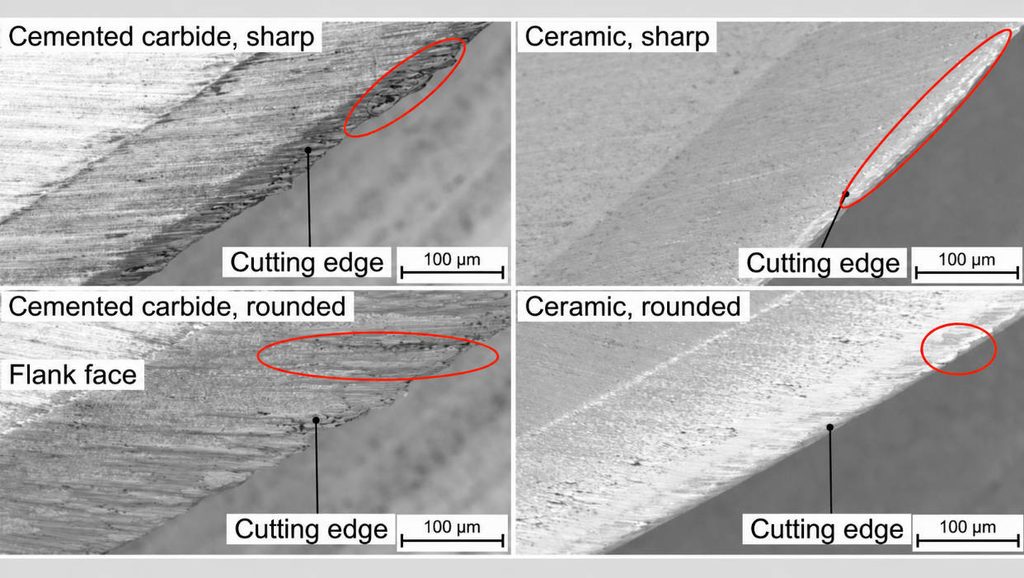
A new or properly reconditioned doctor ring has a precision-ground working edge designed to shear excess ink from the cliché.
After repeated operation, the sharp contact edge gradually wears into a wider, flatter surface.
Instead of removing ink cleanly, the ring begins dragging or smearing it across the printing plate.
Some industry troubleshooting guidance identifies a flattened edge approximately 0.25 mm wide as a point at which the ring may stop shearing ink effectively.
This is a useful inspection reference, not a universal replacement specification. Actual limits should follow the ring supplier’s and machine manufacturer’s requirements.
If the edge has become visibly rounded or excessively wide, inspect whether professional reconditioning is possible.
Sign 2: Small Chips, Cracks, or Notches Appear
Ceramic rings can develop localized damage even when the rest of the ring remains in good condition.
Common causes include accidental impact, improper handling, contamination, and abnormal contact with the printing plate.
A small chip along the working edge can create a gap between the ring and cliché.
During production, this may leave repeated ink streaks along the cup’s travel path.
Inspect the entire circumference under adequate lighting. A magnifying glass can help identify small defects that are difficult to see with the naked eye.
A cracked ring should not be returned to production simply because most of its working edge looks normal.
Replace it if structural damage compromises its integrity or doctoring performance.
Sign 3: Ink Streaks or a Thin Ink Film Remain on the Plate
When the ceramic ring becomes worn or uneven, it may no longer remove excess ink consistently.
Typical symptoms include:
- Thin ink lines across the non-engraved surface.
- Repeated smearing along the cup’s travel path.
- Uneven ink removal around the engraved image.
- Residual ink appearing even after normal cleaning.
However, these symptoms do not automatically mean the ring needs replacing.
Dried ink, insufficient lubrication, weak magnetic contact, or a scratched cliché can produce similar results.
Clean the components and inspect the plate before making a replacement decision.
For a more detailed troubleshooting procedure, read Why Is My Pad Printing Plate Covered in Ink After Doctoring?.
Sign 4: Ink Leakage Becomes More Frequent
A worn or damaged doctor ring may fail to maintain consistent contact with the printing plate.
As a result, ink can escape beneath the cup or accumulate around the working area.
If leakage repeatedly occurs in the same location, inspect the ring for chips, cracks, and uneven wear.
Nevertheless, other components may also be responsible.
A damaged sealing O-ring, incorrect cup positioning, or insufficient magnetic attraction can create similar problems.
Before purchasing a replacement ring, check the complete ink cup assembly.
Our guide Why Is My Pad Printing Ink Cup Leaking? 7 Causes and Fixes explains how to distinguish these problems.
Sign 5: Printing Quality Becomes Less Consistent
A deteriorating doctoring edge can affect the entire printing process.
If excess ink remains outside the engraved image, the silicone pad may pick up unwanted ink during transfer.
This can produce background marks, blurred edges, inconsistent image definition, or repeated cleaning requirements.
When these defects appear, compare the current printing results with an approved reference sample.
If cleaning and machine adjustments do not resolve the problem, inspect the ring’s working edge and determine whether it needs reconditioning or replacement.
Can a Worn Ceramic Ink Cup Ring Be Reconditioned Instead of Replaced?
Not every worn ceramic ring needs to be discarded.
Depending on its condition, a ring may be professionally reconditioned through a controlled grinding or lapping process.
This process removes a small amount of material from the working surface to restore a suitable contact edge.
ENGYPRINT’s pad printing consumables guidance notes that rings with an abrasion depth of no more than 0.03 mm may be suitable for regrinding using a special grinding plate.
This is a manufacturer-specific reference, not a universal allowance for every ring design.
Reconditioning should only be considered when:
- The ring has no structural cracks.
- Damage is limited to a suitable amount of surface wear.
- Sufficient material remains for the required profile.
- The original dimensions can be maintained within specification.
- The working edge can be restored to the required flatness and geometry.
After reconditioning, the ring should be inspected to verify its surface condition, height, and doctoring performance.
When Should You Replace Rather Than Recondition?
| Ring Condition | Recommended Action |
|---|---|
| Light surface abrasion within approved limits | Consider professional regrinding |
| Slight edge wear with no structural damage | Inspect for reconditioning |
| Small isolated chip | Evaluate repairability or replace |
| Multiple chips around the working edge | Replacement is generally preferable |
| Cracked or fractured ring | Replace |
| Excessive material loss or incorrect geometry | Replace |
| Poor doctoring after approved reconditioning | Replace |
Do not attempt to grind a precision ceramic ring manually with ordinary sandpaper or abrasive tools.
An uncontrolled process can change the ring geometry, reduce its height, and create an uneven contact surface.
Ceramic vs. Carbide: Would Switching Materials Extend Service Life?
Some manufacturers consider changing from ceramic to carbide when replacement frequency becomes a concern.
Both materials are used in closed ink cup pad printing systems, but their suitability depends on the application.
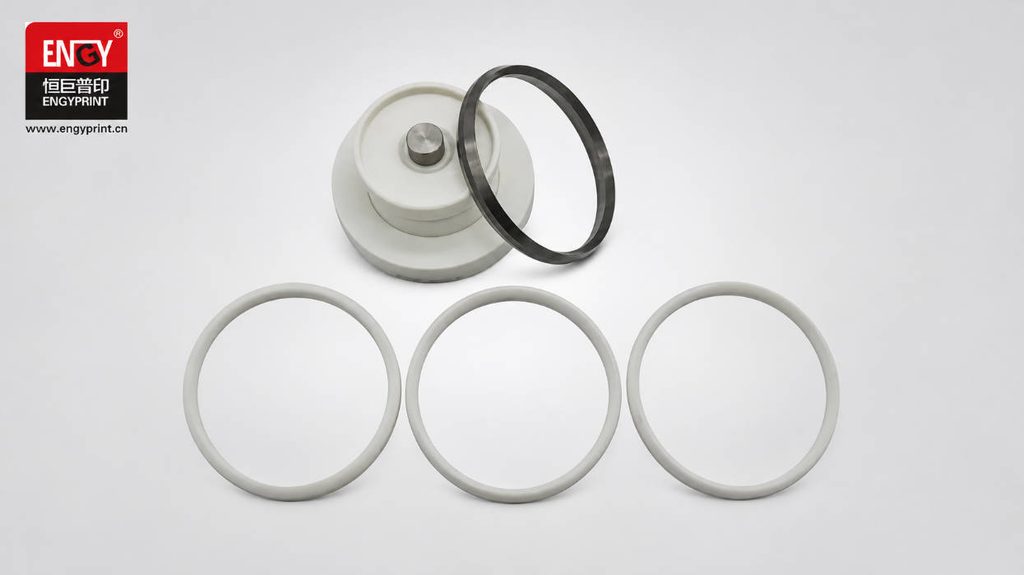
| Comparison | Ceramic Ring | Carbide Ring |
|---|---|---|
| Material | Zirconia ceramic | Tungsten carbide |
| Main characteristic | Hard, wear-resistant precision ceramic | High wear resistance |
| Typical application guidance | Photo-polymer and laser clichés | Thin and thick steel clichés |
| Maintenance consideration | Careful handling and edge inspection | Verify plate compatibility and wear behavior |
| Selection priority | Stable doctoring and suitable plate compatibility | Demanding applications requiring high wear resistance |
Carbide may offer advantages in certain demanding applications, but switching materials does not automatically guarantee lower operating costs.
The printing plate material, ink characteristics, contact pressure, and machine configuration must all be considered.
For example, a carbide ring that is unsuitable for the existing plate may introduce unnecessary wear rather than improve production efficiency.
For a more detailed comparison, see Ceramic Ring vs Carbide Ring for Closed Ink Cup Pad Printers.
How to Build a Practical Ceramic Ring Replacement Schedule
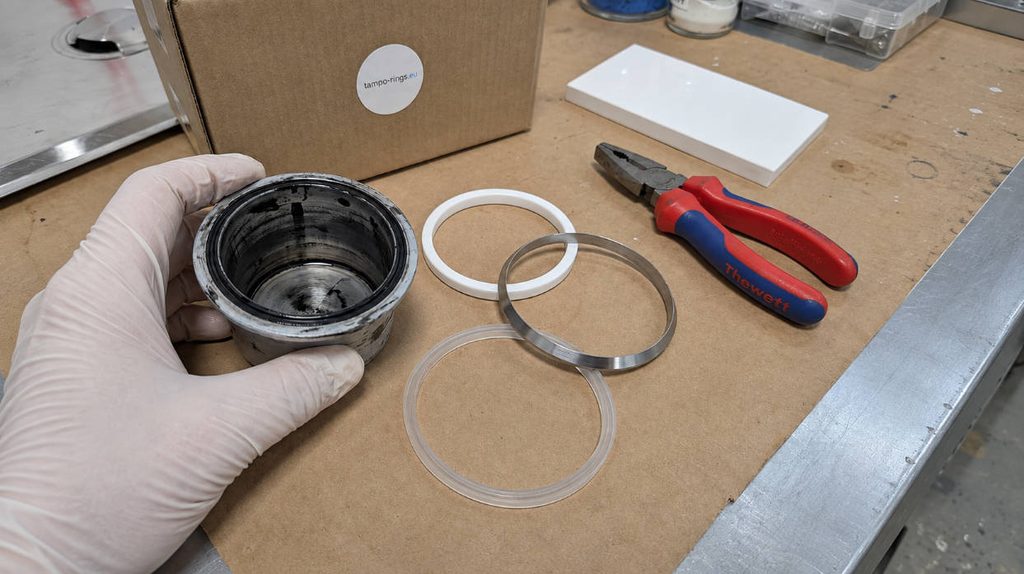
For factories operating multiple pad printing machines, replacing rings only after failure can create unnecessary production interruptions.
A better approach is to establish a condition-based replacement schedule supported by cycle records.
Consider the following maintenance framework:
| Inspection Frequency | What to Check | Purpose |
|---|---|---|
| After each production run | Clean the ring and remove ink residue | Prevent contamination buildup |
| Weekly | Inspect the working edge for chips, notches, and wear | Identify early deterioration |
| Monthly or during scheduled service | Review cycle counts and compare ring condition | Evaluate replacement trends |
| Before high-volume production | Confirm doctoring quality and ring condition | Reduce unexpected downtime |
These are suggested inspection activities, not mandatory replacement intervals.
The actual schedule should be adjusted according to production volume, ink characteristics, and the manufacturer’s maintenance recommendations.
Track the Cost Per Production Cycle
For procurement managers, ring lifespan should also be evaluated from a cost perspective.
A cheaper ring is not necessarily the more economical option if it requires frequent replacement or causes printing defects.
A useful comparison is:
Cost per 100,000 cycles = Total ring-related cost ÷ Actual service cycles × 100,000
Total ring-related cost can include:
- Initial purchase price.
- Professional reconditioning costs.
- Replacement labor.
- Production downtime associated with ring failure.
For example, if one ring costs $120 and provides 300,000 acceptable printing cycles without additional reconditioning, its consumable purchase cost is $40 per 100,000 cycles.
This is an illustrative calculation, not a quoted ENGYPRINT product price or guaranteed service-life figure.
Tracking actual performance over several replacement cycles helps factories compare suppliers and materials using production data rather than assumptions.
Frequently Asked Questions
How many cycles can a ceramic ink cup ring last?
Properly handled ceramic doctor rings can last several hundred thousand printing cycles in suitable applications. However, actual service life varies according to ink abrasiveness, plate condition, contact pressure, production volume, and maintenance.
How do I know if my ceramic doctor ring is worn out?
Look for a flattened or rounded working edge, visible chips, cracks, repeated ink streaks, leakage, and declining doctoring performance. Inspect the ring after cleaning to distinguish actual wear from dried ink contamination.
Can a ceramic ink cup ring be sharpened?
Yes, some worn ceramic rings can be professionally reground or lapped using suitable precision equipment. Whether this is possible depends on the amount of wear, remaining material, and ring geometry.
Does higher printing speed reduce ceramic ring lifespan?
It can contribute to faster wear when higher speed increases vibration, unstable contact, or mechanical stress. However, speed alone does not determine ring lifespan. Alignment, pressure, ink condition, and plate quality also matter.
Should I replace my ceramic ring every month?
Not necessarily. Monthly replacement is not suitable for every machine or production environment. A better approach is to inspect the ring regularly, record its operating cycles, and establish replacement intervals based on actual wear and printing performance.
Is a carbide ring better than a ceramic ring for long production runs?
Carbide may be suitable for demanding applications requiring high wear resistance, particularly when matched with compatible steel clichés. However, material selection should consider the complete printing system rather than production volume alone.
Keep Your Pad Printing Production Running with the Right Ink Cup Ring
A ceramic ink cup ring does not have a fixed expiration date. Its usable life depends on how it is operated, maintained, and matched to the printing system.
For manufacturers, the most reliable replacement strategy is to monitor cycle counts, inspect the working edge, maintain the ink cup properly, and replace or recondition the ring before wear begins affecting print quality.
ENGYPRINT supplies zirconia ceramic rings, tungsten carbide rings, sealed ink cups, and customized pad printing consumables for different machine configurations.
If your current ceramic ring is wearing faster than expected or you need a replacement with specific dimensions,contact ENGYPRINT with your machine model, ring specifications, and application details.
Our team can help identify a suitable ring configuration for your pad printing equipment and production requirements.
Related Reading
- How to Measure a Pad Printing Ink Cup Ring for Replacement
- Why Is My Pad Printing Ink Cup Leaking? 7 Causes and Fixes
- Ceramic Ring vs Carbide Ring for Closed Ink Cup Pad Printers
- How to Maintain a Closed Ink Cup Pad Printer
- Pad Printing Machine Accessories Guide
- Pad Printing Machine Spare Parts: What Buyers Should Prepare