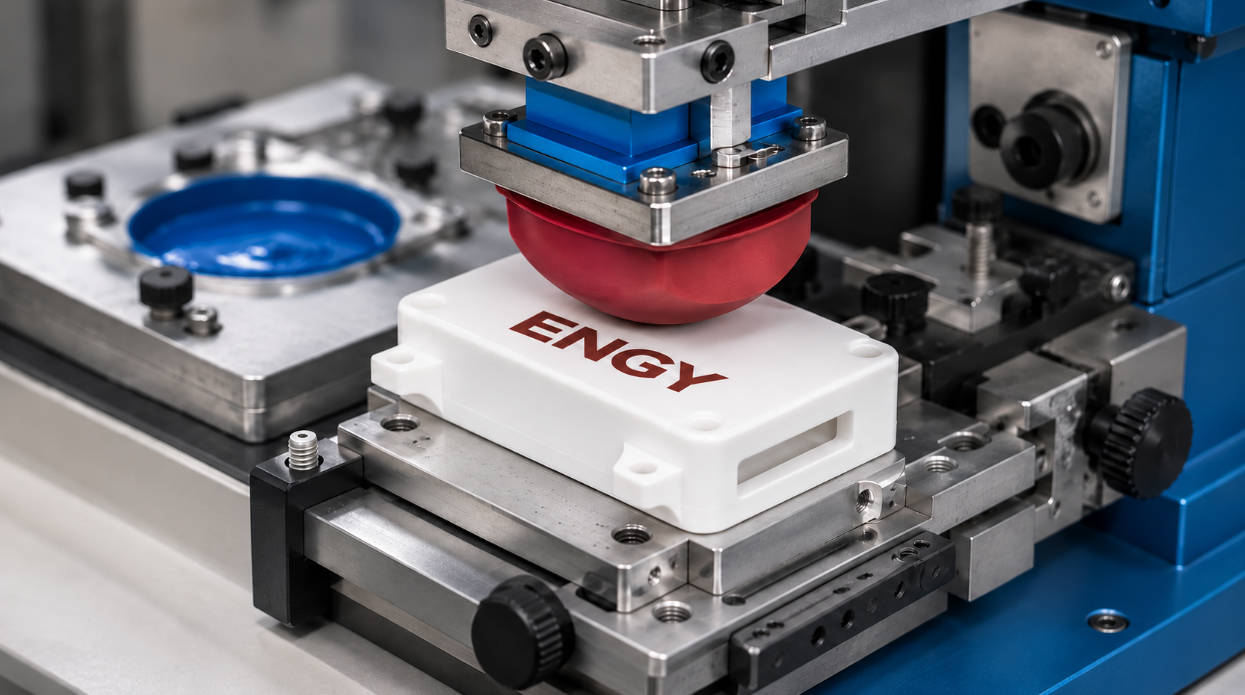
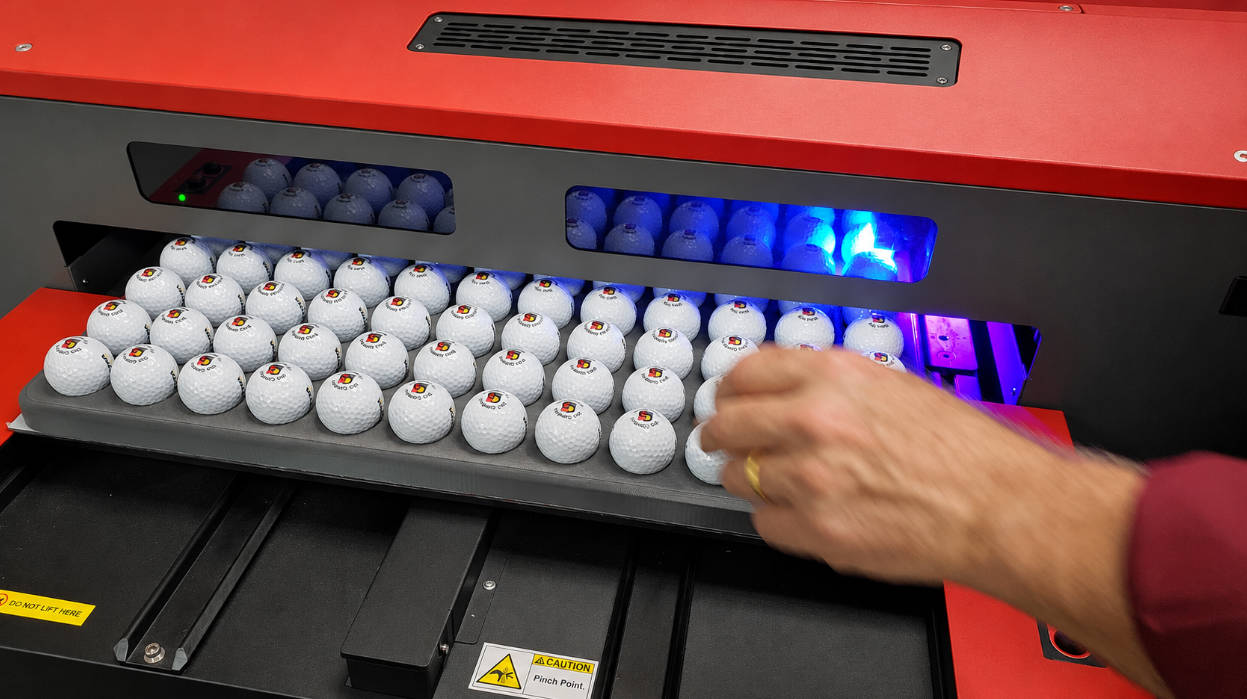
Introduction
A pad printing plate may look like a relatively simple consumable, but its material can have a significant impact on production costs, printing consistency, and maintenance requirements.
For manufacturers, choosing between aluminum and steel plates is not simply a matter of selecting the harder or more durable material. The right choice depends on how many impressions a job requires, how frequently the artwork changes, and what type of pad printing machine is being used.
Aluminum plates are commonly selected for short production runs and applications requiring frequent artwork changes. Steel plates, on the other hand, offer greater resistance to wear and are generally more suitable for longer production runs.
However, steel plates also come in different configurations. Thin steel plates and thick hardened steel plates serve different production requirements and should not be treated as interchangeable.
This guide compares the three main options to help manufacturers choose a pad printing plate based on actual production needs rather than material specifications alone.
1. Aluminum vs. Steel Pad Printing Plates: Understanding the Three Options
Before comparing performance, it is important to understand how these plates are constructed and manufactured.
ENGYPRINT supplies aluminum plates, thin steel plates, and thick steel plates for different pad printing applications.
Aluminum Pad Printing Plates
Aluminum plates are primarily used for direct fiber laser engraving.
Because aluminum is relatively soft, it can be processed efficiently by a compatible fiber laser system. The engraved artwork forms recessed areas that hold ink during the printing process.
ENGYPRINT offers aluminum plates in two configurations:
- 0.5mm aluminum plate without steel backing
- 0.95mm aluminum plate with steel backing
These plates are particularly useful for manufacturers that need to produce short runs, change logos frequently, or prepare new artwork without going through a traditional chemical etching process.
Their main limitation is wear resistance. Repeated contact with the ceramic ring or doctor blade can gradually affect the engraved image.
Thin Steel Pad Printing Plates
Thin steel plates are typically made from carbon steel or stainless steel.
ENGYPRINT offers several thickness options:
- Carbon steel: 0.25mm, 0.3mm, and 0.5mm
- Stainless steel: 0.25mm
Depending on the specification, the plates can be supplied with or without a surface coating.
Compared with aluminum, steel provides a harder working surface and better resistance to repeated doctoring. This makes thin steel plates a practical option for manufacturers that need more durability without moving to a much thicker steel plate.
Thin steel plates are commonly processed through chemical etching, although the exact plate-making method depends on the material and production setup.
Thick Steel Pad Printing Plates
Thick steel plates are designed for demanding production environments where long service life and stable printing performance are important.
ENGYPRINT offers thick plates made from materials including SKD11, 2510, and GCr15, corresponding to different material grades and product markings.
Typical specifications include:
- Common thickness: 9.8–10.2mm
- Heat-treatment hardness: HRC 63 ±1
- Surface finishes: Black, bright, and mirror
- Custom dimensions: Available
The greater thickness provides a rigid plate structure, while heat treatment improves surface hardness and wear resistance.
Thick steel plates are particularly suitable for long production runs with consistent artwork, where replacing plates frequently would create unnecessary costs and interruptions.
2. How Do Aluminum and Steel Plates Compare?
The most useful way to compare these materials is to consider how they perform throughout a production cycle.
| Comparison Factor | Aluminum Plate | Thin Steel Plate | Thick Steel Plate |
|---|---|---|---|
| Base material | Aluminum | Carbon steel / stainless steel | Hardened tool steel |
| Typical thickness | 0.5mm / 0.95mm | 0.25–0.5mm | Around 10mm |
| Plate-making method | Fiber laser engraving | Commonly chemical etching | Chemical etching |
| Initial investment | Generally lower | Moderate | Higher |
| Wear resistance | Lower | Higher | Highest |
| Production suitability | Short runs | Medium to long runs | Long, high-volume runs |
| Artwork changes | Frequent changes | Occasional changes | Infrequent changes |
| Maintenance frequency | More frequent replacement may be needed | Moderate | Generally less frequent replacement |
| Main advantage | Fast artwork preparation | Balance of durability and cost | Long service life and stability |
These are general selection guidelines rather than guaranteed performance ratings. Actual results depend on plate quality, engraving or etching depth, artwork, machine condition, ink, and doctoring system.
One important point: a harder plate does not automatically produce better prints in every application. Correct plate preparation, installation, and ink transfer conditions remain essential.
3. Production Volume: The Most Important Selection Factor
If you are choosing between aluminum and steel, start by estimating the total number of impressions required for each artwork.
A plate that is economical for a 5,000-piece job may become expensive when used for a production contract involving hundreds of thousands of impressions.
Short Production Runs: Aluminum Is Often More Practical
Aluminum plates are particularly suitable for jobs with relatively low impression counts.
For example, consider a manufacturer printing a logo on a customized electronic accessory. The customer may order a few thousand pieces initially, then request a different logo or product version for the next batch.
In this situation, the manufacturer needs a plate-making solution that supports quick artwork preparation and reasonable initial costs.
Fiber laser engraving offers several practical advantages:
- Artwork can be processed directly from digital files.
- No traditional photosensitive film exposure is required.
- The engraving process can be completed quickly.
- New designs can be prepared without maintaining a large inventory of etched steel plates.
For manufacturers handling prototypes, customized products, and frequently changing designs, aluminum can reduce the time and expense associated with plate preparation.
Medium Production Runs: Thin Steel Offers a Practical Balance
When production volumes increase, plate durability becomes more important.
Thin steel plates offer greater resistance to wear than aluminum while maintaining a relatively compact and manageable structure.
They are particularly worth considering when:
- The same artwork will be used across multiple batches.
- Production runs are repeated regularly.
- Printing quality must remain consistent over extended cycles.
- Replacing an aluminum plate too frequently would increase operating costs.
For example, a manufacturer printing control-panel symbols or appliance logos may use the same artwork for several months.
In this situation, thin steel can offer a better balance between initial investment and replacement frequency.
Long Production Runs: Thick Steel Is the Strongest Candidate
For large-scale production with stable artwork, thick steel plates are generally the preferred option.
Their hardened surfaces provide excellent resistance to repeated contact with doctoring components.
This makes them suitable for applications where:
- The same logo is printed continuously.
- Production quantities are high.
- Consistent image quality is required over extended runs.
- Frequent plate replacement would interrupt production.
For manufacturers operating dedicated production lines, the higher initial cost of thick steel may be justified by its longer service life.
The important consideration is whether the expected production volume is sufficient to recover that initial investment.
4. Initial Plate Cost vs. Long-Term Cost Per Impression
A common purchasing mistake is comparing plate prices without considering how long each plate will remain usable.
The cheaper plate is not necessarily the more economical option.
A better approach is to calculate the cost per usable impression.
Cost per impression = Total plate-related cost ÷ Usable impressions
For a more complete calculation, manufacturers should include:
- Plate purchase price
- Artwork preparation and plate-making costs
- Replacement frequency
- Machine downtime during plate changes
- Quality losses caused by plate wear
- Labor associated with replacement and setup
Consider two simplified production scenarios.
Scenario A: A manufacturer producing 8,000 units
The manufacturer needs a plate for a single customer order, and the artwork may change for the next production batch.
An aluminum plate may be the more economical choice because the manufacturer does not need to pay for the extended service life of a hardened steel plate.
Scenario B: A manufacturer producing 300,000 units
The same logo will be printed continuously across a large production order.
A steel plate may provide better long-term value because its higher initial cost can be distributed across a much larger number of impressions.
These examples illustrate why production volume should influence material selection. The actual break-even point must be calculated using supplier quotations and verified plate-life data.
5. Does Plate Material Affect Printing Quality?
Yes, but the relationship is more complicated than simply saying steel produces better prints.
Both aluminum and steel plates can deliver good printing results when properly manufactured and used within their intended applications.
The main differences relate to surface hardness, engraving or etching quality, and how consistently the plate performs over time.
Image Detail and Engraving Quality
Aluminum is relatively soft and suitable for direct fiber laser engraving.
It works well for many standard logos, text, and relatively simple graphics.
Steel plates offer a harder working surface and can maintain the engraved or etched image for longer under repeated doctoring.
For applications involving fine lines, small characters, or detailed graphics over long production runs, a properly prepared steel plate can offer an advantage in maintaining image consistency.
However, the final result also depends on the quality of the plate-making process and the actual artwork.
Ink Transfer Consistency
During pad printing, excess ink must be removed from the plate surface while sufficient ink remains inside the engraved image.
If the plate becomes worn or damaged, the ink transfer process may become less predictable.
Aluminum plates are more susceptible to gradual wear from repeated contact with ceramic rings or doctor blades.
Steel plates generally maintain their working surface for longer, making them more suitable for extended production cycles.
This is particularly important when manufacturers need to maintain consistent logo appearance across large batches.
6. Check Machine Compatibility Before Choosing a Plate
Material selection should never be separated from machine compatibility.
Even a high-quality plate may cause production problems if it does not match the machine’s plate holder, mounting system, or doctoring arrangement.
The type of pad printing machine is especially important.
Closed Ink Cup Pad Printing Machines
Closed ink cup machines use a sealed ink cup with a ceramic or carbide ring to contain the ink and doctor the plate surface.
ENGYPRINT’s closed ink cup systems can accommodate different plate types, including aluminum, carbon steel, and thick steel plates, subject to the machine’s specifications.
This makes them suitable for a wider range of plate configurations.
Open Tray Pad Printing Machines
Open tray pad printers typically use thick plates as their standard configuration.
If a manufacturer wants to use a thin plate in an open tray machine, the machine may require a built-in magnet in the base plate to prevent movement during printing.
This is an important detail that should be checked before ordering thin steel or aluminum plates.
For compatible equipment, ENGYPRINT provides different plate options and customized solutions.
Explore the ENGYPRINT Pad Printing Machine Range.
7. Which Plate Should You Choose? A Practical Decision Guide
There is no universal winner between aluminum and steel. The right choice depends on the production conditions.
Use the following guide when evaluating your next plate purchase.
Choose Aluminum If:
- You mainly handle short production runs.
- Customer artwork changes frequently.
- Fast plate preparation is important.
- You use fiber laser engraving.
- Your machine supports the required aluminum plate configuration.
Choose Thin Steel If:
- Your production volume is higher than typical short-run work.
- The same artwork is used repeatedly.
- You need greater wear resistance than aluminum provides.
- You want a balance between initial cost and plate lifespan.
- Your machine supports thin steel plate mounting.
Choose Thick Steel If:
- You operate long-term production programs.
- The same artwork is used for a large number of impressions.
- Plate replacement would cause significant downtime.
- High surface hardness and long-term stability are important.
- Your machine is designed to accommodate thick plates.
Before making a final decision, also consider artwork complexity, required image quality, ink compatibility, and the availability of replacement plates.
8. What Should You Tell a Supplier When Ordering Pad Printing Plates?
Providing complete technical information helps suppliers recommend the correct plate and avoid unnecessary modifications.
When requesting a quotation, prepare the following details:
| Specification | Information to Provide |
|---|---|
| Plate material | Aluminum, carbon steel, stainless steel, or hardened steel |
| Thickness | Exact required thickness |
| Plate dimensions | Length and width |
| Machine type | Closed ink cup or open tray |
| Mounting requirements | Plate holder, magnetic support, or mounting holes |
| Artwork | AI vector file or other suitable artwork |
| Production quantity | Estimated impressions per design |
| Surface treatment | Coated, uncoated, black, bright, or mirror finish, as applicable |
| Quantity required | Number of plates |
If you are replacing an existing plate, sending a photograph or physical sample can make specification confirmation easier.
For custom applications, it is also useful to provide the machine model and explain whether the artwork will be reused or frequently changed.
Frequently Asked Questions
1. Is an aluminum pad printing plate better than a steel plate?
Neither material is universally better. Aluminum is more suitable for short runs and frequent artwork changes, while steel is generally preferred for applications requiring greater wear resistance and longer production life.
2. How long do aluminum and steel pad printing plates last?
Steel plates generally last longer than aluminum plates because of their greater surface hardness and resistance to doctoring wear. However, actual service life depends on material grade, engraving depth, artwork, machine condition, and maintenance. Suppliers should provide application-specific reference data rather than a guaranteed impression count.
3. What is the difference between thin steel and thick steel pad printing plates?
Thin steel plates typically range from 0.25mm to 0.5mm and are used in applications requiring a relatively thin plate structure. Thick steel plates are approximately 10mm thick and offer greater rigidity and wear resistance for demanding production environments.
4. Can aluminum pad printing plates be used in closed ink cup machines?
Yes. Aluminum plates can be used in compatible closed ink cup machines. However, the plate dimensions, thickness, and mounting configuration must match the machine.
5. Are thick steel plates suitable for open tray pad printing machines?
Yes. Thick steel plates are commonly used with open tray pad printing machines because their rigid structure provides a stable printing surface.
6. Can I change from an aluminum plate to a steel plate without replacing my pad printing machine?
Sometimes, but not always. The machine must support the new plate’s dimensions, thickness, and mounting arrangement. Thin plates used in certain open tray systems may also require magnetic support.
Conclusion
Choosing between aluminum and steel pad printing plates requires more than comparing material hardness or purchase prices.
Aluminum is a practical solution for short production runs, customized orders, and applications where artwork changes frequently. Thin steel offers a balance of durability and cost for repeated production, while thick hardened steel is better suited to long-running industrial applications that demand extended service life and stable performance.
The most economical option is the one that matches your actual production requirements.
ENGYPRINT supplies aluminum plates, thin steel plates, and thick steel plates in different specifications and custom dimensions. Whether you need a laser-engraved aluminum cliché for a small production order or a hardened steel plate for continuous manufacturing, selecting the correct configuration can help improve production efficiency and control long-term operating costs.
Explore ENGYPRINT Pad Printing Plates:
- Aluminum Plate for Pad Printing Machine
- Thin Steel Pad Printing Plates
- Thick Steel Pad Printing Plates
- Pad Printing Consumables
For custom plate dimensions, material recommendations, or compatibility questions,contact ENGYPRINT with your machine specifications and production requirements.
Related Reading
- 0.5mm vs. 0.95mm Aluminum Pad Printing Plates: What Is the Difference?
- Why Is My Pad Printing Plate Covered in Ink After Doctoring?
- Pad Printing Plate Size Guide: 100x100mm, 100x150mm and Custom Plates
- Pad Printing Machine Accessories Guide
- Pad Printing Machine Spare Parts: What Buyers Should Prepare
- Pad Printing Machine Maintenance Schedule: Daily, Weekly and Monthly Checklist