Selecting a pad printing plate size is not simply a matter of choosing a plate larger than the artwork. The correct size must also match the pad printing machine, plate holder, ink cup or open ink tray, doctoring movement and required image position.
A 100x100mm plate is generally suited to compact artwork and smaller machine configurations, while a 100x150mm plate provides more space for wider images, multiple engravings or additional ink cup travel. Custom plates are required when the machine holder, printing layout or production process does not match a standard dimension.
Both 100x100mm and 100x150mm formats are commercially available in the pad printing industry, while many plate manufacturers also cut or machine plates to application-specific dimensions.
Before ordering a pad printing cliché plate, buyers should confirm five items:
- Existing plate dimensions
- Machine plate-holder dimensions
- Ink cup or open-tray configuration
- Artwork dimensions and position
- Plate material and thickness
This guide explains how these factors determine whether you need a 100x100mm, 100x150mm or custom pad printing plate.
The 60-Second Plate Size Decision
Use the following sequence before comparing plate quotations.
| Question | What to Check | Why It Matters |
| Are you replacing an existing plate? | Measure its length, width and thickness | The replacement usually needs to fit the same holder |
| Is the machine closed ink cup or open tray? | Check the doctoring system | The required plate travel and usable engraving area differ |
| How large is the artwork? | Measure the maximum width and height | The image must fit inside the usable area, not merely the total plate area |
| How large is the ink cup? | Measure the outer ring diameter | The plate must support the complete doctoring path |
| Are several images engraved on one plate? | Check image count and spacing | Multiple images may require additional plate length |
| Does the holder use holes, slots or clamps? | Record their positions | Mounting features may need to be customized |
| Is the original plate unavailable? | Send machine model and holder photos | The supplier must verify compatibility another way |
The safest plate selection method is to start with machine compatibility, then check ink cup movement, and only then calculate whether the artwork fits.
Choosing a larger plate without checking the machine does not solve a compatibility problem. A plate may have enough surface area for the artwork but still fail to fit the holder or complete the required doctoring stroke.
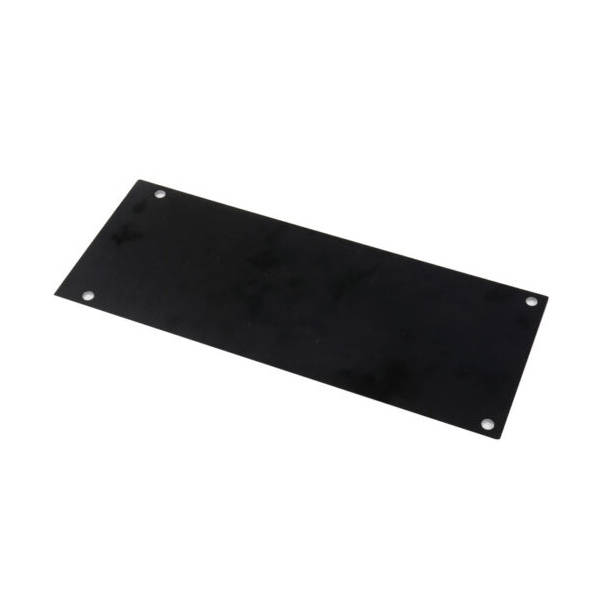
Plate Size Is Not the Same as Printable Area
A plate described as 100x100mm has an overall external dimension of 100mm by 100mm. This does not mean that the entire 100x100mm surface can be engraved and printed.
Part of the plate may be required for:
- Clamping
- Positioning holes
- Ink cup travel
- Doctor blade movement
- Edge clearance
- Registration adjustment
- Separation between multiple images
- Machine-specific mounting structures
The cliché contains the etched or engraved print image, while the ink cup or open inking system fills the recessed image with ink. A silicone pad then picks up that ink and transfers it to the product.
For this reason, buyers should distinguish between three dimensions:
Overall Plate Size
The complete outside dimensions of the plate, such as 100x100mm or 100x150mm.
Usable Engraving Area
The area that can practically contain the artwork after allowing for machine movement and edge clearance.
Actual Artwork Size
The width and height of the logo, text, symbol or graphic being printed.
The artwork must fit inside the usable engraving area, which is normally smaller than the plate’s overall dimensions.
There is no universal formula for subtracting a fixed margin because usable space depends on the machine and ink system. The supplier should therefore review the machine model, ink cup diameter and artwork together.
When a 100x100mm Pad Printing Plate Is Suitable
A 100x100mm pad printing plate is a compact format often considered for small artwork, tabletop equipment and simple single-image applications.
It may be suitable when:
- The existing machine already uses a 100x100mm plate
- The print image is relatively compact
- Only one engraving is required
- The ink cup and travel path fit within the available length
- The plate holder is designed for a square plate
- Production does not require several alternative images on one plate
Typical applications may include:
- Small logos
- Product identification marks
- Short text
- Electronic component symbols
- Buttons and control markings
- Cosmetic component logos
- Small promotional item graphics
However, artwork dimensions alone should not determine the choice.
For example, a 35x20mm logo may appear small enough for a 100x100mm plate. But the plate may still be unsuitable if the machine requires additional travel for a relatively large closed ink cup.
Advantages of a 100x100mm Plate
- Compact and easy to handle
- May use less plate material
- Appropriate for smaller holders
- Convenient for simple single-image layouts
- Suitable for machines designed around compact plate dimensions
Limitations of a 100x100mm Plate
- Less space for ink cup movement
- Limited room for multiple images
- Less flexibility for repositioning artwork
- May not fit larger machine holders
- Can restrict future artwork changes
A 100x100mm plate should therefore be selected because it matches the machine and process—not simply because the logo is small.
When a 100x150mm Pad Printing Plate Is More Practical
A 100x150mm pad printing plate provides 50mm more length than a 100x100mm plate while retaining the same nominal width.
This longer format may be useful when:
- The artwork is wider
- Additional doctoring travel is required
- Two or more small engravings are placed on one plate
- The machine holder is designed for a rectangular plate
- More adjustment space is needed
- The buyer wants additional layout flexibility
A 100x150mm format is available for several pad printing plate materials and systems, including laser-engravable and steel plate configurations.
Common Reasons to Select 100x150mm
Wider Artwork
Long brand names, warning text, measurement scales and extended graphics may require more horizontal engraving space.
Multiple Engravings
A manufacturer may want two product logos, language versions or model markings engraved separately on one plate.
The machine can then reposition the plate, ink cup or workpiece to use the required image, provided the machine supports this arrangement.
Additional Ink Cup Travel
In a closed ink cup system, the cup moves across the plate while its doctoring ring controls the ink film. The plate must provide sufficient travel space for the cup to cover and clear the engraved image. Ink cup size and movement therefore influence the minimum practical plate length. (Inkcups)
More Registration Flexibility
A longer plate can provide additional room for image positioning during initial setup. This can be useful when the exact engraving position must correspond with the machine stroke or product fixture.
Possible Limitations
A 100x150mm plate is not automatically interchangeable with a 100x100mm plate.
The longer plate may:
- Extend beyond the plate holder
- Interfere with guards or machine components
- Require different clamping positions
- Exceed the machine’s travel distance
- Require mounting holes or slots
- Increase unnecessary material use for a very small application
The existing machine specification should always take priority over a general size recommendation.
100x100mm vs 100x150mm Pad Printing Plates
| Selection Factor | 100x100mm Plate | 100x150mm Plate |
| Overall format | Compact square | Longer rectangular format |
| Small single logo | Often suitable | Usually provides more space than necessary |
| Wide text or graphic | May be restricted | More practical in many configurations |
| Multiple engravings | Limited layout space | Better layout flexibility |
| Ink cup travel | Less available length | More available travel length |
| Small tabletop machine | May be suitable | Must verify holder capacity |
| Future artwork changes | Limited flexibility | More room for alternative layouts |
| Material use | Lower for compact applications | Higher due to greater plate area |
| Machine compatibility | Must match holder | Must match holder and stroke |
| Best selection basis | Existing machine and small layout | Longer layout or greater movement requirement |
Choose 100x100mm for a verified compact machine configuration; choose 100x150mm when the machine supports it and the process needs additional image or travel space.
Neither size is universally better. The correct selection depends on the complete printing system.
How Ink Cup Size Affects Plate Dimensions
The relationship between ink cup diameter and plate size is one of the most important—and frequently misunderstood—selection factors.
In a closed ink cup machine, the cup sits against the plate and moves across its surface. The ceramic or metal doctoring ring distributes ink into the engraved area and removes excess ink from the plate surface.
Larger ink cups can support larger images, but they also require an appropriately sized plate and machine system.
Buyers should check:
- Ink cup outer diameter
- Doctoring ring diameter
- Cup movement direction
- Total stroke length
- Artwork position relative to the cup
- Plate edge clearance
- Whether the cup must move completely beyond the image
A common mistake is comparing the artwork width only with the ink cup’s nominal size. The supplier must also consider whether the cup can doctor the entire image consistently during its movement.
Closed Ink Cup Plate Check
For a closed ink cup machine, provide:
- Ink cup diameter
- Existing plate dimensions
- Maximum machine stroke
- Photograph of the cup installed on the plate
- Artwork dimensions
- Machine brand and model
Open Ink Tray Plate Check
An open tray machine uses an ink tray and doctor blade rather than a sealed cup. The required plate size is influenced by:
- Plate-holder dimensions
- Doctor blade width
- Ink tray dimensions
- Blade movement
- Artwork position
- Number of colors or printing stations
A plate designed for an open system may also differ in thickness and mounting method from one used in a closed ink cup system.
When You Need a Custom Pad Printing Plate
A custom plate is appropriate when standard dimensions do not match the machine or production layout.
ENGY lists multiple commonly produced thin-steel plate dimensions and states that other sizes can be customized. Its thin-steel plates are available in carbon steel or stainless steel, with listed thickness options including 0.25mm, 0.3mm and 0.5mm. (ENGYPRINT)
Custom sizing may be required in the following situations.
Replacing a Nonstandard Original Plate
Some pad printers use proprietary plate holders or dimensions developed for a specific machine series.
Even a difference of several millimeters may affect clamping, alignment or movement.
Using an Existing Plate Holder
If the plate holder cannot be modified, the replacement plate should normally follow the holder’s length, width and thickness requirements.
Engraving Several Images
A longer plate may be needed when multiple logos, model numbers or artwork versions are placed on the same cliché.
The supplier must confirm:
- Number of images
- Spacing between images
- Required registration marks
- Machine movement between images
- Whether the ink cup can reach every engraving
Printing an Unusually Large Image
Larger graphics may require a wider plate, larger ink cup, larger silicone pad and a machine with sufficient printing pressure and stroke.
Increasing the plate size alone does not necessarily make a large image printable.
Adding Mounting Holes or Slots
Some machines locate the plate through:
- Screw holes
- Countersunk holes
- Guide-pin holes
- Side slots
- Notches
- Magnetic backing plates
These features should be shown on a dimensional drawing whenever possible.
Matching an Automated Pad Printing System
Custom automation may use dedicated plate positioning, servo movement, multi-station printing or special guarding.
In these systems, plate dimensions should be confirmed from the equipment drawing rather than estimated from the artwork.
Plate Size Must Be Checked Together with Material and Thickness
Length and width are only two parts of the specification.
A complete plate order should also define:
- Plate material
- Plate thickness
- Surface condition
- Engraving or etching method
- Image depth
- Mounting features
- Quantity
- Whether the plate is blank or engraved
ENGY’s product page identifies carbon steel and stainless steel as available thin-plate materials, with coated and uncoated surface options and logo etching service. (ENGYPRINT)
Thin-steel cliché plates in the broader industry are commonly around 0.5mm, while thick steel plates may be produced in substantially greater thicknesses for applications requiring high abrasion resistance and longer service life.
Thin Steel Plate
Thin steel plates are commonly used where:
- The machine supports a thin plate or magnetic backing plate
- Cost-efficient plate replacement is important
- Artwork changes relatively frequently
- The production volume does not require a thick steel plate
- The plate is used in an appropriate closed or open system
Thick Steel Plate
Thick steel plates may be considered where:
- The machine holder is designed for a rigid steel block
- High production volume requires greater wear resistance
- The plate must maintain dimensional stability
- The machine uses an open ink system
- The original plate specification calls for thick steel
Do not replace a thick plate with a thin plate, or vice versa, without checking the holder and machine setup.
How to Measure an Existing Plate Correctly
When replacing a plate, measure the original before removing it permanently from production.
Step 1: Measure Length and Width
Use a suitable measuring tool and record the dimensions in millimeters.
Do not assume that a plate measuring approximately 100x150mm is exactly that size. Some machine systems use slightly different nominal dimensions.
Step 2: Measure Thickness
Thickness affects:
- Plate height
- Ink cup contact
- Doctor blade position
- Pad pickup height
- Holder clamping
- Machine setup
Step 3: Record Mounting Features
Measure:
- Hole diameter
- Distance between hole centers
- Distance from holes to plate edges
- Slot length and width
- Countersink dimensions
- Position of notches or alignment marks
Step 4: Mark the Engraved Side
The supplier must know which side carries the print image and how the plate is oriented in the machine.
Step 5: Photograph the Installed Plate
Take photographs showing:
- Full plate holder
- Ink cup or open tray
- Plate orientation
- Clamping method
- Machine nameplate
- Artwork position
Step 6: Send the Artwork File
Vector files are generally more suitable for plate preparation than low-resolution screenshots.
Commonly requested formats may include:
- AI
- EPS
- CDR
- DXF for certain technical graphics
File requirements depend on the supplier’s engraving and prepress workflow.
Artwork Layout: One Image or Several Images?
Plate size can also be optimized through artwork arrangement.
One Image per Plate
This layout is straightforward and reduces the risk of selecting the wrong engraving during setup.
It may be appropriate for:
- Stable high-volume production
- Automated printing
- Frequently repeated artwork
- Applications requiring fast setup
Multiple Images per Plate
Several engravings can reduce the number of separate plates required, but the arrangement must be compatible with machine movement.
Possible layouts include:
- Several product model numbers
- Different language versions
- Left-side and right-side graphics
- Alternative logo sizes
- Several color separation images
However, fitting more images onto one plate is not always more efficient. It may increase setup complexity and require additional movement or alignment.
Plate layout should optimize machine operation and changeover time—not merely maximize the amount of artwork placed on the steel surface.
Common Plate Size Selection Mistakes
Ordering from Artwork Size Alone
A buyer sends a 40x30mm logo and requests the smallest plate available.
This ignores machine holder dimensions, ink cup travel and engraving position.
Assuming All 100x150mm Plates Are Interchangeable
Two plates may share the same length and width but differ in:
- Thickness
- Hole positions
- Material
- Surface finish
- Engraving method
- Edge treatment
Using the Entire Plate as the Engraving Area
Artwork placed too close to an edge may interfere with doctoring, clamping or registration.
Ignoring Plate Orientation
A 100x150mm plate may be installed with the 150mm dimension parallel to cup movement—or in another orientation determined by the machine.
Changing orientation can affect whether the artwork and movement fit.
Ordering a Larger Plate “Just in Case”
An oversized plate may not fit the machine. It can also increase cost without improving print quality.
Sending Only the Machine Model
Machine models may have different holders, ink cups or modifications. Photographs and actual measurements provide a more reliable basis for verification.
Information to Send Before Ordering
Use this plate quotation checklist.
| Required Information | Example |
| Machine brand and model | Model name or nameplate photo |
| Printing system | Closed ink cup or open tray |
| Existing plate size | Length × width × thickness |
| Ink cup diameter | Outer ring diameter in millimeters |
| Artwork size | Maximum image width × height |
| Artwork file | AI, EPS, PDF or another editable file |
| Number of images | One logo or several engravings |
| Plate material | Carbon steel, stainless steel or specified material |
| Mounting details | Holes, slots, notches or plain edges |
| Plate condition | Blank plate or etched plate |
| Required quantity | Prototype quantity or production batch |
| Application | Product material and approximate production volume |
ENGY can review the machine information and artwork when producing custom pad printing plates.
Sending complete information at the beginning reduces the risk of receiving a plate that contains the correct artwork but does not fit the machine.
FAQ
What is the standard pad printing plate size?
There is no single universal standard. Common dimensions include compact formats such as 100x100mm and 100x150mm, as well as longer plates used for specific machine holders. The correct size depends on the pad printer, ink system and artwork.
Is a 100x100mm pad printing plate large enough for a logo?
It may be large enough for a compact logo, but artwork size is only one factor. The plate must also provide sufficient space for ink cup travel, clamping and image positioning.
What is the difference between a 100x100mm and 100x150mm cliché plate?
A 100x150mm plate provides additional length. This can accommodate wider artwork, multiple engravings or more doctoring travel, provided the machine holder and stroke support the larger plate.
Does pad printing plate size need to match the ink cup size?
The plate must be compatible with the ink cup diameter and movement path. The cup needs enough plate surface to doctor the engraved image correctly without running beyond the supported area.
Can I order a custom plate size for my pad printer?
Yes. Custom dimensions, thicknesses and mounting features can be produced when standard plates do not match the machine. Buyers should provide an existing plate sample, dimensional drawing or detailed measurements.
How do I measure a pad printing cliché plate?
Measure the total length, width and thickness. Also record mounting-hole positions, slots, notches, engraving orientation and the location of the artwork relative to each edge.
Can several logos be engraved on one pad printing plate?
Yes, several images may be arranged on one plate if the plate and machine have enough movement and positioning capability. Image spacing and ink cup coverage must be checked before engraving.
Is a larger pad printing plate always better?
No. A larger plate may not fit the holder or machine stroke. It can also add material cost without providing a practical advantage for a small, fixed artwork.
Should I choose a thin steel or thick steel printing plate?
Choose the plate type specified for the machine and production requirements. Thin and thick steel plates use different mounting arrangements and should not be treated as interchangeable without technical verification.
What files are needed to order an engraved pad printing plate?
A supplier typically needs an editable artwork file, required print dimensions, plate dimensions, machine information and engraving position. A photograph of the existing plate and holder is also helpful.
Conclusion
The correct pad printing plate size is determined by the complete printing setup—not by artwork dimensions alone.
A 100x100mm plate may suit compact artwork and smaller machine configurations. A 100x150mm plate provides additional room for wider graphics, several engravings or ink cup travel. A custom plate is appropriate when the holder, thickness, mounting features or production layout differs from these standard formats.
Before ordering, verify:
- Plate length, width and thickness
- Machine plate-holder dimensions
- Ink cup or doctor blade configuration
- Artwork size and orientation
- Mounting holes or slots
- Number of images
- Plate material
For a new project or replacement plate, send ENGY the artwork, machine model, existing plate measurements and ink system information for a compatibility review. You can also explore ENGY’s pad printing machines and consumables for related production requirements.