Look at an old computer keyboard and you may notice something strange: the A, S, E, or other frequently used letters have started fading, while less-used keys still look almost new.
Why does that happen?
The answer is usually found in how the letters—known in the keyboard industry as keycap legends—were produced.
Keyboard keys can be marked using several manufacturing methods, including pad printing, laser etching or engraving, dye sublimation, UV printing, and double-shot molding. Each method creates the legend differently, so each reacts differently to finger friction, skin oils, cleaning chemicals, heat, and years of typing.
Keyboard letters wear off mainly when the legend is applied as a surface layer rather than being incorporated into the plastic itself.
Pad printing is one of the industrial methods used to print letters, numbers, icons, and symbols onto molded plastic keys. It offers fast production, fine detail, and flexible artwork, which makes it useful for many electronic components.
But it is only one way to make a keyboard legend.
Understanding these methods explains both why some keyboard letters eventually disappear and how manufacturers select a printing process for different keyboard products.
The Letter on a Keyboard Key Is Called a Legend
Before looking at the printing methods, it helps to separate two parts of a keyboard key.
The keycap is the molded plastic component your finger touches.
The legend is the visible information on that keycap, such as:
- A, B, C or other letters;
- numbers;
- F1–F12;
- arrow symbols;
- Enter;
- Shift;
- Ctrl;
- function icons;
- language characters;
- secondary symbols.
The keycap itself may last for many years while the legend changes appearance.
That is why a keyboard can still work perfectly even though several letters are almost invisible.
The electrical switch underneath the key has nothing to do with how the legend was produced.
How Are Keyboard Keys Printed?
There is no single keyboard printing process.
Manufacturers select the legend method according to:
- keycap material;
- required durability;
- number of colors;
- production quantity;
- backlighting requirements;
- artwork complexity;
- target product cost.
Five commonly encountered approaches are:
| Method | How the Legend Is Created | Main Characteristic |
|---|---|---|
| Pad printing | Ink is transferred onto the keycap with a silicone pad | Flexible and efficient surface printing |
| Laser etching / engraving | Laser modifies or removes the plastic surface | No conventional printed surface layer in basic etched designs |
| Dye sublimation | Dye penetrates into the plastic surface under heat | High resistance to surface rubbing |
| Double-shot molding | A second plastic material forms the legend | Legend is physically molded into the keycap |
| UV printing | Digital ink is deposited and UV-cured | Flexible multicolor and detailed artwork |
These processes solve different manufacturing problems.
That is why asking which one is universally “better” is less useful than asking what the keyboard needs to achieve.
Pad Printing: How Letters Are Printed Onto the Surface
Pad printing is particularly interesting from a manufacturing perspective because keyboards contain exactly the type of components this process handles well: relatively small molded plastic parts with precise logos, characters, and symbols.
The process normally works like this:
- The legend artwork is engraved into a printing plate, also called a cliché.
- Ink fills the engraved image.
- Excess ink is removed.
- A silicone pad contacts the cliché.
- The pad picks up the ink image.
- The pad moves to the keycap.
- The legend is transferred to the plastic surface.
The silicone pad can reproduce:
- letters;
- small numbers;
- thin lines;
- icons;
- multilingual characters;
- brand marks.
Because the pad deforms during contact, the same principle is useful far beyond keyboards.
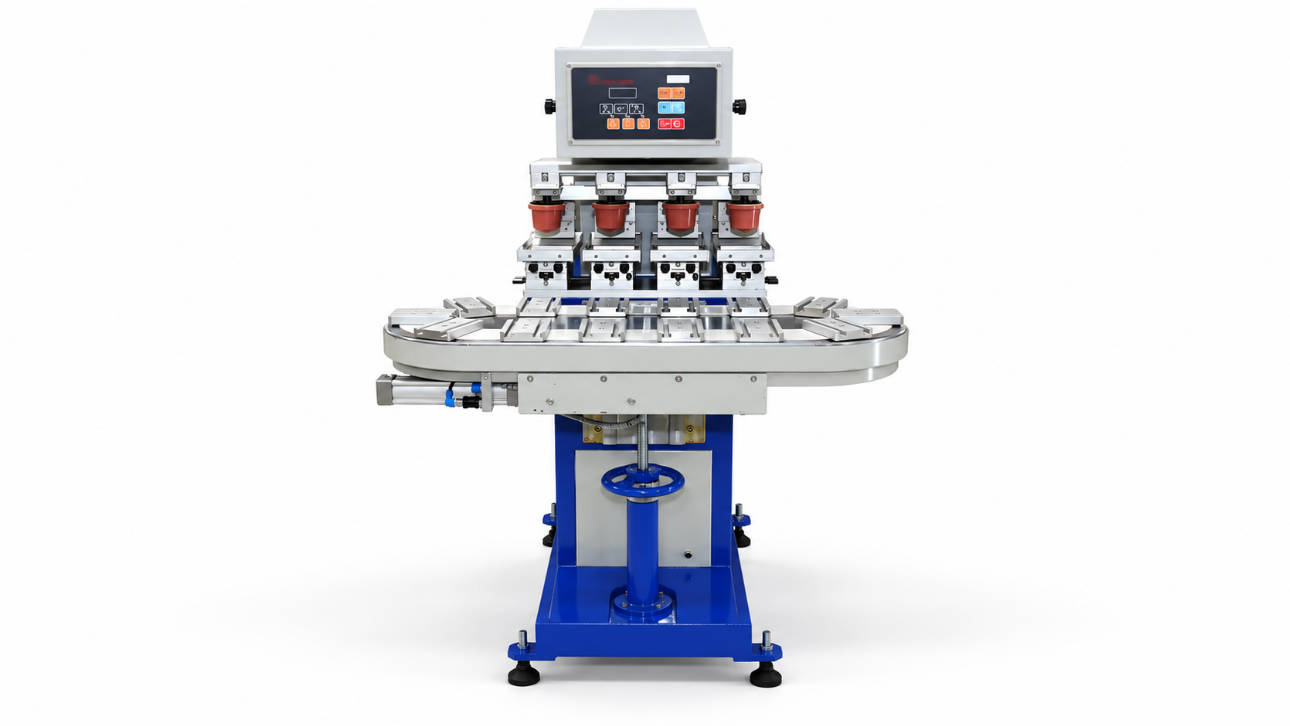
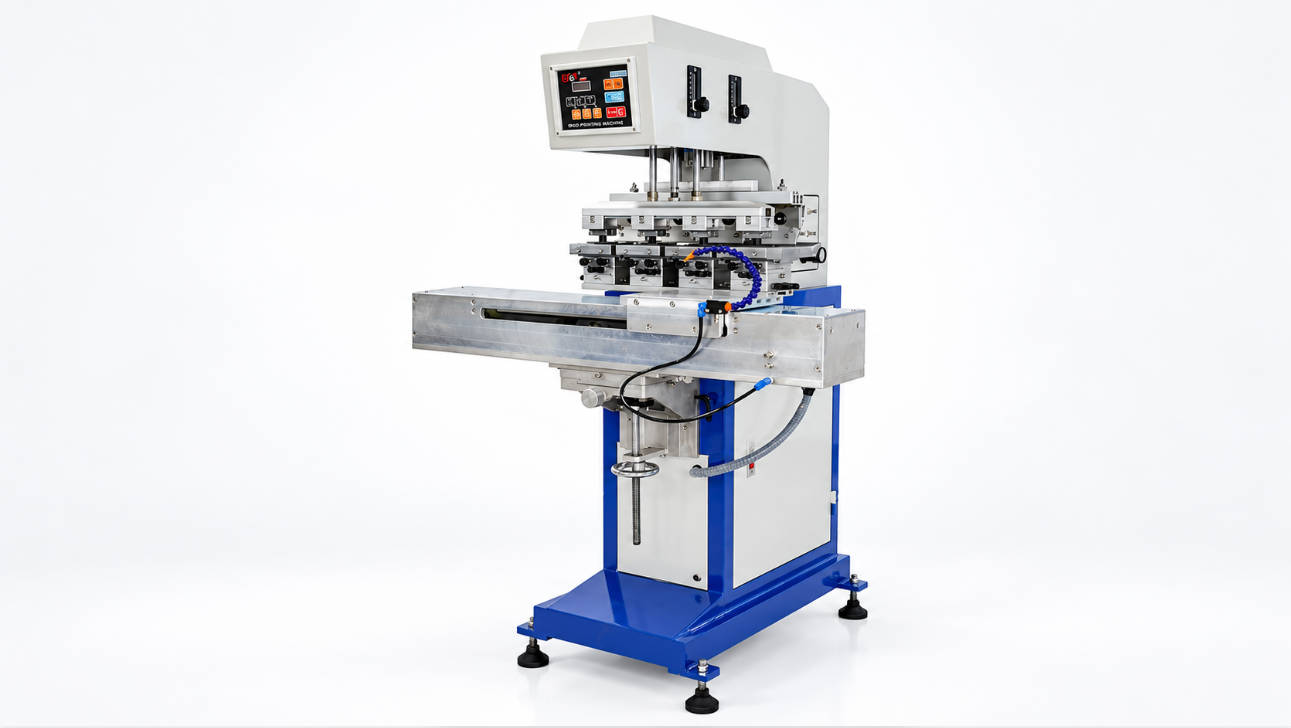
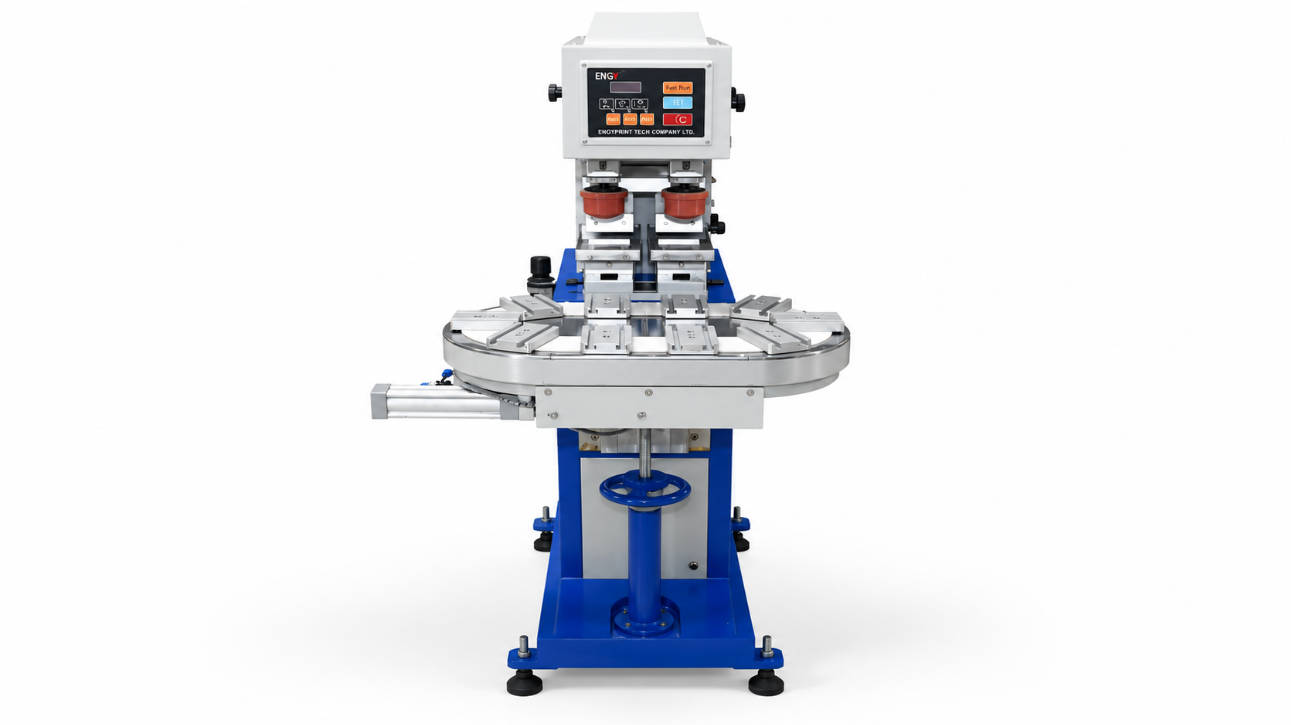
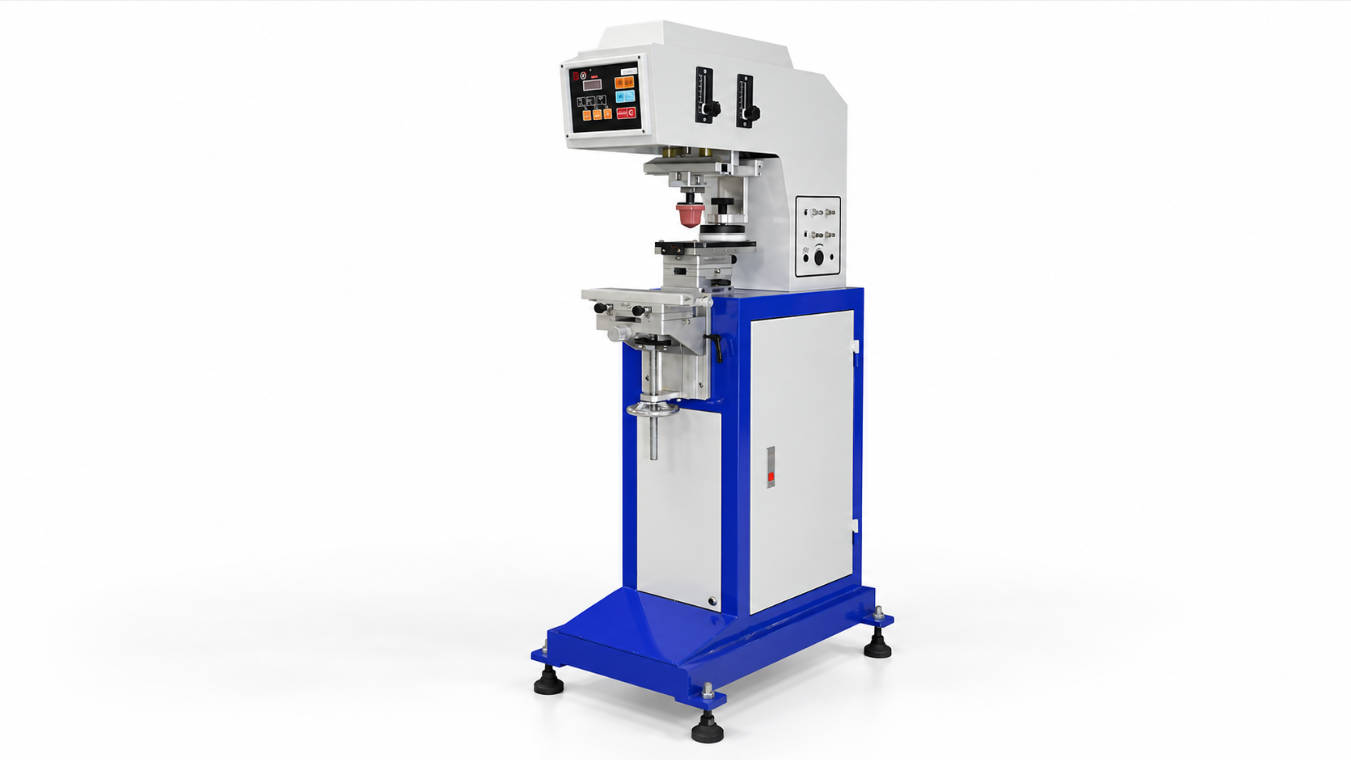
ENGY’s pad printing solutions for electronic components and plastic housings cover applications such as buttons, plastic housings, control symbols, electronic components, and similar precision markings.
Why Do Pad-Printed Keyboard Letters Wear Off?
The key feature of pad printing is also the reason its durability must be engineered carefully.
The ink is transferred onto the surface of the molded keycap.
It is not a second piece of plastic extending through the cap.
That means the printed surface may eventually face mechanical wear.
Every time you type, your finger creates contact with the key.
Over a long period, heavily used keys accumulate:
- friction;
- skin oils;
- sweat;
- dust;
- cleaning chemicals;
- repeated rubbing.
The most-used legends therefore experience more mechanical stress than keys that are rarely touched.
A surface-printed keyboard legend can gradually wear because repeated finger contact physically abrades the ink film over time.
This is why frequently used keys may fade first.
It does not necessarily mean that the keyboard itself is defective.
It reflects the relationship between the legend manufacturing method and the product’s use conditions.
Why Some Letters Disappear Faster Than Others
Keyboard wear is rarely uniform.
A user may discover that several letters are badly faded while keys such as Pause or Scroll Lock still look almost untouched.
The explanation is straightforward: not every key receives the same number of contacts.
Keys used continuously for typing, gaming, shortcuts, or work experience considerably more friction.
The exact wear pattern depends on the user.
For example, one person’s most heavily used keys may be associated with writing, while another person’s wear pattern may be dominated by gaming controls.
Other factors also affect the rate of visible wear.
Typing Frequency
More keystrokes mean more physical contact.
Finger Pressure
Users do not press every key with exactly the same force.
Skin Oil and Sweat
Human skin transfers oils and moisture onto the keyboard surface.
These can interact with dirt, coatings, and printed surfaces.
Cleaning Method
Aggressive cleaning chemicals may affect certain printed coatings faster than gentle cleaning.
Legend Ink and Coating
Different ink systems and protective coatings can provide different abrasion resistance.
Keycap Surface Texture
A rough or textured surface behaves differently from a smooth keycap.
So two visually similar keyboards can age differently even under similar use.
Does a Clear Coating Make Pad Printing Last Longer?
It can.
Some surface-printed keycaps use an additional protective coating over the printed legend.
The coating acts as a barrier between the user’s finger and the ink.
Instead of directly rubbing the printed image, the finger first contacts the coating.
This can extend the useful appearance of a surface-printed legend.
However, coatings also introduce additional manufacturing variables, including:
- adhesion;
- coating thickness;
- curing;
- surface feel;
- compatibility with the underlying plastic and ink.
The durability of a pad-printed key should therefore be evaluated as a complete process rather than judging only the printing machine.
Laser Etching: The Legend Is Created by Modifying the Surface
Laser marking uses a very different principle.
Instead of transferring ink from a plate, a laser modifies the keycap surface.
Depending on the exact process, the laser may:
- remove material;
- discolor the plastic;
- expose another layer;
- create an engraved area.
This makes the basic mark less dependent on a printed ink film sitting on top of the keycap.
Laser processing is also useful for certain illuminated keyboard designs.
However, not every laser-marked key is identical.
Some engraved legends may receive an additional color fill.
If a separate fill material is added, the durability of that fill must be considered separately from the engraved feature itself.
Dye Sublimation: Putting the Color Into the Plastic Surface
Dye sublimation approaches the problem differently again.
Under suitable heat and process conditions, the dye penetrates into the keycap material rather than remaining simply as a surface ink layer.
This makes the legend highly resistant to normal finger abrasion.
Dye sublimation is strongly associated with appropriate plastic materials, particularly keycaps designed for the process.
It is useful when manufacturers want durable legends without creating separate molded legend components.
However, the process also has design and material limitations.
For example, color combinations and substrate characteristics influence what artwork can be produced effectively.
Double-Shot Keycaps: The Letter Is Part of the Keycap
Double-shot molding is not really “printing” in the conventional sense.
It uses two molding stages or two plastic materials.
One material forms the legend.
Another forms the surrounding keycap body.
The visible character is therefore a physical piece of plastic rather than a layer of ink applied to the outside.
This creates a major durability advantage.
With a true double-shot keycap, normal surface abrasion does not erase the legend in the same way that it can remove a surface-printed ink layer.
Even as the key surface wears, the legend material remains present.
The trade-off is manufacturing complexity.
Double-shot production requires:
- specialized molding;
- appropriate tooling;
- more complex manufacturing setup;
- design constraints.
For standard alphabet legends produced at very large scale, that investment may make sense.
For flexible artwork, many languages, frequently changing symbols, or smaller-volume industrial keys, another process may be more practical.
UV Printing: Flexible Digital Artwork
UV printing uses digitally controlled printheads to deposit ink onto the product before ultraviolet energy cures the ink.
Its major advantage is artwork flexibility.
Manufacturers can produce:
- multiple colors;
- complex graphics;
- detailed artwork;
- changing designs
without preparing a separate conventional printing plate for every image in the same way as pad printing.
That makes UV printing attractive for specialized and customized keycaps.
However, like other surface-decoration methods, the performance of the printed layer depends on:
- ink adhesion;
- substrate compatibility;
- curing;
- coating;
- abrasion.
A colorful digital legend is not automatically more durable simply because it was UV cured.
Pad Printing vs Laser vs Dye-Sub vs Double-Shot
For buyers and manufacturers, the differences become clearer in a direct comparison.
| Factor | Pad Printing | Laser | Dye Sublimation | Double-Shot |
|---|---|---|---|---|
| Legend type | Surface ink | Surface physically modified | Dye enters material | Separate molded plastic |
| Artwork flexibility | High | High | High within process limits | More tooling-dependent |
| Fine symbols | Strong capability | Strong capability | Strong capability | Tooling-dependent |
| Multicolor changes | Relatively flexible | Limited by process | Possible | More complex |
| Small production changes | Practical | Practical | Practical depending on setup | Less flexible |
| Wear mechanism | Surface ink can abrade | Mark is physically created | Dye is within surface | Legend is molded plastic |
| Suitable for electronic buttons | Yes | Yes | Application-dependent | Application-dependent |
| Industrial automation | Strong | Strong | Process-specific | Injection-molding based |
The right process depends on what the manufacturer values most.
So Why Is Pad Printing Still Used?
If other methods can create extremely durable legends, why use pad printing at all?
Because durability is only one manufacturing requirement.
Factories also care about:
- cost;
- production speed;
- artwork flexibility;
- existing molding tools;
- number of models;
- product shape;
- changeover;
- automation;
- print location.
Pad printing does not require the character to be built into the injection-molding tooling.
That provides an important advantage.
Imagine one manufacturer produces the same molded electronic button in:
- English;
- German;
- French;
- Spanish;
- Japanese;
- several icon variants.
The physical button can remain the same.
The printed artwork changes.
This can be much more flexible than creating a completely different molded legend structure for every variation.
Keyboard Keys Are Only One Example
The same production challenge exists across the electronics industry.
Think about:
- remote-control buttons;
- appliance keys;
- calculator buttons;
- game-controller buttons;
- power-tool controls;
- automotive switches;
- control-panel symbols;
- medical equipment buttons.
All require small, readable graphics on molded components.
The logo may be only a few millimeters wide, but it needs accurate placement.
For this type of application, pad printing can offer a practical combination of:
- precision;
- repeatability;
- flexible artwork;
- irregular-surface printing;
- automation.
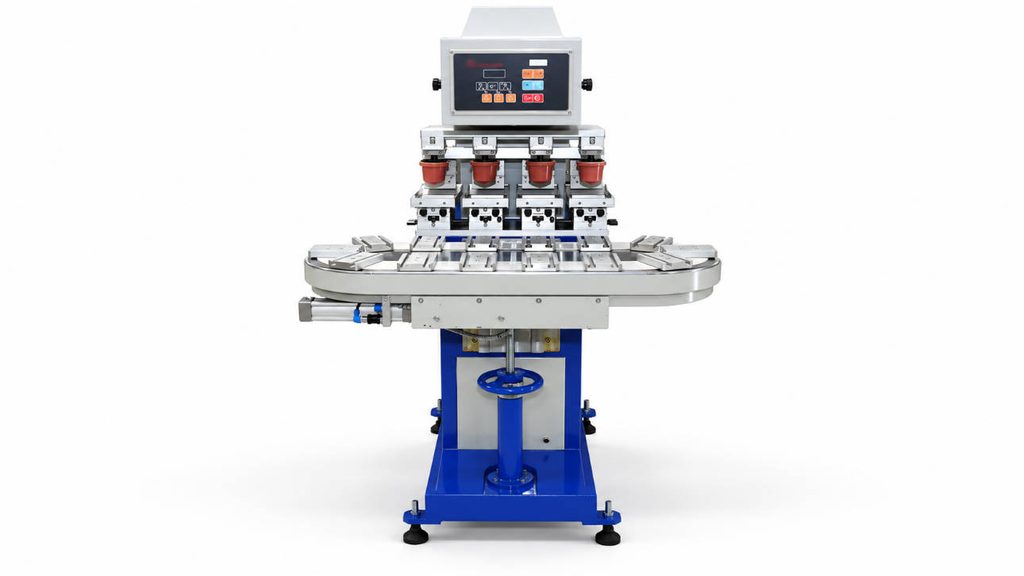
This is why ENGY’s industrial pad printing machine range includes configurations intended for different electronics, plastic components, multi-color graphics, and automated production requirements.
What Determines Whether a Pad-Printed Key Legend Lasts?
Not all pad printing has the same durability.
Several variables matter.
Keycap Material
ABS, PBT, polycarbonate, and other plastics do not behave identically.
Ink needs to be compatible with the substrate.
Surface Cleanliness
Injection molding can leave:
- release agents;
- dust;
- oils;
- handling contamination.
These can reduce ink adhesion.
Ink Selection
The ink resin system must match the plastic and required resistance.
A keyboard legend faces different demands from a decorative logo that is rarely touched.
Curing
Ink that feels dry is not necessarily fully cured.
Final abrasion resistance may depend on allowing the ink to complete the required curing process.
Surface Pretreatment
Some plastics may require treatment to improve ink adhesion.
Protective Coating
A clear coat can provide additional protection against finger abrasion.
Printing Consistency
Stable pad pressure, ink transfer, cliché condition, and fixture positioning help create repeatable legends across mass production.
Why Fixture Design Matters When Printing Keyboard Keys
A keyboard manufacturer may need to print thousands of individual keycaps with the legend in exactly the same position.
If the key moves inside the fixture, the legend can shift.
That becomes particularly obvious with:
- small characters;
- centered legends;
- secondary symbols;
- two-color printing.
The fixture must therefore:
- hold the key consistently;
- locate it in the same position each cycle;
- allow efficient loading;
- avoid scratching the molded surface.
For mass production, one fixture may hold multiple keycaps so several components can be printed during the same cycle.
One Key at a Time or Multiple Keys Per Cycle?
Production layout has a major influence on equipment choice.
A low-volume manufacturer may manually place individual components into a simple fixture.
A high-volume keyboard factory may require:
- multiple fixtures;
- automatic feeding;
- conveyor transport;
- multi-pad printing;
- automatic unloading;
- vision or positioning systems.
In these cases, a standard desktop pad printer may no longer be the most efficient solution.
ENGY’s customized pad printing machines can be configured around special feeding methods, multi-part fixtures, higher production capacity, special printing positions, and other product-specific requirements.
What About Backlit Keyboard Keys?
Backlighting changes the manufacturing problem.
A conventional opaque surface-printed legend does not automatically allow light to shine through.
Backlit keyboard designs may therefore use:
- translucent materials;
- laser-created light windows;
- multi-layer key structures;
- specialized coatings;
- molded translucent legend sections.
This is one reason the phrase “keyboard printing” covers several very different manufacturing processes.
A standard office keyboard, illuminated gaming keyboard, industrial keypad, and custom mechanical keycap set may use completely different legend technologies.
Common Misconception: PBT Means the Letter Cannot Wear Off
The keycap material and legend method are two separate decisions.
A durable plastic does not automatically mean the legend is equally durable.
For example, if a legend is applied as a surface coating, that coating still has its own wear characteristics.
Likewise, ABS does not automatically mean “bad keycap.”
A manufacturer must evaluate:
keycap material + legend method + surface treatment + intended use
as one system.
How Should a Manufacturer Choose a Keyboard Key Printing Process?
Start with the product requirement rather than the printing technology.
Choose Pad Printing When:
- molded keycaps already exist;
- artwork changes between product models;
- small symbols require precise printing;
- several languages are required;
- production needs flexible changeover;
- printing on other electronic buttons is also required;
- industrial automation is planned.
Consider Laser Processing When:
- the surface is suitable;
- permanent engraving or marking is required;
- backlighting is important;
- the design matches laser process limitations.
Consider Dye Sublimation When:
- the keycap material supports the process;
- high legend wear resistance is important;
- the artwork and color combination are suitable.
Consider Double-Shot Molding When:
- extremely durable legends are required;
- large production volume justifies tooling;
- designs remain relatively stable;
- the legend geometry can be built into the molding process.
There is no universal winner.
The production model determines the appropriate process.
What Should a Keyboard Manufacturer Provide Before Selecting a Pad Printer?
For a real industrial project, saying “I need to print keyboard keys” is not enough.
A pad printing equipment supplier needs information such as:
| Information | Why It Matters |
|---|---|
| Keycap material | Determines ink and adhesion requirements |
| Keycap dimensions | Determines fixture and pad size |
| Legend dimensions | Determines plate and pad configuration |
| Number of colors | Determines machine architecture |
| Quantity per keyboard | Affects fixture design |
| Required output | Determines automation level |
| Keycap variations | Determines changeover strategy |
| Legend languages | Affects artwork/plate planning |
| Abrasion requirement | Determines ink/coating validation |
| Product samples | Allows printing trials |
For unusual key structures, multiple legends, or high production quantities, ENGY’s custom pad printing machine service allows the product, artwork, capacity requirement, and actual samples to be evaluated before the equipment configuration is finalized.
FAQ
How are letters printed on keyboard keys?
Keyboard legends may be produced using pad printing, laser etching or engraving, dye sublimation, UV printing, or double-shot molding. Different keyboard designs use different processes.
Why do the letters on my keyboard wear off?
Letters commonly wear when the legend is a surface-applied ink or coating exposed to repeated finger friction, oils, sweat, and cleaning. Frequently used keys usually show wear first.
Are keyboard keys pad printed?
Many keyboard and electronic-button applications can use pad printing, especially where manufacturers need small, precise legends on molded plastic parts. However, not all keyboards use pad printing.
Does pad printing wear off keycaps?
Because pad printing deposits ink onto the keycap surface, the print can gradually wear under repeated abrasion. Ink selection, adhesion, curing, and protective coatings can significantly affect durability.
What keyboard printing method does not wear off easily?
Double-shot legends are molded from a separate plastic material, while dye-sublimated legends penetrate into the keycap surface. Both avoid the same surface-ink wear mechanism associated with basic pad printing.
What is the difference between pad printed and double-shot keycaps?
Pad printing applies ink onto a finished molded keycap. Double-shot molding uses two plastic materials so that the legend itself forms part of the keycap structure.
Why do WASD or frequently used keys fade first?
Frequently used keys receive more finger contact and abrasion than rarely used keys. If the legend is surface printed, this repeated wear can gradually remove the printed layer.
Can pad printing be used for backlit keys?
A conventional opaque pad-printed legend does not by itself create a shine-through character. Backlit key designs may use translucent materials, laser processing, specialized coatings, or more complex manufacturing structures.
Is ABS or PBT better for printed keyboard keys?
Material alone does not determine legend durability. Manufacturers must consider both the keycap plastic and the legend process. A PBT key with a surface-applied print still has a surface coating that can wear.
What pad printing machine is used for keyboard keys?
Machine selection depends on the number of colors, keycap dimensions, required production output, loading method, fixture design, and automation level. Solutions can range from standard one-color machines to multi-part automated systems.
Conclusion
So, how are keyboard keys printed?
There is no single answer.
Pad printing transfers ink onto the molded keycap surface using a flexible silicone pad.
Laser systems modify the surface itself.
Dye sublimation moves color into the keycap material.
Double-shot molding creates the legend from a second piece of plastic.
UV printing provides another flexible digital option.
These differences explain why some keyboard letters remain sharp for years while others gradually become faint.
If a keyboard legend sits as a printed layer on top of the keycap, repeated typing can eventually wear that layer. If the legend is incorporated into or beneath the surface, ordinary finger abrasion has much less ability to remove it.
For keyboard and electronics manufacturers, the correct process therefore depends on more than durability alone.
Production quantity, artwork flexibility, keycap material, number of languages, colors, automation, cost, and backlighting all influence the decision.
And when pad printing is selected for industrial keyboard keys, the machine, ink, fixture, curing process, and abrasion requirement should be engineered together rather than treated as separate decisions.
Related Reading
- pad printing solutions for electronic components and plastic housings
- industrial pad printing machine range
- customized pad printing machines
- custom pad printing machine service
- Top 5 Industries That Rely on Pad Printing Technology
- Golf Ball Pad Printing Machine: Fixture, Ink Cup and Conveyor Selection Guide