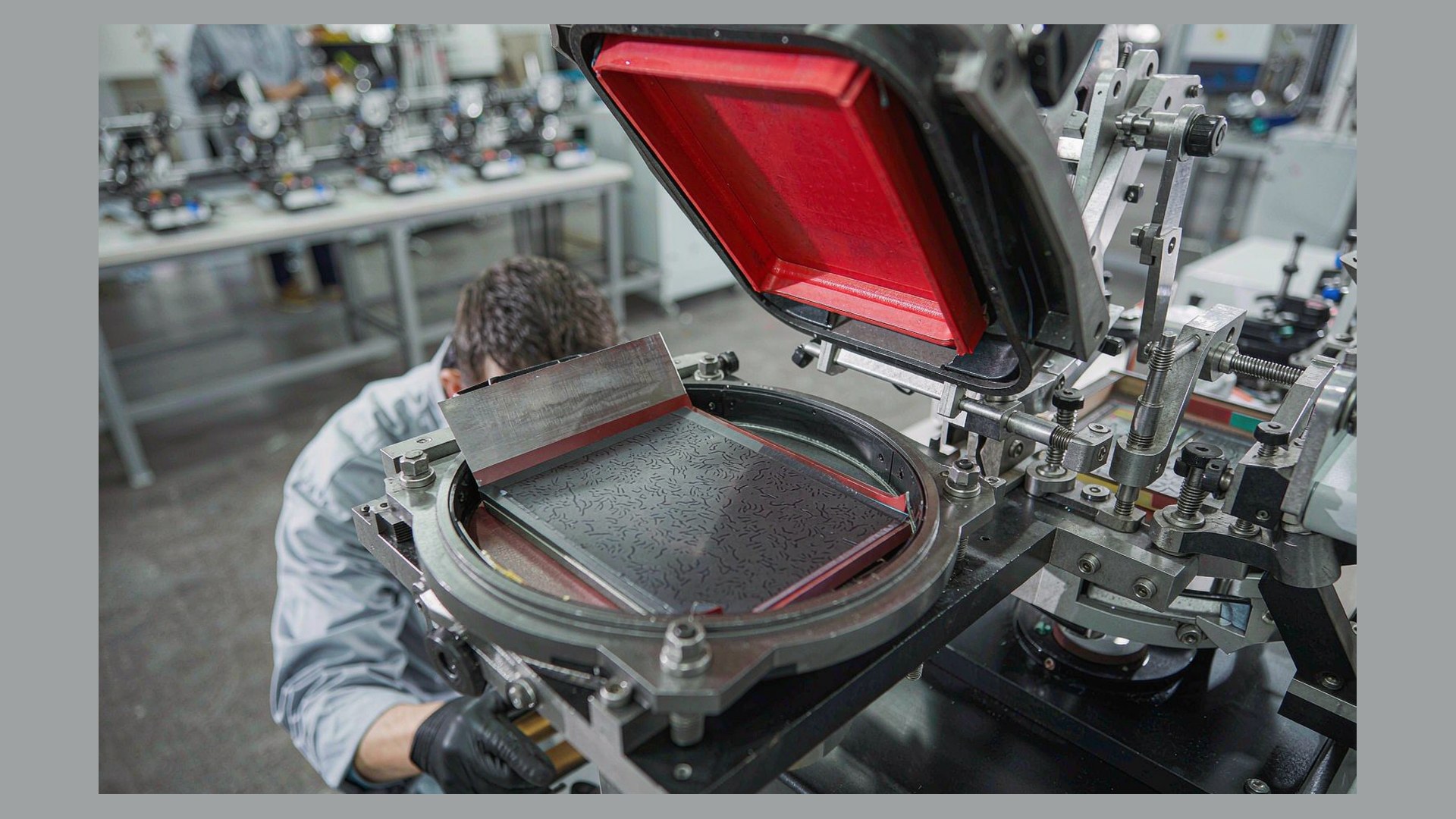
Choose a 90 mm pad printing ink cup when your image fits comfortably inside an 82 mm doctoring aperture and you want the smallest cup that will cover the artwork — and move to a 100 mm cup only when the artwork genuinely needs the extra width. In published standard size lists, the 90 mm cup is specified as 90 mm outer diameter, 82 mm inner diameter, 12 mm height, while the 100 mm cup is 100 mm outer diameter, 90 mm inner diameter, 12 mm height.
A larger ink cup is not automatically better. Going from 90 mm to 100 mm adds roughly 8 mm of usable doctoring width, but it also adds ink inventory, requires a longer machine stroke, and increases the cost of every ring and blade you replace for the rest of the machine’s life.
This guide is for buyers, maintenance engineers and purchasers specifying a closed (sealed) ink cup for a pad printing machine. It explains what the three published dimensions mean, what actually changes between the two sizes, which measurements to take before ordering, and the mistakes that lead to an ink cup that technically fits but performs badly.
What the Three Numbers on an Ink Cup Actually Mean
Ink cups are normally specified by three dimensions, and confusing the first two is the most common ordering error:
| Dimension | What it is | What it governs | What it does NOT govern |
|---|---|---|---|
| Outer diameter (OD) | The outside width of the cup body | Whether the cup physically fits the machine’s cup holder and stroke | How wide an image you can print — that is the inner diameter |
| Inner diameter (ID) | The doctoring aperture — the opening the ring sweeps | The maximum width of image the cup can flood and doctor | The physical footprint on the machine |
| Height | Depth of the cup body | Ink capacity and how much ink sits in the cup | Image width or print quality |
The practical consequence: two cups with the same outer diameter can have different inner diameters, and it is the inner diameter that decides whether your artwork fits. Always specify all three numbers when ordering, and match them to the ring you intend to run.
90 mm vs 100 mm Ink Cup: Side-by-Side
The figures below are the dimensions published in standard sealed ink cup size tables, where cup bodies are offered in plastic (PL) or aluminium (AL) with ceramic or carbide doctoring rings.
| Specification | 90 mm cup | 100 mm cup | What the difference means in practice |
|---|---|---|---|
| Outer diameter | 90 mm | 100 mm | The 100 mm cup needs more clearance in the cup holder and more machine travel |
| Inner diameter (doctoring aperture) | 82 mm | 90 mm | About 8 mm more usable image width |
| Height (standard listing) | 12 mm (also listed at 13 mm) | 12 mm | The 90 mm listing offers an extra height option for a little more ink capacity |
| Swept image area (calculated from the inner diameter) | ≈ 5,280 mm² | ≈ 6,360 mm² | Roughly 20% more flood area — relevant only if your artwork needs it |
| Blade and bevel options listed | SS / SD / DD | SS / SD | The 90 mm size lists a double-bevel double-blade option that the 100 mm listing does not |
| Ring material options | Ceramic or carbide | Ceramic or carbide | Material choice is independent of size |
| Cup body material options | Plastic or aluminium | Plastic or aluminium | Choose by ink compatibility and wear expectations |
The swept-area figures above are a simple geometric calculation from the published inner diameters (area = π × radius²), included to show the scale of the change rather than as a performance claim. Blade and bevel codes follow the usual convention: SS is single blade with single bevel, SD is single blade with double bevel, DS is double blade with single bevel, and DD is double blade with double bevel.
What Actually Changes When You Move from 90 mm to 100 mm
Coverage and artwork width
The doctoring aperture has to cover the whole image with margin to spare. If the image reaches the edge of the aperture, the ring seal runs over artwork and you get inconsistent flooding at the edges of the print.
As a working rule, the image should sit inside the inner diameter with clearance on all sides, because the ring needs a clean sealing path around it. If your largest current artwork plus its position tolerance already fits inside 82 mm with margin, a 100 mm cup buys you nothing today. If it does not, no amount of setup will make a 90 mm cup work reliably.
Ink volume and viscosity stability
A larger cup holds more ink. That cuts both ways. More ink in the cup means the ink is refreshed less often and the working viscosity tends to move more slowly during a shift, which is useful on long runs. It also means more ink is left over at a colour change, more solvent is consumed in cleaning, and more ink is at risk if a job is scrapped part-way through.
The right size is therefore the smallest cup that covers the artwork with margin, plus enough capacity that you are not topping up continuously. Oversizing purely to “have more ink” is one of the more expensive habits in a pad printing shop.
Machine stroke and compatibility
The cup travels across the cliché to flood and doctor it. A wider cup requires a longer stroke, and the machine must have the travel to carry it clear of the image at both ends of the cycle. On a machine specified around a smaller cup, fitting a larger one can leave the ring sitting on the plate at the extremes of travel, which shows up as wear on the plate and inconsistent doctoring.
Before changing size, confirm the machine’s usable stroke and the cup holder geometry. Ink cups are supplied to match various machine brands, so the holder interface matters as much as the diameter.
Ring, blade and running cost
The doctoring ring is the wear item, and its cost scales with size. Choosing a cup one size larger than necessary increases the price of every ring and blade replacement for the life of the machine, and — as the published listings show — can also narrow the range of blade and bevel options available in that size. If a specific bevel configuration matters for your doctoring, check that it is listed for the size you are buying.
How to Choose: A Practical Decision Table
| Your situation | Recommended direction | Why |
|---|---|---|
| Largest artwork fits inside 82 mm with clear margin | 90 mm cup | Smallest cup that covers the job — lower ring cost, less ink inventory, shorter stroke requirement |
| Largest artwork needs more than 82 mm of aperture | 100 mm cup | A 90 mm cup cannot flood and doctor an image wider than its aperture |
| You need the DD double-bevel option | 90 mm (as listed) | The published 90 mm listing includes DD; the 100 mm listing shows SS/SD |
| You want more ink capacity without more width | 90 mm at the taller listed height | Height adds capacity, not coverage — useful when width is already sufficient |
| Machine stroke is limited or the holder is compact | The smaller of the two that still covers the artwork | Stroke and holder geometry are hard limits that no setup adjustment fixes |
| Frequent colour changes, short runs | The smaller cup | Less residual ink to clean out and less ink written off per changeover |
| Long, uninterrupted runs of one colour | The larger cup, if the artwork needs it | More ink in the cup reduces how often you intervene |
| Standard sizes do not match your machine | Custom dimension | Published tables note that other dimensions can be customised |
Four Measurements to Take Before You Order
- The largest image you will print on this machine — width and height, not the average. Include any job you expect to add in the next year, because a cup is a long-lived purchase.
- Position tolerance of that image on the plate — if the artwork is placed off-centre, the effective aperture you need is larger than the image itself.
- The machine’s usable stroke and cup holder interface — confirm physically, or send the machine model to the supplier.
- The ring and bevel you intend to run — ceramic or carbide, and the blade/bevel configuration. Confirm the combination is listed for the size you are ordering.
Ring material is a separate decision from size, and it has its own trade-offs in wear life, plate compatibility and ink systems. If you have not settled it yet, the comparison of ceramic ring versus carbide ring for closed ink cup pad printers covers that choice in detail; the ring itself is available as a separate ceramic ring for pad printing ink cups.
Common Mistakes When Choosing an Ink Cup Size
- Ordering by outer diameter only. Two cups with the same outer diameter can have different apertures. The inner diameter is what governs your artwork.
- Buying larger “just in case”. You pay for it in every ring and blade replacement, in ink left over at changeover, and in stroke length you may not have.
- Ignoring the machine stroke. A cup that is too wide for the travel will ride onto the plate at the ends of the cycle and damage both the plate and the ring.
- Mismatching cup and ring. Cup, ring and magnet system are a set. Mixing parts across sizes or brands is a common source of leaking and streaking.
- Assuming blade and bevel options are identical across sizes. Published listings differ by size — verify the configuration you need is available in the diameter you are buying.
- Forgetting the plate. The plate has to be large enough for the cup to travel across it. A bigger cup may require a larger plate, which is a further cost.
What to Confirm with the Supplier Before Ordering
Ink cups are application-specific, and a short specification exchange prevents most returns. Send:
- Machine brand and model, or the cup holder interface if the machine is not a standard brand
- Required outer diameter, inner diameter and height — all three
- Largest image dimensions and the plate size you intend to run
- Ring material preference (ceramic or carbide) and blade/bevel configuration
- Cup body material preference (plastic or aluminium) and the ink system in use
- Whether the size you need is in the standard list or has to be customised
ENGY supplies sealed ink cups in a published range of standard sizes and states that other dimensions can be customised, with cup bodies in plastic or aluminium and ceramic or carbide rings. A commonly specified mid-range option is the closed ink cup for pad printer at 90-82-12 mm, and smaller work is often served by the 65-58-10 mm closed ink cup. Because ink cups are matched to different machine brands, sending your machine model is usually faster than measuring from scratch — send the details to the ENGY team if you are unsure which size your machine was built around.
FAQ: Choosing Between a 90 mm and 100 mm Ink Cup
What is the difference between a 90 mm and a 100 mm pad printing ink cup?
In published size lists, the 90 mm cup is 90 mm outer diameter with an 82 mm inner diameter, and the 100 mm cup is 100 mm outer with a 90 mm inner diameter — both commonly listed at 12 mm height. The practical difference is roughly 8 mm more doctoring aperture, which is what governs the widest image you can print.
Is a bigger ink cup better for pad printing?
Only if your artwork needs the extra aperture. A larger cup adds ink capacity and reduces how often you top up, but it costs more per ring and blade replacement, needs a longer machine stroke, and leaves more ink to clean out at a colour change. The usual rule is the smallest cup that covers the image with margin.
Which ink cup dimension determines the maximum print size?
The inner diameter. That is the doctoring aperture the ring sweeps, so the image has to fit inside it with clearance for the sealing path. The outer diameter governs whether the cup fits your machine, not how large you can print.
Can I fit a 100 mm ink cup on a machine supplied with a 90 mm cup?
Only if the machine has the stroke and the cup holder geometry to take it. A wider cup needs more travel to clear the plate at both ends of the cycle. Confirm the usable stroke and holder interface before changing size, or send the machine model to the supplier.
Do 90 mm and 100 mm ink cups use the same ring and blade?
No — the ring is sized to the cup. Order cup, ring and magnet system as a matched set. Published listings also show different blade and bevel configurations by size, so confirm the configuration you need is available for the diameter you are buying.
Does ink cup height affect print quality?
Height affects ink capacity, not coverage. A taller cup of the same diameter holds more ink, which can reduce how often you intervene on long runs, but it does not widen the image you can print. The 90 mm size is listed at both 12 mm and 13 mm height.
What happens if the artwork is wider than the ink cup aperture?
The ring cannot flood and doctor the full image, so part of it will not be inked consistently. The fix is a larger aperture or a smaller artwork — not a machine adjustment.
Can I get an ink cup size that is not in the standard list?
Yes. Published ranges note that other dimensions can be customised, and ink cups are supplied to match a variety of machine brands. Send the machine model and the three dimensions you need.
How do I stop an ink cup from leaking?
Leaking is usually a sealing problem rather than a size problem: a chipped or worn ring, a mismatched ring and cup, incorrect cup pressure, or a damaged sealing face. Size only matters if the cup is so large that it rides onto the plate at the ends of the stroke.
Conclusion
The choice between a 90 mm and a 100 mm ink cup is decided by one measurement: the widest image you must print, plus the margin the ring needs to seal around it. If it fits inside an 82 mm aperture, the 90 mm cup is the lower-cost, lower-risk answer. If it does not, the 100 mm cup is not an upgrade — it is the minimum.
Whatever you choose, specify all three dimensions, match the ring and blade to the cup, confirm the machine stroke, and check that the blade and bevel configuration you need is listed for that diameter. Those four checks prevent most of the leaking, streaking and premature ring wear that get blamed on the ink.
If you would like the right size confirmed for your machine, contact ENGY with your machine model, largest artwork dimensions and plate size, and we will match a cup, ring and blade configuration to your application.