If you search for replacement cutting parts for a plastic pelletizer, you will quickly encounter both pelletizer knives and pelletizer blades.
Are they two different products?
Usually, no.
In most pelletizing applications, “pelletizer knife” and “pelletizer blade” are overlapping terms for the cutting component used to separate plastic strands or molten polymer into pellets. There is no universal industry rule stating that a knife and a blade must have different constructions.
That does not mean every product carrying these names is interchangeable.
A straight strand-pelletizer knife, a rotor knife, a bed knife, an underwater pelletizer blade and a circular pelletizing blade can all appear under searches for “pelletizer blades,” yet their geometry and operating conditions are completely different.
For buyers, therefore, the terminology itself is less important than answering four questions:
- What pelletizing system is being used?
- What function does the cutting part perform?
- What are the exact blade dimensions and mounting features?
- What material and cutting-edge geometry does the application require?
If you are sourcing a rotating or customized cutting component, ENGY’s circular pelletizing blade for plastic pelletizer provides one example of how pelletizing knives can be specified according to blade design and customer drawings.
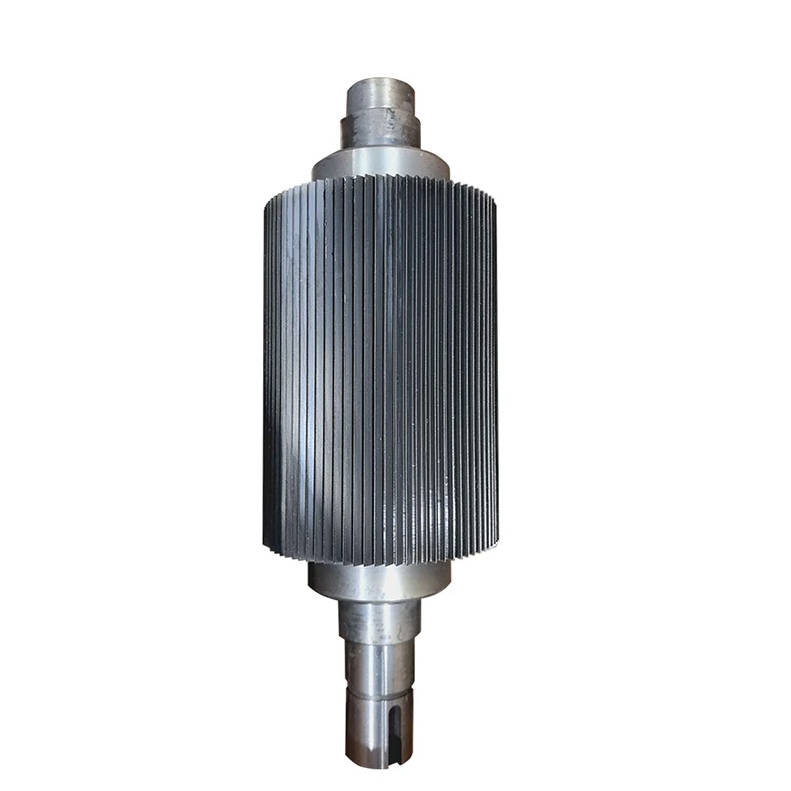
Knife or Blade? Why Both Terms Appear in the Same Industry
Industrial cutting terminology is rarely as standardized as buyers expect.
“Knife” tends to emphasize the component as a cutting tool. Terms such as:
- rotor knife
- bed knife
- pelletizer knife
- granulator knife
- die-face knife
are common in maintenance, machinery and replacement-parts discussions.
“Blade” often emphasizes the cutting element or its physical form. Buyers may therefore encounter:
- pelletizer blade
- circular blade
- cutter blade
- underwater pelletizer blade
- fan blade
- die-face cutter blade
But these naming patterns are conventions rather than rigid technical definitions.
The word used in a catalog does not determine whether a pelletizer cutting part will fit your machine. Machine type, geometry, dimensions and material specification do.
This distinction matters because searching only by terminology can lead buyers toward visually similar but mechanically incompatible parts.
A Better Way to Read Pelletizer Blade Terminology
Instead of asking whether the supplier calls the product a knife or blade, break the product description into three levels.
Level 1: What Pelletizing Process Is Used?
The first question is whether the equipment uses:
- strand pelletizing
- underwater pelletizing
- hot die-face pelletizing
- water-ring pelletizing
- another rotary cutting arrangement
The cutting conditions are very different.
A strand pelletizer normally cuts strands that have already passed through a cooling stage.
A die-face or underwater system cuts polymer much closer to the die as material exits the extrusion process.
The operating temperature, moisture exposure, cutting speed, wear mechanism and required knife geometry may therefore differ significantly.
Level 2: What Does the Knife Actually Do?
Determine whether the component is:
- the rotating cutting element
- a stationary bed knife
- a blade mounted on a cutter hub
- part of a circular cutting assembly
- a replaceable straight knife
- a custom-shaped cutting component
This immediately provides more useful information than the generic term “pelletizer blade.”
Level 3: What Is Its Physical Specification?
Finally, identify:
- length
- width
- thickness
- outside diameter, when applicable
- inside diameter or bore
- number and position of mounting holes
- cutting-edge angle
- number of cutting edges
- rotation direction
- material
- hardness requirement
- surface treatment
- dimensional tolerances
At this stage, the words “knife” and “blade” matter very little.
Pelletizer Knives vs Pelletizer Blades at a Glance
| Question | Pelletizer Knife | Pelletizer Blade |
| Is it a standardized technical category? | No | No |
| Can it describe a pelletizer cutting component? | Yes | Yes |
| Common in replacement-parts terminology? | Yes | Yes |
| Can it refer to straight cutting parts? | Yes | Yes |
| Can it refer to die-face cutting parts? | Yes | Yes |
| Can it refer to rotating components? | Yes | Yes |
| Does the name define the material? | No | No |
| Does the name define the dimensions? | No | No |
| Are products with these names automatically interchangeable? | No | No |
| What should buyers verify instead? | Machine, geometry, dimensions, material and mounting | Machine, geometry, dimensions, material and mounting |
The practical conclusion is simple:
Treat “pelletizer knives” and “pelletizer blades” as search terms first, not as sufficient engineering specifications.
The Names That Actually Matter When Buying a Replacement
Once the generic terminology is removed, several more specific blade categories become useful.
Rotor Knives
Rotor knives are associated with a rotating cutting assembly.
In strand pelletizing equipment, the rotor may contain multiple cutting edges that repeatedly shear polymer strands against another cutting component.
Important specifications may include:
- rotor configuration
- number of cutting edges
- blade position
- cutting width
- knife geometry
- rotor speed
- material being processed
A buyer requesting only “pelletizer knives” may therefore receive the wrong quotation unless the rotor type is also identified.
Bed Knives
A bed knife is normally the stationary counterpart to the rotating cutting component in certain strand pelletizer systems.
The interaction between the rotating knife and bed knife influences:
- cutting clearance
- pellet consistency
- strand feeding
- cutting load
- wear
- fines generation
The bed knife should not be confused with a rotating pelletizer blade even though both are part of the same cutting system.
Die-Face Cutter Blades
Die-face blades cut polymer directly near or against the die plate.
They may be used in:
- hot die-face pelletizing
- water-ring systems
- underwater pelletizers
These blades require careful matching with the cutter hub, die plate and operating environment.
Their working conditions can differ substantially from those of a dry strand cutter.
Underwater Pelletizer Blades
An underwater pelletizer cuts the polymer while the cutting assembly operates in water.
In addition to normal cutting wear, the component must function under continuous interaction between:
- polymer
- process water
- die plate
- blade edge
- cutter hub
- operating temperature
Material and surface condition therefore require application-specific consideration.
Circular Pelletizing Blades
Circular or rolling-style cutting components appear in applications where the cutting action and machine structure are based on a rotating circular or roller-type blade.
For buyers searching specifically for this geometry, using the term circular pelletizing blade is substantially more useful than sending a general inquiry for “pelletizer knives.”
ENGY offers a custom circular pelletizing blade with blade specifications that can be produced according to drawings, making dimensional information especially important at the quotation stage.
Why Two “Pelletizer Blades” May Not Be Interchangeable
Consider two spare parts listed online under exactly the same keyword:
Pelletizer Blade
One may be a flat rectangular knife with bolt holes.
The other may be a shaped rotating cutting component.
A third may be a small die-face blade installed on a cutter hub.
All three descriptions may be linguistically correct, yet none of the components can replace the others.
Compatibility depends on several groups of specifications.
Installation Geometry
Check:
- overall dimensions
- hole diameter
- mounting-hole centers
- bore dimensions
- slots
- keyways
- blade thickness
- locating surfaces
Even a small dimensional mismatch can prevent installation or change the position of the cutting edge.
Cutting Geometry
The cutting edge is not simply “sharp” or “not sharp.”
Important variables can include:
- bevel angle
- edge thickness
- single or double bevel
- straight or shaped edge
- blade curvature
- number of cutting edges
- cutting direction
Changing geometry can affect both cutting quality and mechanical durability.
Machine Interface
The replacement must match the machine’s:
- cutter shaft
- rotor
- blade holder
- cutter hub
- bed knife
- die plate
- clamping structure
This is why an equipment model or existing drawing is much more useful than a generic keyword.
Material Selection: Why the Steel Grade Matters
Pelletizer knives operate under repeated cutting and abrasion. The required blade material must balance several properties rather than maximizing hardness alone.
Typical considerations include:
Wear Resistance
Filled polymers, recycled feedstock and abrasive additives can accelerate cutting-edge wear.
Greater wear resistance can help maintain cutting geometry over longer operating periods.
Toughness
A very hard cutting edge with insufficient toughness can become vulnerable to chipping under shock load, contamination or unstable feeding.
Dimensional Stability
Heat treatment affects more than hardness.
Industrial knives need to maintain:
- flatness
- edge geometry
- mounting accuracy
- dimensional stability
through production and repeated operation.
Corrosion Resistance
Water-exposed or chemically demanding environments may place additional requirements on material selection.
ENGY’s current circular pelletizing blade specification lists SKD11 or Cr12MoV as available material options and notes that customized production according to drawings is available.
The correct grade should nevertheless be selected according to the actual machine and processed material rather than simply copying a material name from another pelletizer.
A higher-hardness blade is not automatically a better pelletizer blade; the useful combination is adequate wear resistance, edge retention and toughness for the actual cutting conditions.
What Information Should You Send Instead of Asking for “Pelletizer Blades”?
A procurement request such as:
Please quote pelletizer blades.
forces the supplier to ask several additional questions.
A technically useful RFQ looks more like this:
We need replacement cutting blades for our pelletizing machine. Please check the attached drawing and existing blade photos. The processed material is PP with filler, and the current blade material is marked as [grade]. Please confirm dimensional compatibility and recommended material.
The following information dramatically improves quotation accuracy.
| Information | Why the Supplier Needs It |
| Machine manufacturer | Helps identify the cutting system |
| Machine model | Narrows down possible blade designs |
| Pelletizing method | Defines operating conditions |
| Existing blade drawing | Provides the most reliable dimensions |
| Blade sample | Allows reverse checking when drawings are unavailable |
| Overall dimensions | Confirms basic compatibility |
| Mounting-hole dimensions | Determines installation fit |
| Cutting-edge profile | Helps reproduce cutting geometry |
| Current blade material | Provides a baseline for replacement |
| Plastic being processed | Helps evaluate wear conditions |
| Fillers/additives | Important for abrasive applications |
| Production problems | May reveal whether material or geometry needs review |
| Required quantity | Relevant to manufacturing and spare-parts planning |
Searching for the Right Product: Use More Than One Keyword
From an SEO perspective, buyers often begin with a broad term and gradually become more specific.
A typical search path may look like:
pelletizer knives
↓
plastic pelletizer blades
↓
pelletizer replacement blades
↓
circular pelletizing blade
↓
custom pelletizer blade drawing
This is also a useful procurement strategy.
If your first search produces the wrong blade style, add the machine or cutting system to the query.
For example:
- strand pelletizer knives
- underwater pelletizer blades
- die face pelletizer knife
- pelletizer rotor knife
- pelletizer bed knife
- circular plastic cutting blade
- custom pelletizing machine blade
These terms describe the product much more accurately than debating whether “knife” or “blade” is the technically correct word.
Four Mistakes Buyers Make Because of Terminology
Mistake 1: Assuming “Knife” Means Straight and “Blade” Means Circular
There is no universal rule supporting this distinction.
Both terms are used for different geometries across the industrial blade market.
Use dimensional drawings rather than terminology to identify shape.
Mistake 2: Ordering by Photograph Alone
A photograph can confirm general geometry but usually cannot communicate:
- exact thickness
- hole-center distance
- tolerance
- edge angle
- bore size
- material grade
Photos are useful, but drawings or physical samples are more reliable.
Mistake 3: Assuming the Same Machine Brand Always Uses the Same Blade
Machines can differ by:
- model
- generation
- cutter configuration
- production width
- customer modification
- retrofit history
The exact machine model and installed component should be verified.
Mistake 4: Copying the Previous Steel Grade Without Reviewing the Application
Like-for-like replacement is often appropriate, but it is still worth checking whether the processing conditions have changed.
For example:
- more abrasive fillers may have been introduced
- recycled material may contain more contaminants
- throughput may have increased
- the previous blade may suffer premature chipping
- the edge may wear too quickly
These symptoms can justify reviewing material or blade geometry rather than repeatedly purchasing the same specification.
When Is Custom Manufacturing Necessary?
Custom manufacturing is useful when:
- the machine uses a nonstandard cutter
- the original OEM part is difficult to source
- an older pelletizer has limited spare-parts availability
- dimensions have been modified
- a different material grade is required
- a special hole pattern is used
- the application requires a particular edge geometry
The safest basis for customization is usually one of the following:
- Original technical drawing
- Accurately measured sample
- Existing OEM reference plus verified dimensions
- 2D/3D drawing produced from the installed component
ENGY indicates that its pelletizing blade can be produced according to customer drawings. Buyers looking for replacement or application-specific cutting components can review the Circular Pelletizing Blade product page before preparing an RFQ.
A Better Replacement-Blade Decision Sequence
Rather than starting with material or price, use this order.
1. Identify the Cutting System
Determine whether the machine uses strand, die-face, underwater, circular or another pelletizing configuration.
2. Identify the Blade Function
Is it a rotor knife, stationary bed knife, hub-mounted blade or circular cutting component?
3. Lock Down Dimensions
Verify every dimension that controls fit and cutting position.
4. Confirm Edge Geometry
Compare bevel, profile, cutting direction and usable edge.
5. Review Material
Consider wear, toughness, processed polymer and additives.
6. Review the Existing Failure Pattern
If the previous knife failed prematurely, determine whether the problem was:
- wear
- chipping
- deformation
- mounting
- process conditions
- incorrect clearance
7. Then Compare Suppliers and Price
A lower-priced blade that does not match the cutting system is not a lower-cost replacement.
FAQ
Are pelletizer knives and pelletizer blades the same thing?
In many industrial catalogs, the terms overlap and may describe the same type of cutting component. There is no universal rule separating them. Buyers should identify the machine type, blade geometry and dimensions instead of relying on the wording alone.
What are pelletizer knives used for?
Pelletizer knives cut polymer strands or extruded material into pellets during plastic extrusion, compounding and recycling processes. Their exact cutting action depends on the type of pelletizing system.
What is the difference between a pelletizer blade and a bed knife?
A pelletizer blade may refer broadly to a cutting component. A bed knife specifically describes a stationary cutting member used against a moving or rotating cutter in certain pelletizing systems.
What is a pelletizer rotor knife?
A rotor knife is part of the rotating cutting assembly. In strand pelletizers, the rotating edges work with a stationary cutting component to chop cooled polymer strands into pellets.
Are underwater pelletizer blades different from strand pelletizer knives?
Yes in terms of application and operating conditions, even though both may be called pelletizer knives or blades. Underwater blades operate at or near the die face in water, while strand pelletizers typically cut cooled strands farther downstream.
How do I choose the correct replacement pelletizer blade?
Start with the machine model and existing blade design. Confirm dimensions, mounting arrangement, edge geometry, material, hardness requirements and processed plastic before ordering.
What material is used for pelletizer knives?
Tool steels, high-speed steels, stainless grades and other wear-resistant materials may be used depending on the pelletizer and processed material. Material should balance wear resistance, toughness and operating conditions.
Can pelletizer blades be custom-made from a drawing?
Yes. Industrial cutting blades are commonly manufactured according to customer drawings or verified samples when a standard replacement part is unavailable.
What information should I send when requesting custom pelletizer knives?
Send the machine model, pelletizing method, blade drawing, complete dimensions, mounting details, current material, processed polymer, additives and photographs of the existing component.
Why do pelletizer knives wear quickly?
Rapid wear can result from abrasive fillers, recycled contaminants, inappropriate steel selection, incorrect cutting clearance, unsuitable heat treatment, edge geometry or unstable operating conditions. The knife should be evaluated together with the cutting process.
Conclusion
So, what is the difference between pelletizer knives and pelletizer blades?
In many purchasing and manufacturing contexts, there is no meaningful difference in the words themselves. Both can describe cutting components used in pelletizing equipment.
The important distinction is between the actual blade designs.
A rotor knife is not the same as a bed knife. A strand pelletizer knife is not automatically interchangeable with an underwater die-face blade. A circular pelletizing blade requires a different dimensional specification from a conventional straight cutting knife.
When sourcing pelletizer knives, identify the cutting system first and the terminology second.
For a replacement order, provide:
- machine model
- blade drawing
- complete dimensions
- mounting configuration
- edge geometry
- material specification
- processed polymer
- existing blade sample or photographs
For customized industrial cutting requirements, you can review ENGY’s pelletizing blade solutions and submit the existing blade drawing or dimensional information for compatibility evaluation.