I. Introduction: The Printing Dilemma in Modern Manufacturing
In the high-stakes world of industrial manufacturing, choosing a decoration or marking method isn’t just about aesthetics—it is a critical financial decision. If you are reading this, you are likely at a crossroads: Should you invest in the proven reliability of a Pad Printing machine, or is the digital allure of Inkjet Printing the future for your specific product line?
At first glance, inkjet technology seems like the “modern” winner. However, veteran factory managers know that “new” does not always mean “more profitable.” To determine which technology is truly more cost-effective, we must look beyond the initial price tag and evaluate the Total Cost of Ownership (TCO). Pad printing remains the most cost-effective solution for high-volume production and complex 3D geometries, whereas inkjet printing offers superior value for short-run customization on flat surfaces where plate-making costs would be prohibitive.
In this guide, we will share the technical insights and “hidden” cost factors we’ve gathered from a decade of helping manufacturers optimize their production lines. Our goal is simple: to help you make an investment that maximizes your ROI and minimizes your operational headaches.
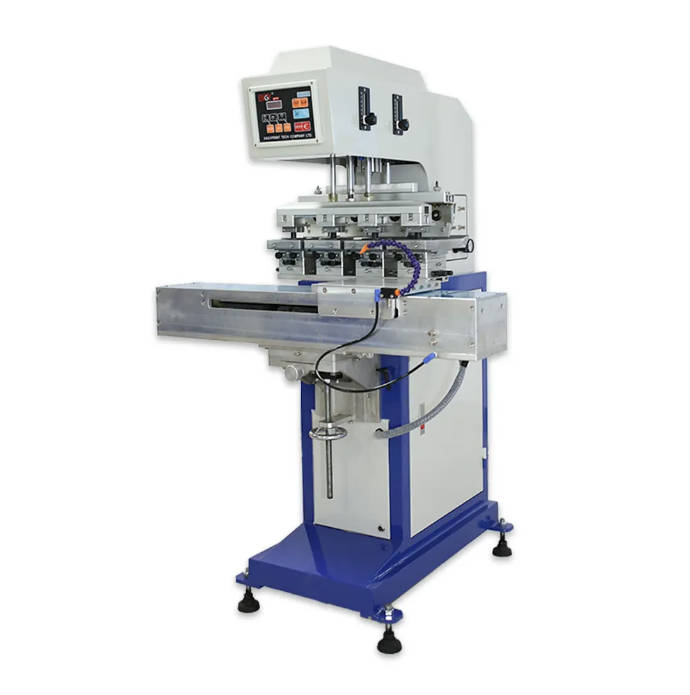
II. The Mechanics of Value: Understanding the Technology
Before we dive into the spreadsheets, let’s briefly look at the “how.” Understanding the mechanical nature of these two processes explains why their cost structures differ so drastically.
1. Pad Printing: The Analog Precision
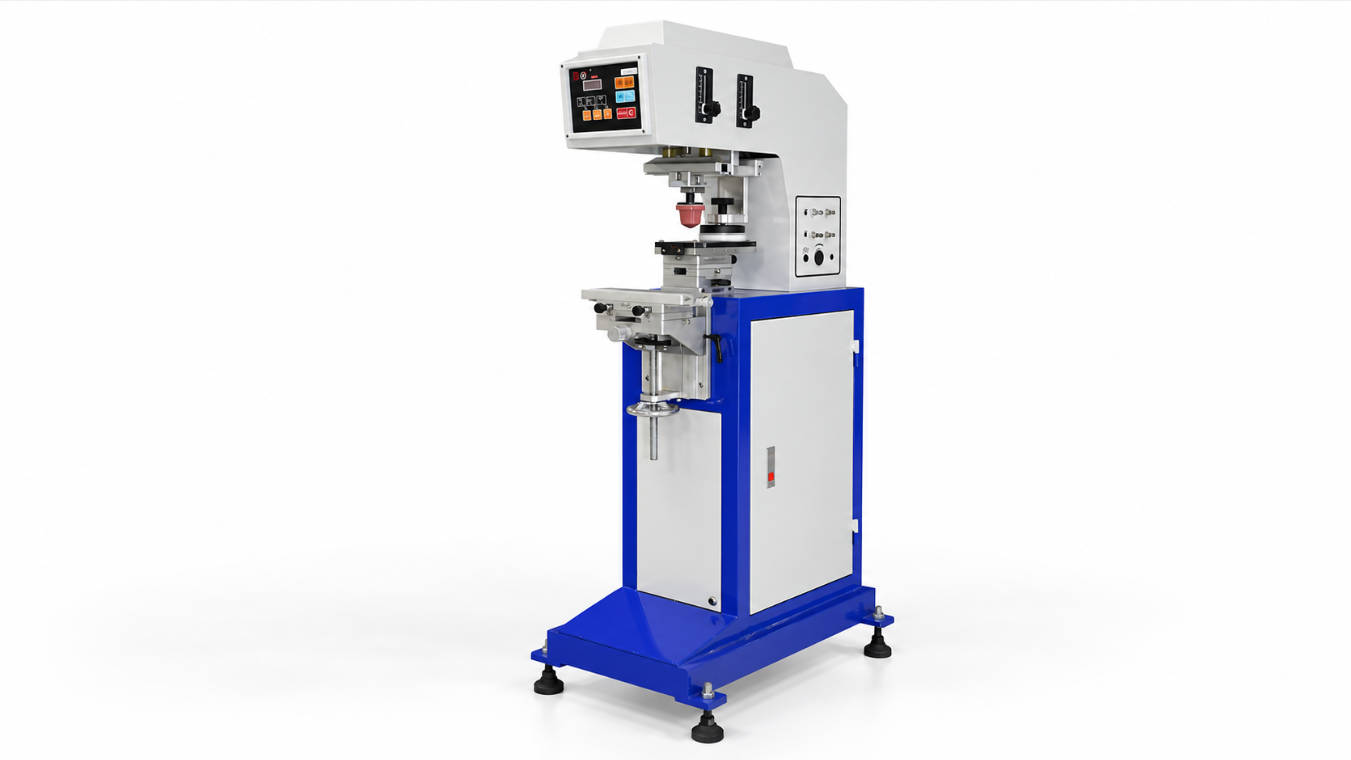
Pad printing (also called tampography) is an indirect offset printing process. An image is etched into a flat plate (cliché), which is then filled with ink. A soft silicone pad presses onto the plate, picks up the ink, and transfers it onto the substrate.
The magic of pad printing lies in the silicone pad’s ability to wrap around complex shapes. Whether you are printing on a golf ball, a curved medical housing, or a textured automotive button, the pad conforms to the surface without distorting the image.
2. Inkjet (Digital) Printing: The Contactless Flow
Industrial inkjet printing is a digital process. It uses printheads to spray tiny droplets of ink directly onto a product. There are no plates or pads involved. Most industrial systems use UV-curable inks that dry instantly under high-intensity light.
While inkjet is revolutionary for its ability to change artwork with a single click, it is a “line-of-sight” technology. If the surface is too curved or recessed, the ink droplets lose focus, leading to blurry edges or “overspray.”
III. Upfront Investment: Capital Expenditure (CAPEX)
When you look at the initial purchase price, the gap between these two technologies is often significant.
1. Machine Costs
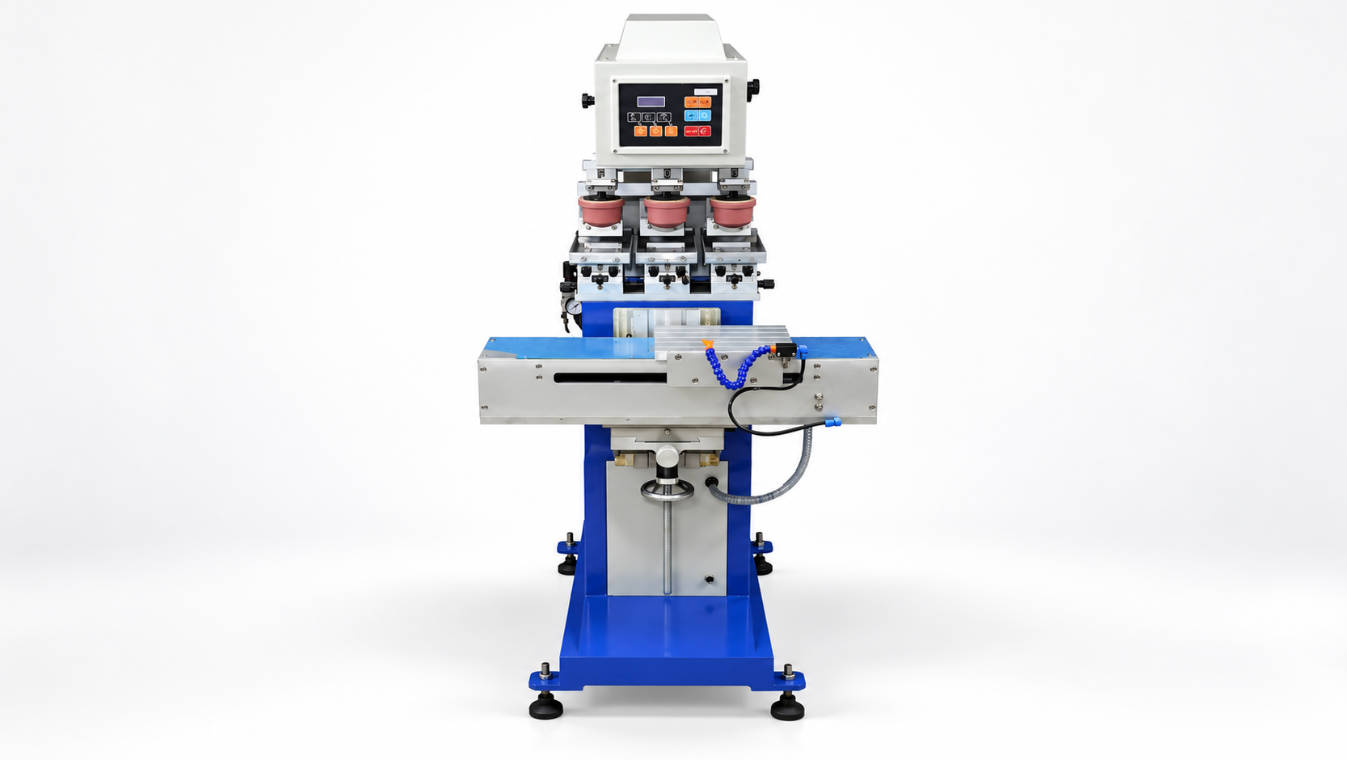
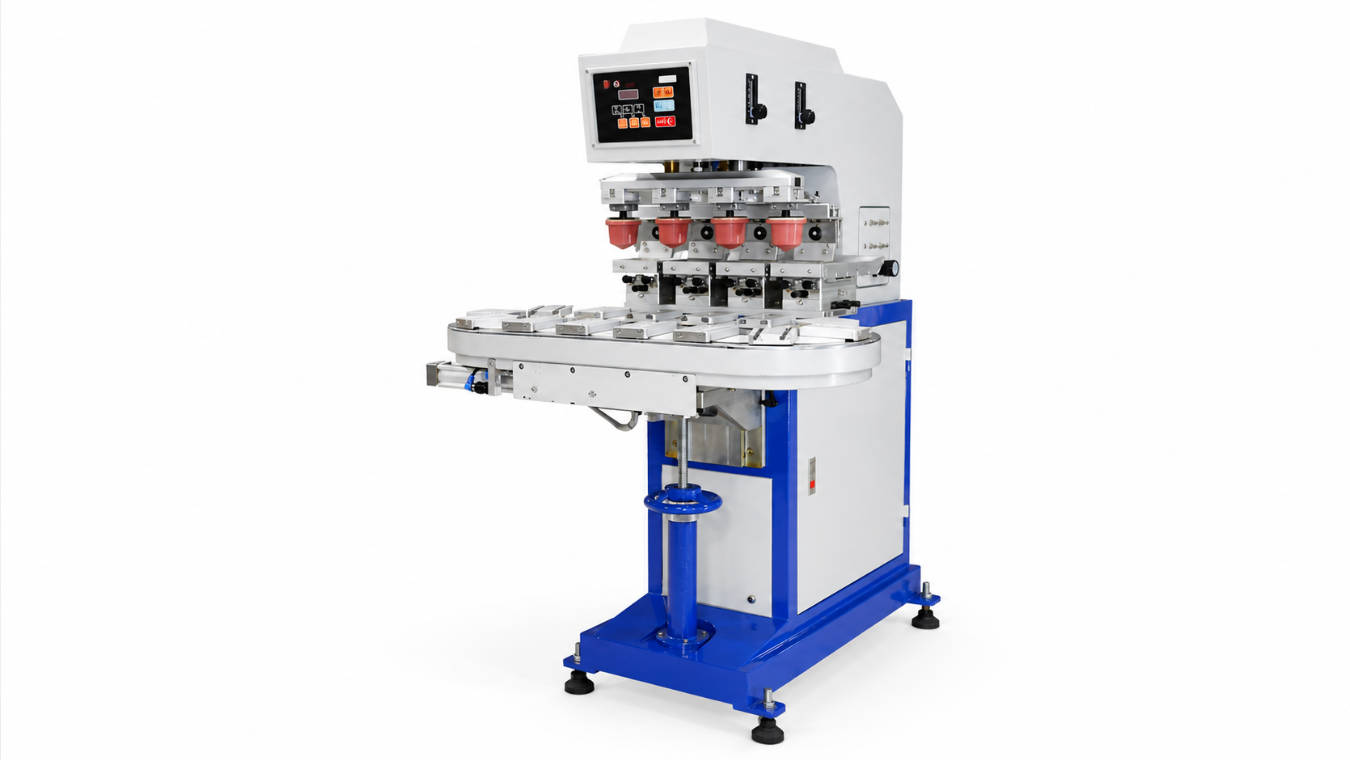
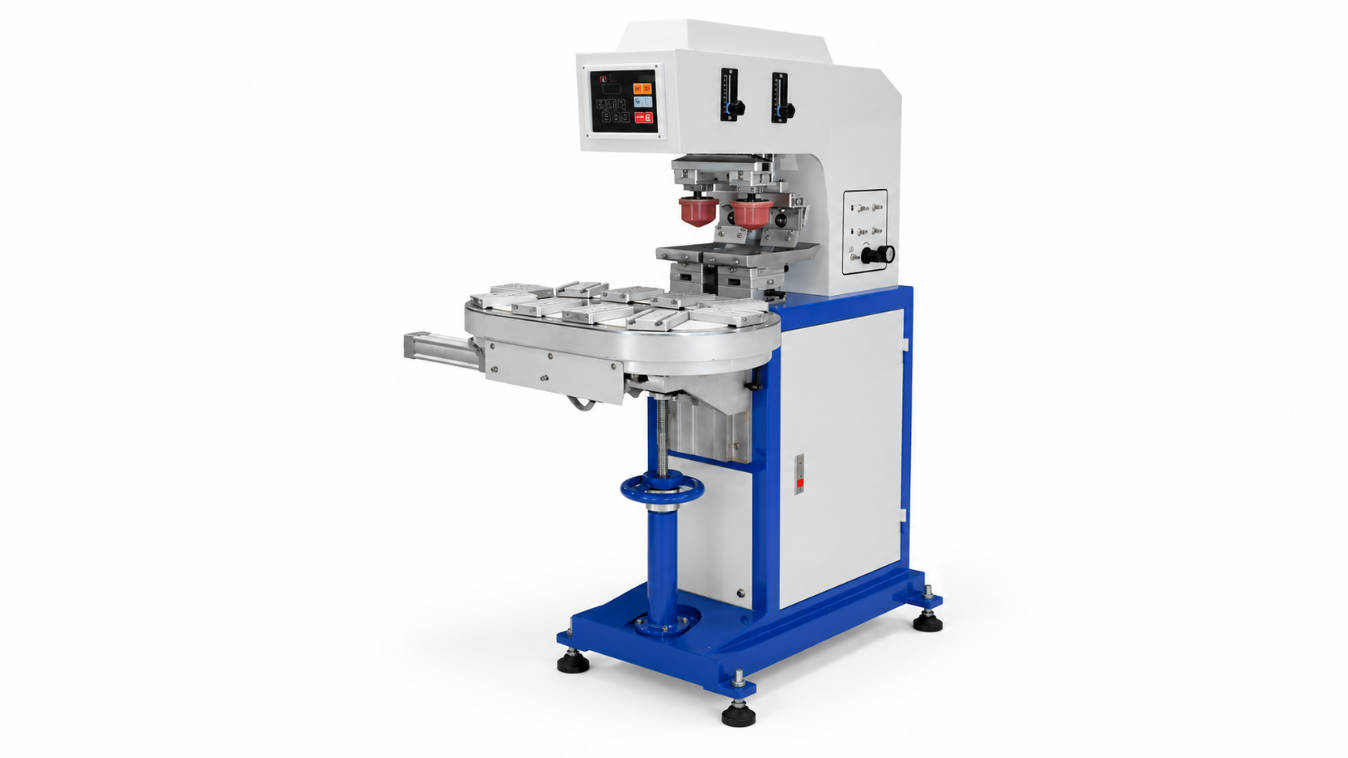
A high-quality, industrial-grade Pad Printing machine is generally a more affordable initial investment. Because the technology is mechanical and robust, entry-level single-color machines are highly accessible. Even advanced multi-color systems with linear conveyors or rotary tables often cost less than a high-resolution UV inkjet system.
In contrast, Inkjet systems involve expensive components: high-precision printheads, sophisticated software, and UV LED curing systems. The cost of a “cheap” inkjet printer is often offset by high maintenance needs later, while industrial-grade digital systems require a heavy upfront budget.
2. Facility and Auxiliary Equipment
- For Pad Printing: You will need a plate-making setup (exposure unit) and perhaps a basic ink-mixing station.
- For Inkjet: You need a climate-controlled environment. Dust and temperature fluctuations are the enemies of printheads. You also need dedicated RIP (Raster Image Processor) software.
IV. Operating Costs: The “Real” Cost Per Print
This is where the financial battle is won or lost. Let’s break down the variable expenses (OPEX).
1. Ink Consumption and Pricing
One of the biggest cost-saving secrets in the industry is the price of ink. Pad printing utilizes traditional solvent-based or epoxy inks. These inks are widely available, can be mixed in-house to match any Pantone color, and typically cost between $50 and $120 per kilogram.
Digital inkjet inks are proprietary. You are often “locked-in” to the manufacturer’s ink, which can cost $300 to $600 per liter. Furthermore, inkjet systems “waste” ink during head cleaning and priming cycles, whereas pad printing ink stays in the “ink cup” with minimal waste.
2. Consumables: Plates vs. Printheads
- The Pad Printing Advantage: A steel cliché (plate) can last for over 1,000,000 cycles. A high-quality silicone pad can last for 50,000 to 100,000 impressions. These are low-cost items that are easy to stock.
- The Inkjet Risk: The primary consumable in digital printing is the printhead. A single printhead can cost between $2,000 and $5,000. If a nozzle gets permanently clogged due to poor maintenance or a stray particle, the entire head must be replaced, instantly erasing your month’s profit margin.
3. Energy and Curing
Pad printing often relies on air-drying or simple infrared tunnels. UV Inkjet requires high-powered UV lamps that consume significantly more electricity and generate heat that may require additional cooling.
V. The Complexity Factor: Shape and Substrate
Cost-effectiveness isn’t just about ink and electricity; it’s about Yield (the percentage of good parts).
Why Pad Printing Wins on 3D Geometry
If your product has a curve—like a syringe, a bottle cap, or an electronic toy—pad printing is almost always more cost-effective. Because the silicone pad is flexible, it maintains consistent pressure and ink transfer across 3D surfaces, ensuring a nearly 0% reject rate due to surface geometry.
To achieve similar results with inkjet on curved surfaces, you would need expensive 4-axis or 5-axis robotic arms to rotate the part under the printhead, keeping it within the “throw distance” (usually 1-2mm). This adds massive complexity and cost to your automation.
Material Compatibility
Adhesion is the foundation of quality. Pad printing inks are highly versatile; by changing the hardener or the ink series, you can print on “difficult” materials like treated PP, glass, or stainless steel with extreme durability. Digital inks, while improving, often require expensive pre-treatment (flame or plasma) or specific primers to stick to non-porous surfaces, adding another step to your production cost.
VI. The “Sweet Spot”: Production Volume and Speed Analysis
One of the most frequent questions we receive from manufacturers is: “At what point does the cost of plates make pad printing more expensive than digital?” The answer lies in the Break-Even Analysis.
1. Setup Time vs. Run Speed
Digital inkjet printing is the clear winner for “Short-Run” efficiency. Because there are no plates to etch or inks to mix (if using CMYK), you can go from an image file to a printed part in minutes. However, the actual printing speed per part is relatively slow compared to a high-speed mechanical cycle.
Pad printing is engineered for mass production. While it may take 30–60 minutes to prepare a cliché and dial in the pad’s compression, once the machine is running, it can easily achieve speeds of 1,000 to 3,000 cycles per hour. In a high-volume environment, the “per-part” labor cost of setup quickly approaches zero.
2. The Cost-Efficiency Threshold
For production runs exceeding 500 to 1,000 pieces of the same design, pad printing is significantly more cost-effective than inkjet due to lower ink costs and higher throughput speeds. If your business model relies on “Mass Customization” (e.g., printing 10 different names on 10 different pens), Inkjet is your best bet. If you are printing the same corporate logo on 50,000 units, pad printing is the undisputed financial champion.
VII. Comparative Cost Matrix (ROI Data)
To help your procurement team visualize the difference, we have compiled this estimated cost comparison based on standard industrial performance data.
| Feature | Pad Printing Machine | Industrial UV Inkjet |
| Initial Purchase Price | $1,000 – $10,000 (Standard) | $25,000 – $150,000+ |
| Ink Cost per Liter | $50 – $120 | $300 – $600 |
| Consumable Life | Plates (1M+), Pads (50k+) | Printheads (Variable/Fragile) |
| Maintenance Complexity | Low (Mechanical cleaning) | High (Software/Nozzle care) |
| Setup Time | 20 – 45 Minutes | 5 Minutes |
| Max Production Speed | High (Up to 3,000 pph) | Moderate (Varies by resolution) |
| Geometry Versatility | Exceptional (3D/Curved) | Limited (Mostly flat/small taper) |
VIII. Reliability and Long-Term Maintenance
In a 24/7 manufacturing environment, Reliability = Profit.
1. The Durability of Mechanics
A Pad Printing machine is essentially a high-precision mechanical press. With basic lubrication and regular cleaning of the ink cup, these machines can run for decades. Most maintenance can be performed by your existing floor technicians.
2. The Fragility of Digital
Inkjet printers are sophisticated electronic devices. The printheads are extremely sensitive to dust, static, and ink viscosity. The most significant hidden cost of inkjet printing is downtime caused by clogged nozzles or software errors. If an inkjet printer sits idle for too long, the ink can cure inside the heads, leading to a repair bill that could easily cost 20% of the machine’s original value.
IX. Expert Insight: Addressing Your Common Doubts
As you consider your purchase, you might be struggling with these common industry myths:
- “Is Pad Printing becoming obsolete?” Absolutely not. As long as products have curves, textures, and require high-durability markings (like medical scales or car dashboards), pad printing will remain the industry standard.
- “Is Digital always better for multi-color?” Not necessarily. Modern 4-color or 6-color pad printing machines with independent pads can achieve incredibly tight registration at a fraction of the operating cost of a digital printer.
- “What about environmental impact?” While solvent-based inks require ventilation, many modern pad printing inks are now available in low-VOC or “Eco-friendly” formulations that meet strict REACH and RoHS standards.
X. Conclusion: Making the Right Investment
Ultimately, the choice between Pad Printing and Inkjet is not about which technology is “better,” but which one fits your Product, Volume, and Budget.
If you are decorating 3D objects, require high-speed output for mass production, or need the lowest possible cost-per-print, a Pad Printing machine is the superior investment. It offers a level of mechanical reliability and material versatility that digital technology has yet to match at a comparable price point.
FAQ: Quick Review for Decision Makers
1. Is pad printing cheaper than inkjet for small batches?
Usually, no. For batches under 100 pieces, inkjet is more cost-effective because you avoid the cost and time of making printing plates (clichés).
2. Which method provides more durable prints?
Pad printing generally offers superior durability because the ink can be chemically “tuned” with hardeners to bond with specific substrates like metals, glass, and difficult plastics.
3. Can inkjet print on curved surfaces?
Only to a limited degree. Digital printing requires the surface to be relatively flat or have a very slight taper. For complex 3D shapes or deep recesses, pad printing is the only viable option.
4. What is the biggest “hidden cost” of inkjet?
The replacement of printheads. Unlike pad printing consumables (pads/plates) which are inexpensive, a damaged inkjet printhead can cost thousands of dollars.
5. How long does a pad printing plate last?
High-quality hardened steel plates can last for over 1,000,000 impressions, making them incredibly cost-effective for long-term production.