A logo looks perfect when a cup, bottle, or container leaves the printing line. Then, after repeated washing, the edges start fading. A few more dishwasher cycles later, part of the design begins to peel.
Does that mean pad printing is not dishwasher safe?
Not necessarily.
Pad printing can achieve strong wash and dishwasher resistance when the ink, substrate, surface preparation, and curing process are correctly matched. However, pad printing is not automatically dishwasher safe simply because the image was applied with a pad printer.
Glass, ceramic, metal, and plastic all interact with printing ink differently. Dishwasher conditions add another layer of stress through hot water, detergents, repeated temperature changes, water pressure, and mechanical abrasion.
For manufacturers, the correct question is therefore not simply:
“Is pad printing dishwasher safe?”
It is:
“What printing system is required for this product to survive the washing conditions it will actually experience?”
That distinction matters when decorating drinking glasses, coffee cups, cosmetic bottles, reusable containers, kitchenware, and other products that may be washed repeatedly.
What Does “Dishwasher Safe” Actually Mean for a Printed Logo?
“Dishwasher safe” sounds like a simple yes-or-no specification.
From a manufacturing perspective, it is not.
A domestic dishwasher and a commercial glass washer may expose a printed product to very different conditions.
Important variables include:
- water temperature;
- washing time;
- detergent chemistry;
- detergent concentration;
- rinse temperature;
- number of wash cycles;
- water pressure;
- mechanical contact with other items;
- drying conditions.
A logo that survives ten gentle home washing cycles has not necessarily demonstrated the same durability as one intended for daily restaurant use.
That is why manufacturers should define wash resistance as a test condition, not just a marketing phrase.
For example, instead of asking for “dishwasher-safe printing,” an OEM project should ideally specify:
- substrate;
- detergent;
- wash temperature;
- cycle duration;
- required number of cycles;
- acceptable change after testing.
Dishwasher resistance should be validated against a defined washing condition rather than assumed from the printing method alone.
Why Do Printed Logos Come Off in the Dishwasher?
A dishwasher attacks the print in several ways at the same time.
That is what makes wash resistance more demanding than a simple dry scratch test.
Heat
Hot water affects both the substrate and the printed ink film.
Repeated heating and cooling can place stress on the interface between them.
Water
Water can penetrate weak interfaces over time.
If adhesion between the ink and product surface is already poor, repeated washing can accelerate lifting or peeling.
Detergent
Dishwasher detergents are designed to remove grease and residues.
That chemistry may also challenge an ink film that is insufficiently resistant.
Mechanical Force
Water jets, racks, neighboring products, and handling all introduce physical stress.
Repetition
One wash may not reveal a problem.
Repeated cycles can expose gradual degradation that was invisible during the first test.
This is why an ink that passes a quick tape test can still perform poorly after prolonged washing.
The Substrate Changes the Answer
The durability of pad printing starts with the material being printed.
A glass tumbler, ceramic mug, stainless-steel container, and polypropylene bottle do not require identical processes.
Pad Printing on Glass
Glass presents a distinctive printing challenge because its surface is:
- smooth;
- nonporous;
- chemically different from plastic;
- easily contaminated by oils and fingerprints.
The ink cannot simply soak into the material.
It must establish a strong bond at the surface.
For this reason, glass printing often requires careful attention to:
- cleaning;
- compatible ink chemistry;
- hardener or catalyst when required;
- curing conditions;
- post-print durability testing.
Fingerprints that appear insignificant can matter.
A glass product handled before printing can carry skin oils that interfere with adhesion.
The same problem can occur with:
- dust;
- polishing residue;
- processing contamination;
- packaging residue.
For glass products that will be washed repeatedly, surface preparation should be controlled before printing rather than treated as an optional cosmetic step.
Pad Printing on Ceramic
Ceramic products include several different surface conditions.
The actual printing surface may be:
- glazed;
- coated;
- polished;
- textured.
This means “ceramic” by itself is not enough information to select an ink.
A printed coffee mug and an unfinished ceramic component may require very different processes.
ENGY’s pad printing application examples include both glass cup and ceramic cup printing, illustrating how pad printing can be configured for these curved products.
When dishwasher resistance matters, the complete surface and curing system should be validated using the real ceramic product.
Pad Printing on Metal Drinkware
Metal containers introduce another set of variables.
The apparent surface may actually be:
- bare metal;
- painted metal;
- powder-coated metal;
- lacquered metal;
- plated metal.
The ink is therefore often bonding to the coating rather than directly to the underlying metal.
Before mass production, manufacturers should identify exactly what surface is being printed.
Two visually similar stainless-steel bottles can perform differently if one has a coating and the other does not.
Pad Printing on Plastic Bottles and Containers
Plastic introduces even more material variation.
A bottle or reusable container may use:
- PP;
- PE;
- ABS;
- PC;
- PET;
- another polymer.
Low-surface-energy plastics such as PP and PE can require special attention to ink selection and surface treatment.
The fact that a plastic product itself is dishwasher safe does not automatically mean the printed decoration is dishwasher safe.
The substrate and printed ink film must both tolerate the washing environment.
Ink Chemistry: The First Major Durability Decision
A pad printing machine transfers the image.
The ink determines much of what happens afterward.
Different pad printing inks are formulated for different:
- plastics;
- glass;
- metals;
- ceramic surfaces;
- coatings;
- durability requirements.
An ink designed for a promotional plastic component should not automatically be assumed suitable for repeatedly washed glassware.
This is one reason industrial printing projects should begin with the product material and performance requirement rather than just the artwork.
One-Component vs Two-Component Ink
One of the important distinctions in industrial pad printing is between one-component and two-component ink systems.
One-Component Ink
A one-component system can offer simpler preparation and production control.
Depending on the formulation, it may work well for compatible plastic substrates and general product decoration.
However, demanding chemical and wash resistance may require another ink system.
Two-Component Ink
A two-component ink typically combines the ink with a hardener or catalyst.
The curing reaction can create a more chemically resistant film when the ink system is properly matched to the substrate.
These systems are often considered for demanding applications involving:
- glass;
- metal;
- ceramic surfaces;
- industrial components;
- repeated washing;
- chemical exposure.
But the presence of a hardener does not automatically guarantee dishwasher resistance.
Correct:
- mixing ratio;
- pot life;
- thinner;
- curing;
- substrate preparation
still matter.
A high-performance ink mixed or cured incorrectly can perform worse than a simpler ink used correctly.
Why Curing Matters So Much
This is one of the most important parts of the entire dishwasher-resistance question.
A freshly printed image may feel dry within a relatively short period.
That does not mean it has reached its final resistance.
Depending on the ink chemistry, full cure can involve:
- solvent evaporation;
- chemical crosslinking;
- heat;
- UV exposure;
- time.
Some glass-printing ink systems specifically require post-print heating to develop high wash resistance. Technical ink guidance also shows that high dishwasher resistance can depend on a controlled bake after printing rather than air drying alone.
For manufacturers, this means drying and curing are not the same thing.
Dry
The surface can be handled without obvious smearing.
Fully Cured
The ink film has developed the intended mechanical and chemical properties.
Testing a print before it has fully cured can produce a misleading conclusion about its dishwasher resistance.
The production schedule therefore needs to include curing as part of the manufacturing process.
Why a Logo Can Survive Water but Fail in a Dishwasher
This is an important distinction.
A printed bottle may survive:
- rinsing under a tap;
- soaking in room-temperature water;
- normal hand washing
but still fail in a dishwasher.
Why?
Because water resistance and dishwasher resistance are not identical.
A dishwasher introduces a combination of:
heat + detergent + water + pressure + time + repeated cycling
The ink/substrate bond must tolerate all of them.
This is why simply immersing a sample in water does not prove dishwasher performance.
Hand Wash Safe vs Dishwasher Safe
Manufacturers should also avoid treating these terms as interchangeable.
A decoration may be perfectly acceptable when gently hand washed with mild detergent.
That same product may show accelerated wear when exposed to:
- stronger alkaline detergent;
- hotter water;
- longer cycles;
- mechanical contact.
If the end customer requires machine washing, test machine washing.
If the product will only be wiped or hand washed, the required process may be different.
Five Factors That Determine Whether a Pad-Printed Logo Survives Washing
1. Ink-to-Substrate Compatibility
This is the foundation.
If the ink does not bond correctly to the product, no amount of machine adjustment will create true long-term wash resistance.
2. Surface Preparation
The surface must be free from contamination.
Depending on the substrate, the process may include:
- cleaning;
- degreasing;
- surface activation;
- primer;
- another application-specific pretreatment.
3. Correct Ink Preparation
For two-component systems, control:
- ink-to-hardener ratio;
- thinner level;
- working time;
- temperature.
4. Complete Curing
Allow the ink to reach its intended final properties before evaluating durability.
5. Realistic Testing
Test the same conditions the finished product will encounter.
These five variables usually matter more than simply increasing print thickness.
Does Printing More Ink Make the Logo More Dishwasher Resistant?
Not necessarily.
A common reaction to durability problems is to increase the amount of ink transferred.
That may involve:
- deeper cliché engraving;
- repeated printing;
- changing viscosity.
But a thicker ink layer cannot correct poor chemical adhesion.
If the ink is incompatible with the glass or plastic, transferring more of the same ink does not solve the underlying problem.
Excessive film thickness may also create:
- slower curing;
- blurred edges;
- poor fine detail;
- uneven drying.
The goal should be the correct ink film, not simply the thickest possible ink film.
Does More Pad Pressure Improve Wash Resistance?
Again, not directly.
Pad pressure helps produce complete image transfer.
Too little pressure may create incomplete printing.
But excessive pressure does not chemically force ink to bond to the substrate.
Too much pressure can instead create:
- image distortion;
- blurred edges;
- accelerated pad wear;
- unstable transfer.
The correct machine settings support consistent transfer.
The ink and surface chemistry create adhesion.
Dishwasher-Safe Printing Troubleshooting Table
| Failure After Washing | Possible Cause | What to Check |
|---|---|---|
| Entire logo peels | Poor adhesion | Ink/substrate compatibility |
| Logo scratches off easily | Weak cure or adhesion | Cure and surface preparation |
| Edges begin lifting | Water/detergent attack | Surface cleanliness and ink chemistry |
| Color gradually fades | Abrasion or chemical exposure | Ink resistance and wash conditions |
| Print survives hand washing but not dishwasher | Test environment too aggressive | Heat, detergent and cycle conditions |
| Some parts fail, others pass | Process inconsistency | Cleaning, mixing and curing control |
| Print fails after only a few cycles | Fundamental adhesion issue | Substrate, ink and pretreatment |
| Multi-color image fails between layers | Intercoat/process issue | Drying and curing sequence |
How Should Manufacturers Test Dishwasher Resistance?
Do not simply put one sample in the office dishwasher and call the project approved.
A repeatable validation plan is more useful.
Step 1: Define the Product Requirement
Ask:
- Home dishwasher or commercial washer?
- How many cycles?
- What temperature?
- What detergent?
- What level of visible change is acceptable?
Step 2: Produce Controlled Samples
Use the same:
- material;
- ink;
- hardener;
- cleaning process;
- machine settings;
- cure
planned for production.
Step 3: Allow the Ink to Cure Fully
Do not begin the final test too early.
Step 4: Record the Starting Condition
Photograph or document:
- color;
- edges;
- gloss;
- adhesion.
Step 5: Run Repeated Wash Cycles
Inspect samples at predefined intervals.
For example, the manufacturer may establish inspection checkpoints based on its customer’s specification.
Step 6: Check More Than Appearance
Look for:
- fading;
- cracking;
- peeling;
- edge lift;
- loss of adhesion;
- surface softening.
The appropriate number of cycles should come from the real customer or product requirement rather than an arbitrary universal number.
There is no meaningful universal dishwasher-cycle claim unless the test conditions are defined.
What Products Commonly Need Wash-Resistant Printing?
This requirement appears in many industries.
Drinking Glasses
Brand logos, promotional graphics, measurement marks, and decorative designs.
Coffee Cups and Ceramic Mugs
Repeated domestic or commercial washing makes durability important.
Reusable Bottles
Sports bottles and reusable containers can face frequent washing and handling.
Cosmetic Bottles
Cosmetic packaging may face both moisture and chemical exposure from the product itself.
ENGY has dedicated pad printing applications for cosmetic containers covering plastic, glass, acrylic, and metal-related product printing.
Laboratory and Medical Containers
Some applications require repeated cleaning or chemical resistance.
Kitchenware
Handles, containers, utensils, and other components may encounter water, detergents, and abrasion.
Why Pad Printing Is Useful for Cups and Bottles
Drinkware and bottles are rarely perfectly flat.
That makes product geometry important.
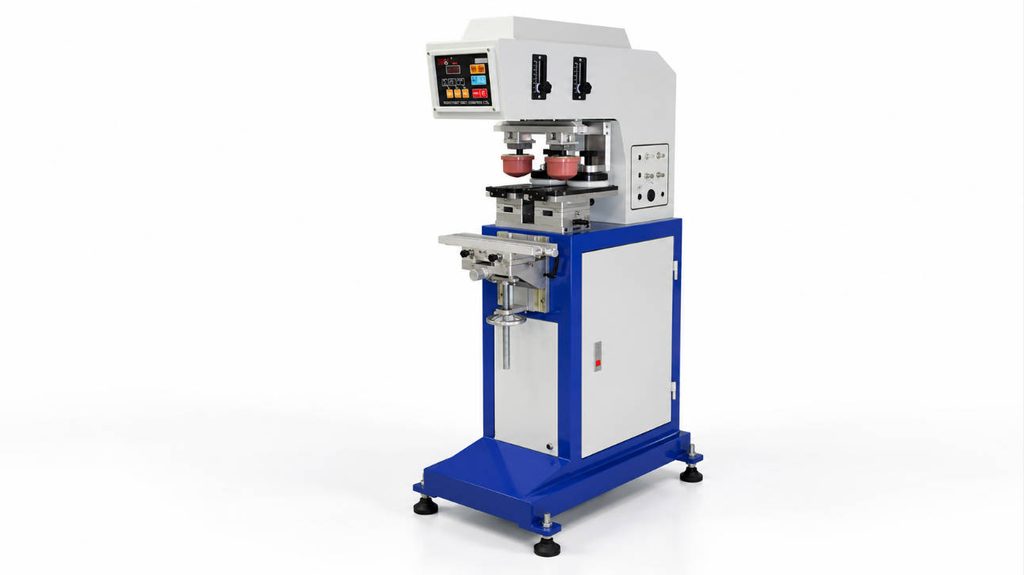
Pad printing uses a flexible silicone pad to transfer the image from the cliché to the product.
The pad can conform to:
- curved surfaces;
- cylindrical surfaces;
- convex areas;
- slightly irregular shapes.
This makes the process particularly useful for smaller logos and graphics on products such as:
- bottles;
- cups;
- cosmetic containers;
- caps;
- glassware.
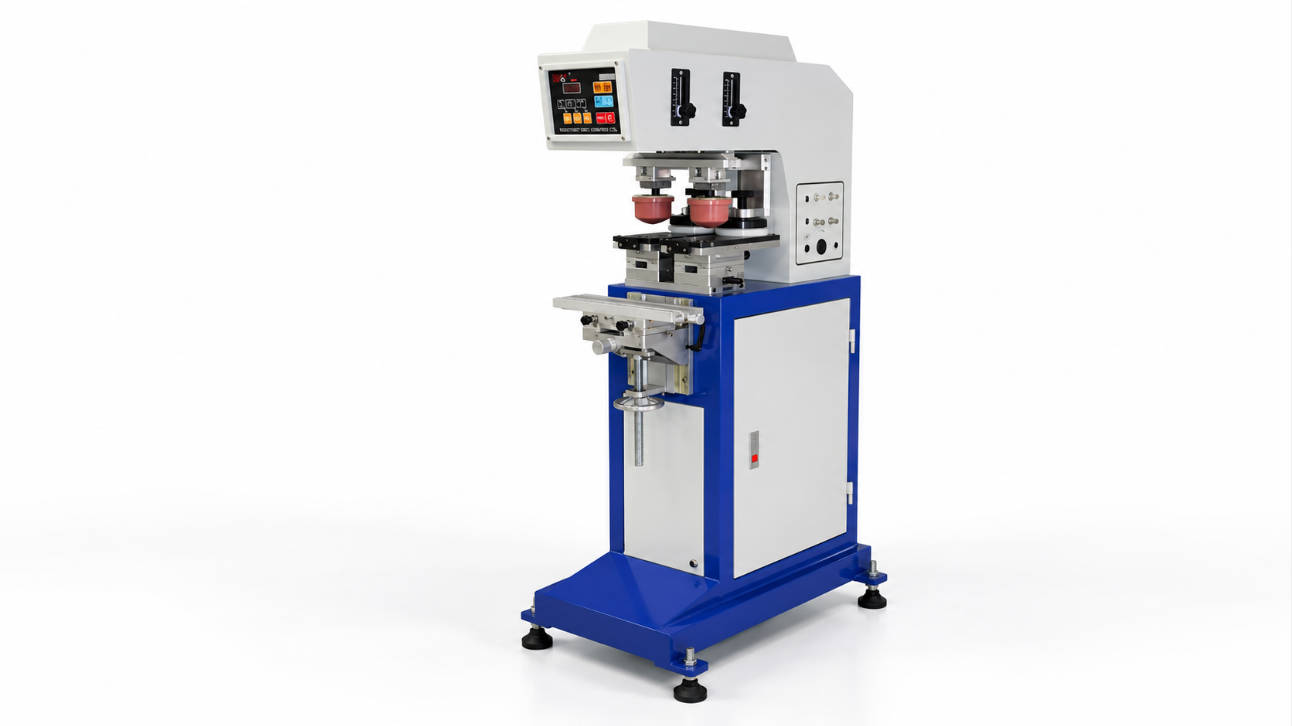
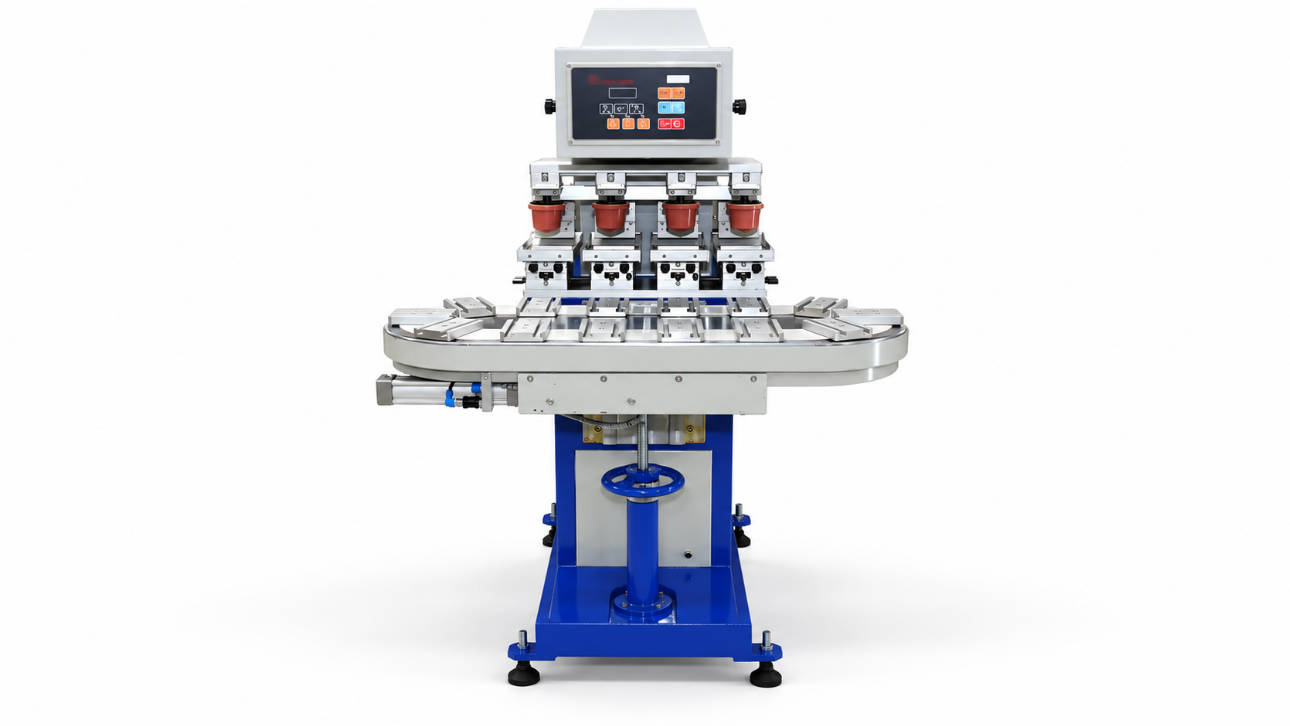
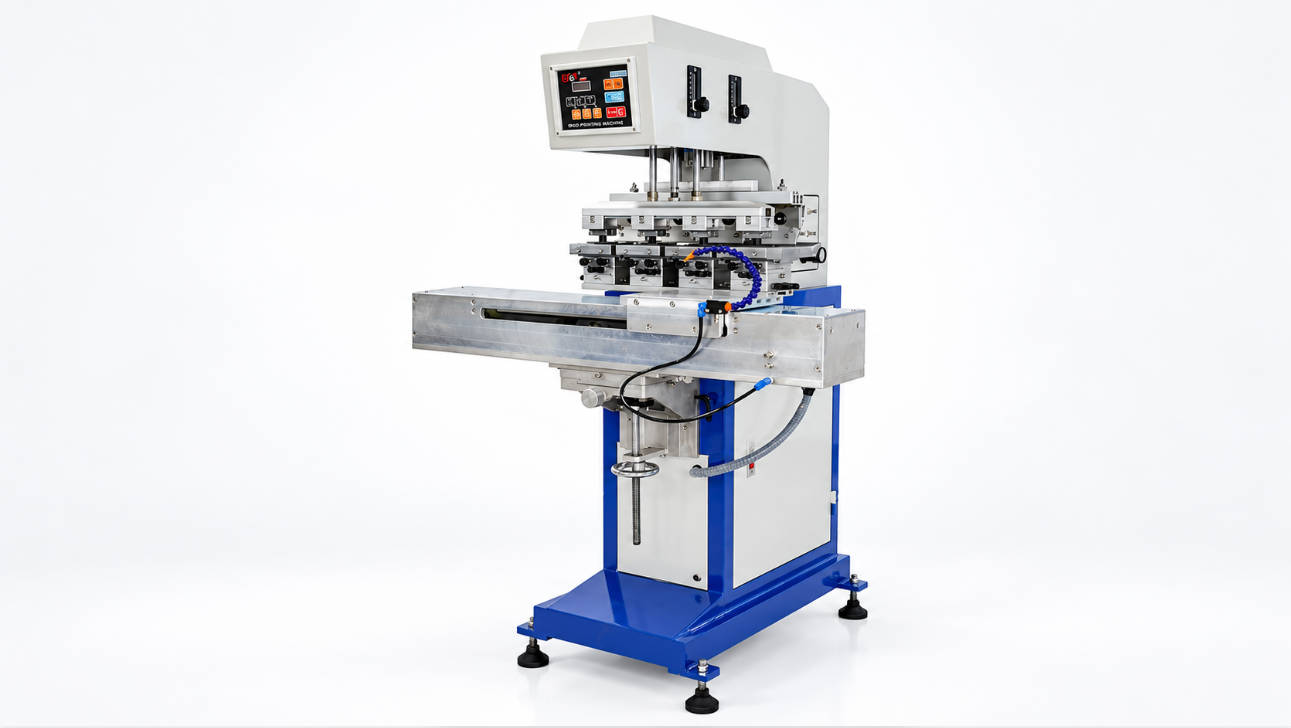
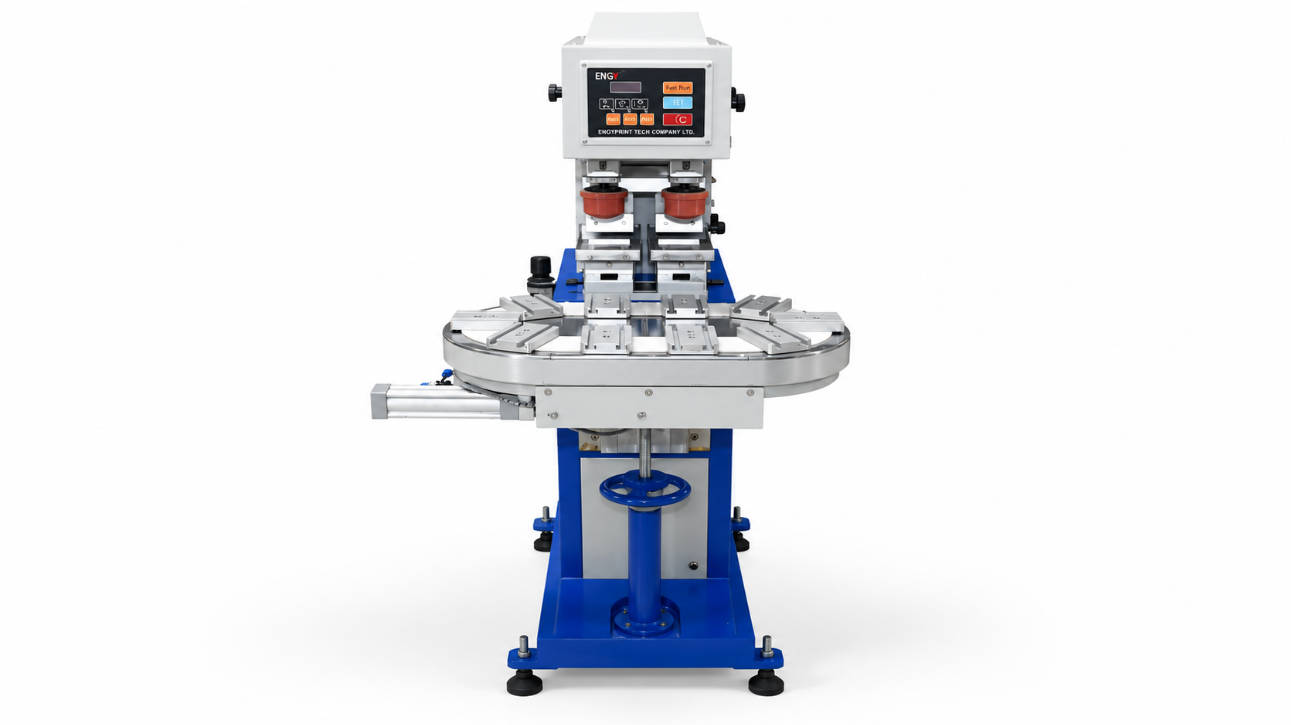
ENGY’s current pad printing machine range includes configurations for bottles, tubes, glass-related products, curved parts, and other industrial applications.
Pad Shape Matters on Curved Drinkware
Durability starts with adhesion, but print quality still depends on mechanical transfer.
A pad that is poorly matched to a curved product can cause:
- distorted logos;
- incomplete edges;
- air entrapment;
- uneven ink deposit.
For round products, the pad needs to deform across the surface without excessive image distortion.
This is another reason machine selection should be based on the actual product rather than only the logo dimensions.
When a Standard Pad Printer Is Enough
A standard pad printing machine may be appropriate when:
- the logo is relatively small;
- product loading is simple;
- only one or two colors are required;
- production volume is moderate;
- the washing-resistant ink process is already validated.
The machine’s role is then primarily to provide repeatable image transfer.
When a Customized Machine Makes More Sense
A more complex project may require:
- surface cleaning or pretreatment;
- product loading;
- one or more printing stations;
- intermediate drying;
- rotation;
- unloading;
- post-print curing.
When thousands of products are processed continuously, performing each operation manually can introduce variation.
In these cases, a customized pad printing machine can be designed around the real product, printing area, colors, fixtures, movement, and production-capacity requirement.
The objective is not simply automation for its own sake.
It is process consistency.
If every glass receives a different cleaning condition, ink mixture, waiting time, or cure, dishwasher results may vary even when the same pad printer is used.
Dishwasher Resistance Is Not the Same as Food-Contact Safety
This distinction is important for drinkware manufacturers.
A printed logo surviving repeated dishwasher cycles does not automatically prove that the ink is suitable for direct food contact.
Those are different requirements.
If the printed area may directly contact:
- food;
- beverages;
- lips;
- another regulated contact surface,
the manufacturer should evaluate the applicable material and regulatory requirements for the destination market.
Do not use dishwasher testing as a substitute for food-contact compliance evaluation.
What Should You Tell a Pad Printing Machine Supplier?
For a cup, bottle, or container project, provide more than a photograph.
A useful project brief includes:
| Information | Why It Matters |
|---|---|
| Product material | Determines ink and adhesion strategy |
| Surface coating | Changes ink compatibility |
| Product diameter and height | Determines machine and fixture design |
| Logo size | Determines cliché and pad |
| Logo position | Determines machine travel |
| Number of colors | Determines machine configuration |
| Required output | Determines automation level |
| Washing conditions | Defines durability target |
| Detergent/chemical exposure | Influences ink evaluation |
| Heat resistance | Affects possible curing process |
| Product samples | Allows real print and wash testing |
For projects where the exact machine configuration is uncertain, ENGY’s custom pad printing machine service includes product evaluation and sample printing before the final equipment setup is confirmed.
A Practical Workflow for Dishwasher-Resistant Pad Printing
Instead of troubleshooting after mass production begins, use the following sequence.
Step 1: Identify the Exact Substrate
Glass is not plastic. PP is not PC. Coated metal is not bare stainless steel.
Step 2: Define the Washing Requirement
Establish realistic wash conditions.
Step 3: Select a Compatible Ink System
Choose according to both substrate and required resistance.
Step 4: Prepare the Surface
Remove contamination and determine whether pretreatment is required.
Step 5: Control Ink Mixing
Follow the specified hardener, thinner, and working-time requirements.
Step 6: Optimize Image Transfer
Set the correct:
- pad;
- cliché;
- pressure;
- fixture;
- machine movement.
Step 7: Cure Correctly
Include curing in the actual production process.
Step 8: Perform Repeated Wash Testing
Do this before large-scale production.
This workflow is more reliable than printing first and asking about dishwasher resistance afterward.
FAQ
Is pad printing dishwasher safe?
Pad printing can be dishwasher resistant when the ink, substrate, surface preparation, curing, and washing conditions are correctly matched. Not every pad-printed product is automatically dishwasher safe.
Does pad printing wash off glass?
Properly specified and cured pad printing can achieve strong adhesion on glass. Poor surface preparation, incompatible ink, or inadequate curing can cause the print to peel or fade during washing.
How do you make printed logos dishwasher safe?
Start with the correct ink for the substrate, thoroughly prepare the product surface, follow the proper mixing and curing process, and validate the result through repeated dishwasher testing under realistic conditions.
What ink is used for dishwasher-safe glass printing?
Industrial applications may use ink systems specifically formulated for glass and high chemical or wash resistance. Some systems use a hardener and controlled post-print curing. The exact ink should be selected according to the glass and performance requirement.
Is pad printing on ceramic mugs dishwasher safe?
It can be, but the result depends on the ceramic surface, ink system, adhesion, curing process, and washing conditions. Testing the actual finished mug is necessary.
Why does a logo come off a cup in the dishwasher?
Common causes include poor ink-to-substrate adhesion, contamination, incorrect ink selection, inadequate curing, aggressive detergent, excessive heat, or repeated abrasion.
Is hand-wash safe the same as dishwasher safe?
No. Dishwasher cleaning generally combines heat, detergent, water pressure, and longer or repeated exposure. A print that survives gentle hand washing may not survive repeated dishwasher cycles.
Does a harder ink always provide better dishwasher resistance?
No. Hardness is only one property. Adhesion, flexibility, chemical resistance, curing, and compatibility with the substrate all affect durability.
Can plastic bottles be pad printed with dishwasher-resistant logos?
Yes, depending on the plastic and ink system. Some plastics are easier to print than others, while PP and PE may require additional surface preparation.
Can a pad printing machine print curved cups and bottles?
Yes. The flexible silicone pad makes pad printing suitable for many curved and irregular products. Machine, fixture, and pad design should be selected according to the product shape and logo.
Conclusion
So, is pad printing dishwasher safe?
The answer is:
It can be—but dishwasher resistance is a property of the complete printing process, not the pad printing machine alone.
A durable printed logo depends on the combination of:
- substrate;
- surface preparation;
- ink chemistry;
- hardener where required;
- printing conditions;
- complete curing;
- detergent resistance;
- heat resistance;
- realistic wash testing.
This explains why one pad-printed glass may survive repeated washing while another begins peeling after only a few cycles.
The solution is not simply more ink, more pressure, or a more expensive machine.
For manufacturers of glasses, mugs, bottles, cosmetic containers, and reusable products, the right approach is to define the required washing conditions first, validate the ink and curing system on the actual substrate, and then configure the printing equipment around a proven production process.