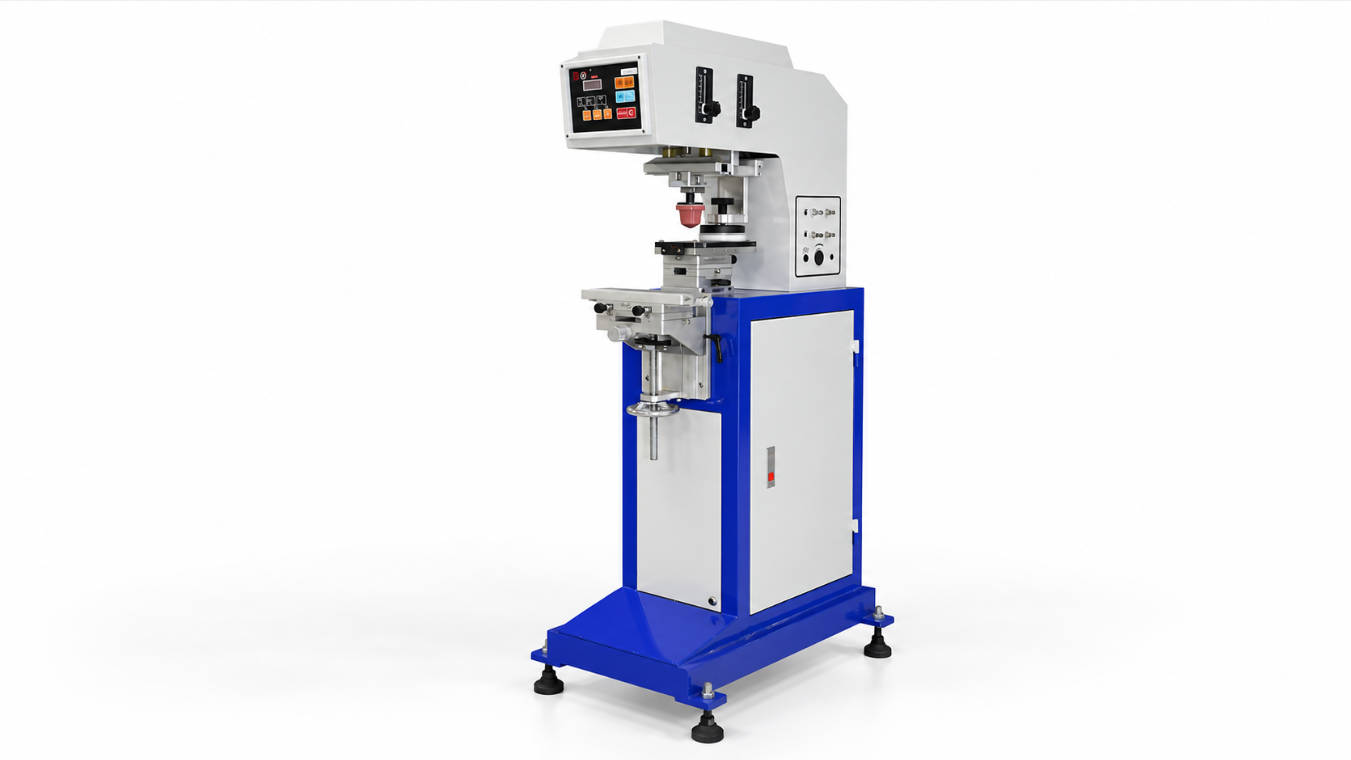
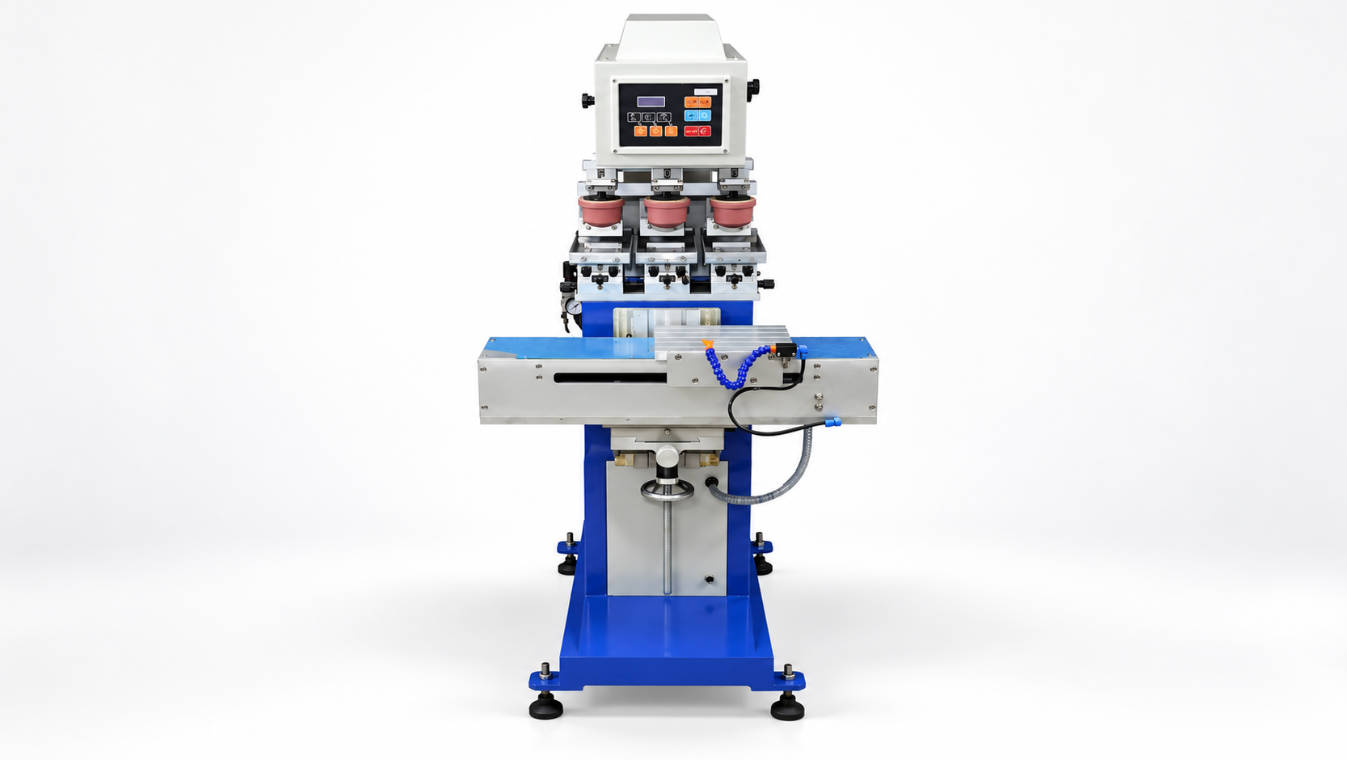
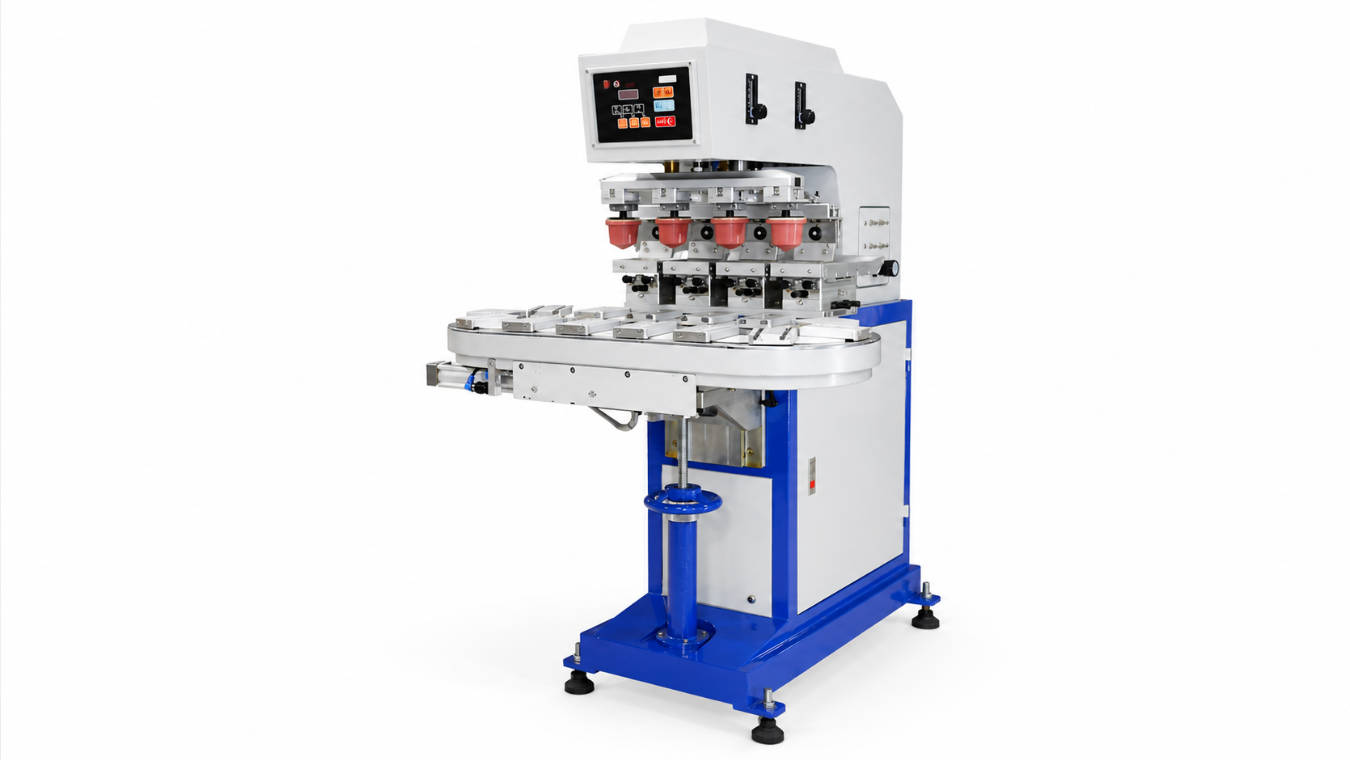
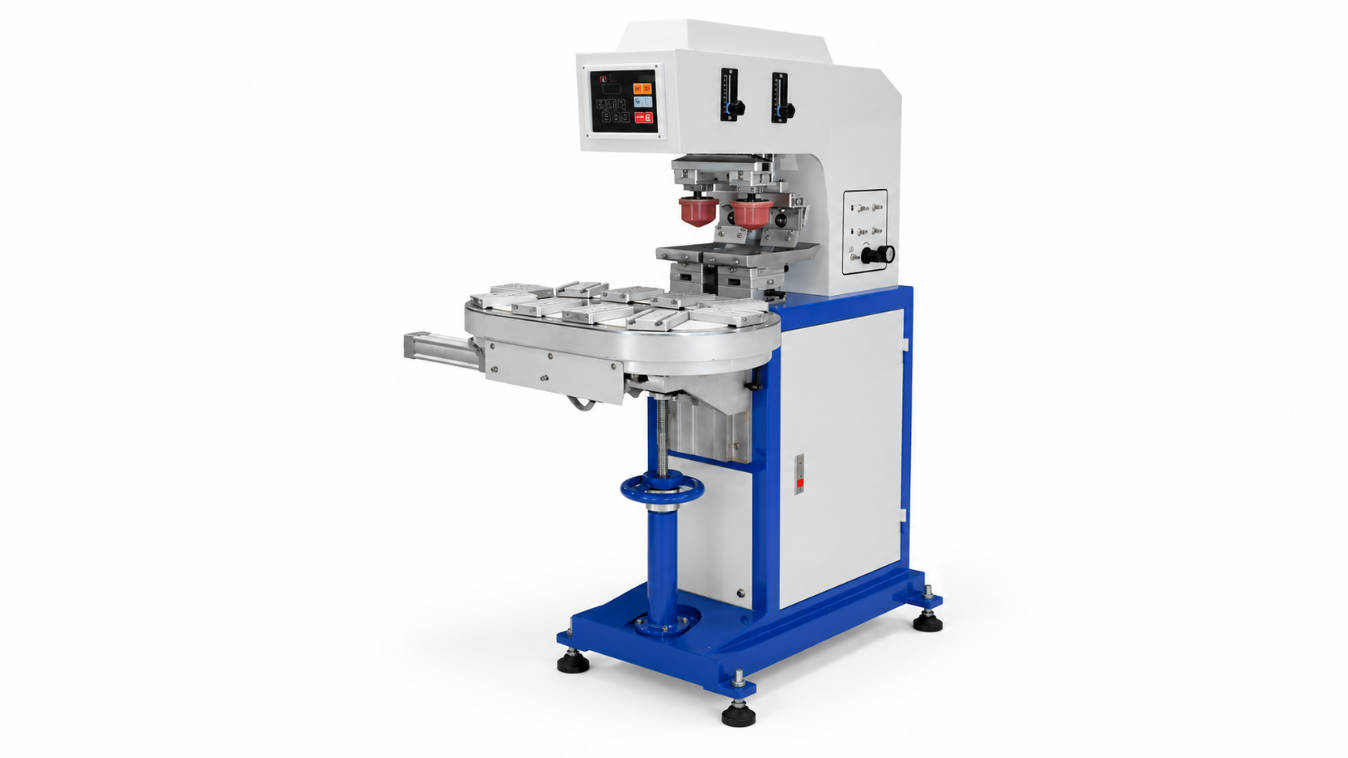
When selecting an industrial pad printing machine, the drive system is one of the key factors affecting printing accuracy, stability, speed, and long-term operating performance. The main difference between a servo pad printing machine and a pneumatic pad printer is how the printing movement is controlled.
A servo pad printing machine uses an electric servo motor with precise motion control, while a pneumatic pad printer relies on compressed air to drive printing movements. Servo systems generally provide better positioning accuracy, repeatability, and process control, while pneumatic systems are commonly selected for simpler applications requiring reliable operation and cost efficiency.
Choosing between these two systems depends on factors such as production volume, printing accuracy requirements, product complexity, and automation expectations.
For manufacturers looking for a suitable solution, understanding the differences between servo and pneumatic pad printers can help avoid selecting equipment that does not match their production requirements.
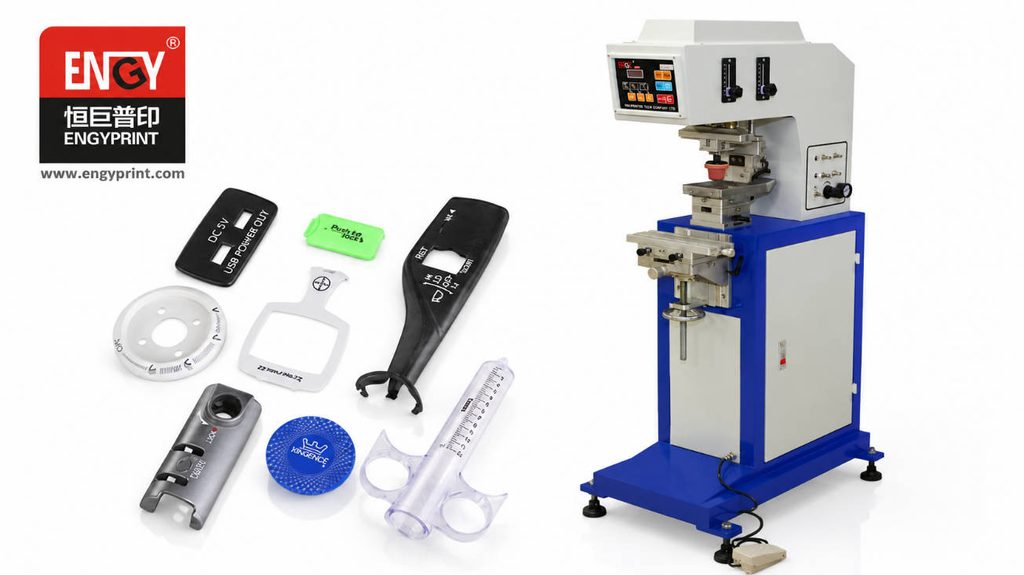
What Is a Servo Pad Printing Machine?
A servo pad printing machine uses servo motors and electronic control systems to manage printing movements, including pad movement, ink transfer cycles, and positioning operations.
Unlike traditional pneumatic systems that depend on air pressure, servo-driven equipment controls movement through programmed parameters. Operators can adjust speed, acceleration, stroke position, and printing timing through the control interface.
This type of system is commonly used in applications where stable repeatability and accurate printing positioning are important.
Typical applications include:
- Electronic components
- Precision plastic parts
- Automotive interior components
- Medical device components
- High-volume industrial products
Servo technology allows manufacturers to achieve more consistent printing results, especially when products require detailed logos, fine patterns, or multi-position printing.
What Is a Pneumatic Pad Printer?
A pneumatic pad printer uses compressed air to control mechanical movements during the printing process.
The system works by using pneumatic cylinders to perform operations such as:
- Pad movement
- Ink cup movement
- Printing stroke operation
- Product positioning
Pneumatic pad printers have been widely used in industrial decoration because they are relatively simple, durable, and easy to maintain.
They are suitable for many standard printing applications, including:
- Plastic products
- Promotional items
- Packaging components
- Small consumer products
For companies with stable production requirements and standard printing processes, pneumatic systems can provide a practical solution.
Servo Pad Printing Machine vs Pneumatic Pad Printer: Key Differences
The main difference between servo and pneumatic pad printers is the motion control method.
| Comparison Factor | Servo Pad Printing Machine | Pneumatic Pad Printer |
| Drive System | Servo motor and electronic control | Compressed air cylinder |
| Motion Control | Programmable and precise | Controlled by air pressure |
| Position Accuracy | Higher repeatability | Suitable for standard applications |
| Speed Adjustment | Digital parameter adjustment | Mechanical/pneumatic adjustment |
| Energy Source | Electricity | Compressed air |
| Maintenance | Requires electronic system knowledge | Requires pneumatic maintenance |
| Initial Investment | Usually higher | Usually lower |
| Suitable Production | Precision and automated production | General industrial printing |
Printing Accuracy: Servo vs Pneumatic
For manufacturers printing detailed graphics, small text, or products requiring strict registration accuracy, motion control becomes an important consideration.
A servo pad printing machine can precisely control:
- Printing stroke distance
- Pad movement speed
- Position repeatability
- Cycle timing
This helps reduce variations between printing cycles.
A pneumatic pad printer depends more on air pressure stability. Changes in compressed air supply, cylinder condition, and mechanical adjustment may influence movement consistency over long production periods.
For standard logo printing applications, pneumatic systems can perform effectively. However, for precision manufacturing environments, servo systems provide additional control advantages.
Production Speed and Stability Considerations
Production speed is not only determined by machine movement speed. Overall efficiency also depends on:
- Product loading method
- Fixture design
- Number of colors
- Ink drying requirements
- Operator workflow
A servo pad printing machine can optimize movement parameters for different products, which is useful when production requires frequent adjustments.
For example, manufacturers producing different models of electronic housings may need flexible parameter changes instead of manually adjusting mechanical components.
Pneumatic machines can also achieve efficient production, especially when the product design and printing process remain unchanged for long periods.
Energy Consumption and Factory Requirements
Pneumatic pad printers require a compressed air supply system. In factories without an existing air system, additional equipment such as compressors and air preparation units may be required.
Servo pad printing machines mainly rely on electrical control systems, which can simplify installation requirements in some production environments.
However, the actual operating cost depends on:
- Machine configuration
- Production schedule
- Factory energy prices
- Maintenance requirements
Companies should evaluate total operating conditions rather than only comparing the initial equipment price.
Cost Comparison: Which One Has Better Value?
The purchase cost difference between servo and pneumatic pad printers depends on machine configuration, automation level, printing colors, and customization requirements.
Generally:
- Pneumatic pad printers are often selected when initial equipment investment needs to be controlled.
- Servo pad printing machines are considered when precision, repeatability, and production flexibility are higher priorities.
For manufacturers producing large quantities of consistent products, investing in better motion control may help improve production stability.
For companies with simple printing requirements, a pneumatic solution may already meet production needs.
The right choice should be based on production requirements instead of choosing the more advanced technology automatically.
When Should You Choose a Servo Pad Printing Machine?
A servo pad printing machine may be a suitable option when your production requires:
1. High Printing Accuracy
Products with fine graphics, small characters, or strict alignment requirements can benefit from precise motion control.
2. Frequent Product Changes
Manufacturers producing multiple product models can adjust parameters through software instead of performing extensive mechanical adjustments.
3. Integration With Automation Systems
Servo systems are commonly easier to integrate into automated production lines because movement parameters can be digitally controlled.
You can explore ENGY’s industrial pad printing machine solutions for different production requirements:
[pad printing machine solutions](ENGY Pad Printing Machine Solutions)
When Is a Pneumatic Pad Printer a Better Choice?
A pneumatic pad printer may be suitable when:
- Products have standard printing requirements
- Production volume is moderate
- Printing accuracy requirements are not extremely strict
- Factory maintenance prefers simpler mechanical systems
Pneumatic machines remain widely used because they offer a practical balance between performance and investment.
Common Mistakes When Choosing a Pad Printing Machine
Choosing Based Only on Machine Price
The cheapest equipment may not always match the production environment. Buyers should consider:
- Product shape
- Printing complexity
- Expected output
- Future expansion plans
Ignoring Fixture Requirements
Even with an accurate machine, poor fixture design can affect printing quality.
Selecting Too Much Automation Too Early
Automation should solve actual production problems. A highly automated system is not always necessary for every application.
How to Choose the Right Pad Printing Machine Supplier
When purchasing a pad printing machine, buyers should evaluate:
Engineering Capability
A supplier should understand not only machine manufacturing but also printing processes, fixtures, and product requirements.
Customization Ability
Different products require different solutions. A capable supplier should provide customized configurations based on:
- Product dimensions
- Printing position
- Ink system
- Production workflow
After-Sales Support
Technical support, spare parts availability, and machine adjustment guidance are important factors for long-term operation.
ENGY provides pad printing equipment solutions for manufacturers requiring different printing applications and production requirements.
Learn more about ENGY:
[ENGY official website](ENGY Official Website)
FAQ
What is the difference between a servo pad printing machine and a pneumatic pad printer?
A servo pad printing machine uses servo motors and electronic control for precise movement, while a pneumatic pad printer uses compressed air cylinders. Servo systems usually provide higher motion control accuracy.
Is a servo pad printer better for high-volume production?
A servo pad printer can be suitable for high-volume production where repeatability, automation integration, and stable printing quality are important.
Are pneumatic pad printing machines still suitable for industrial applications?
Yes. Pneumatic pad printers remain suitable for many industrial printing applications, especially when products have standard printing requirements.
Does a servo pad printing machine require less maintenance?
Maintenance requirements depend on machine design and operating conditions. Servo systems reduce some mechanical adjustments but require proper electronic system management.
How do I choose between an electric pad printer and a pneumatic pad printer?
The choice depends on product requirements, printing accuracy, production volume, automation needs, and budget considerations.
Can a pad printing machine be customized for special products?
Yes. Many industrial pad printing applications require customized fixtures, printing heads, or machine configurations based on product shape and production process.
Conclusion
Both servo pad printing machines and pneumatic pad printers have their own suitable application scenarios.
Pneumatic pad printers remain a practical choice for many standard industrial printing applications, while servo pad printing machines provide more precise control for manufacturers requiring higher consistency, automation capability, and flexible production adjustment.
Before purchasing equipment, companies should evaluate their product characteristics, production goals, and future requirements to select the appropriate pad printing solution.