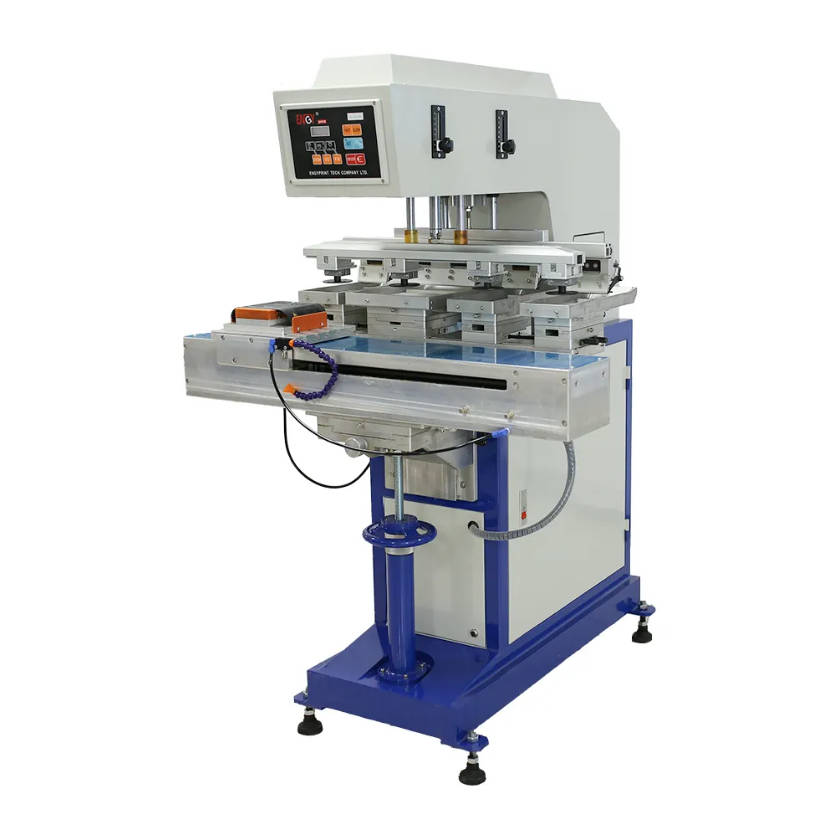
In the world of industrial marking and product Decoration, pad printing (also known as tampography) stands out for its unique ability to print on irregular, curved, and textured surfaces. However, for many businesses looking to invest in new equipment, one of the most frequent questions is: “How many colors can a pad printing machine actually print?”
While the short answer is that most standard pad printing machines are designed to print between 1 and 6 colors, advanced automated systems can be customized to handle 12 or more colors in a single production pass.
Choosing the right color configuration is not just about aesthetics—it involves understanding registration precision, machine footprint, and your long-term return on investment (ROI). This guide will break down everything you need to know about multi-color pad printing capabilities.
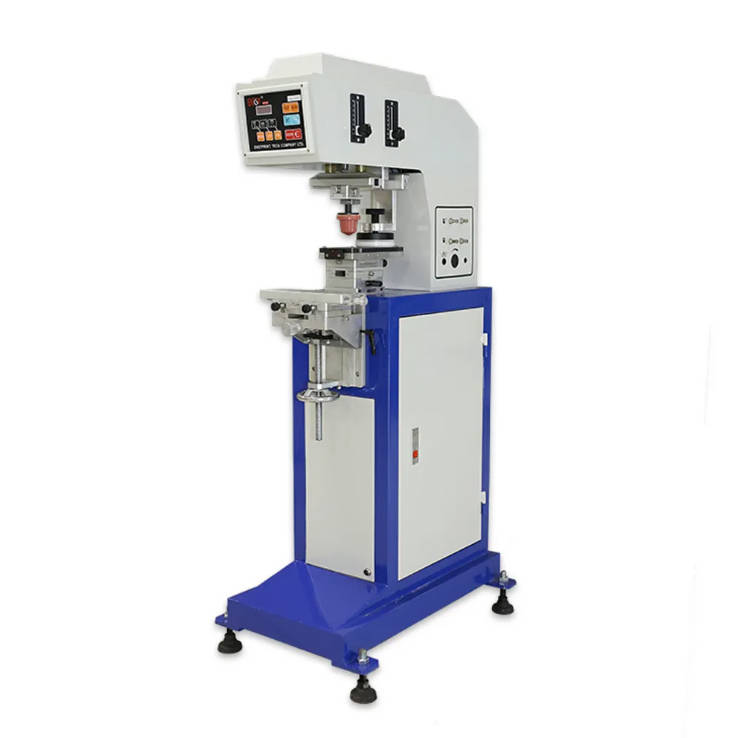
I. Understanding Core Machine Configurations
The number of colors a machine can print is primarily determined by its mechanical configuration. Here is how different setups handle color counts:
1. Single-Color Machines
These are the “workhorses” of the industry. They are ideal for high-speed, high-volume branding where only a single logo or safety warning is required. They offer the fastest cycle times because there is no movement between color stations.
2. Multi-Color Shuttle Systems
In a shuttle system, the part being printed moves back and forth while the printing pads stay in a fixed lateral position.
- Best for: 2 to 4 colors.
- Pros: High precision and smaller machine footprint.
- Cons: Slower than conveyor systems because the part must travel to each station sequentially.
3. Carousel and Conveyor Systems
These systems use a continuous loop (either a rotary table or a linear track) to move parts through multiple print stations simultaneously.
- Best for: 4 to 12+ colors.
- Pros: Extremely high throughput; while one part is getting its 4th color, the next part is getting its 1st.
- Cons: Requires more floor space and a higher initial investment.
II. Comparison of Multi-Color Pad Printing Systems
To help you decide which configuration fits your production line, refer to the technical comparison below:
| Feature | Single-Color Machine | Shuttle System (Multi-Color) | Conveyor/Carousel System |
| Common Color Range | 1 Color | 2 – 5 Colors | 4 – 12+ Colors |
| Typical Speed | 1,500+ parts/hr | 400 – 800 parts/hr | 800 – 2,000+ parts/hr |
| Registration Accuracy | N/A | Very High (±0.02mm) | High (±0.05mm) |
| Setup Complexity | Low | Medium | High |
| Floor Space Requirement | Small | Moderate | Large |
| Ideal Application | Simple logos, medical tools | Electronics, complex toys | Automotive parts, high-volume caps |
III. Technical Factors Determining Color Capacity
The maximum number of colors a pad printing machine can print is limited by the physical size of the machine frame, the diameter of the ink cups, and the required registration accuracy between each color layer.
1. The Ink Cup Size vs. Frame Width
Every color requires its own “cliché” (printing plate), ink cup, and pad. If you want to print 6 colors using 90mm ink cups, the machine frame must be wide enough to accommodate six 90mm assemblies side-by-side without mechanical interference.
2. Registration Accuracy (The “Trapping” Challenge)
When printing multiple colors, the “registration”—how perfectly the colors align—is critical. Multi-color pad printing requires high-precision servo motors or mechanical indexing to ensure that each subsequent color lands exactly where it should, often with tolerances as tight as 0.05mm.
3. Ink Tacking and Intermediate Drying
Pad printing involves “wet-on-wet” transfer. For high-color jobs, the ink must “tack up” (become sticky) quickly so the next pad doesn’t pick up the previous color. In 6+ color setups, manufacturers often install intermediate drying stations (using hot air or IR) between print heads to ensure crisp color separation.
IV. Advanced Multi-Color Printing Techniques
Modern technology allows pad printers to exceed the limitations of physical ink cups:
CMYK (Process) Printing
Just like a standard paper printer, pad printing can achieve thousands of hues using only four colors: Cyan, Magenta, Yellow, and Black (CMYK). By using specialized translucent inks and high-resolution clichés, you can print photographic-quality images on 3D objects using only a 4-color machine.
White Base Layering
When printing on dark or transparent substrates, the first “color” is often a white base. This ensures that the subsequent colors appear vibrant and accurate. Therefore, a 3-color logo on a black plastic part often requires a 4-color machine.
V. Choosing the Right Machine for Your Business
When evaluating a purchase, consider the following three factors:
- Complexity vs. Speed: Adding more colors increases setup time (cleaning 6 ink cups vs. 1). If 90% of your jobs are 2-color, a 4-color machine offers “future-proofing” without being overly complex.
- Part Geometry: Very large parts may limit the number of colors because the “travel” required for the pad to reach different areas of the part becomes mechanically difficult.
- The Digital Alternative: If you consistently need 10+ colors with variable data (like serial numbers), consider whether a UV Digital Inkjet system might be more efficient, though pad printing remains superior for adhesion on difficult plastics and curved surfaces.
VI. Maintenance and Setup for Multi-Color Success
To maintain high quality in multi-color environments, focus on:
- Independent Pad Control: High-end machines allow you to adjust the stroke pressure and delay for each pad individually. This is vital when one color covers a large area and another color covers a tiny detail.
- Environmental Control: Consistent temperature and humidity are essential for multi-color pad printing to maintain ink viscosity; changes in the room environment can cause registration drift during long production runs.
- Plate Alignment: Use a “pin-registration” system for your clichés to ensure that plates are perfectly aligned before they even touch the machine.
VII. Conclusion: Future-Proofing Your Investment
While you can technically print an unlimited number of colors by running a part through a machine multiple times, it is highly inefficient and risks high reject rates. For most professional B2B manufacturing needs, a 4-color or 6-color pad printing machine provides the best balance of versatility, speed, and cost-effectiveness.
If you are currently printing 2 colors but expect your brand to evolve, investing in a machine with a larger frame (e.g., a 4-color frame equipped with only 2 ink cups) allows you to expand your capabilities without buying an entirely new system later.