A medical device pad printing machine should be selected based on clean operation, ink stability, marking precision, substrate compatibility, fixture repeatability, process documentation, and traceability requirements. For medical products, the goal is not only to print a visible logo or mark. The printed information must remain clear, consistent, and suitable for the device’s intended production, handling, packaging, sterilization, and use conditions.
Pad printing is widely used for medical device components because it can print on small, curved, recessed, and irregular surfaces. It can be applied to plastic housings, diagnostic consumables, medical connectors, syringe parts, caps, buttons, device handles, laboratory components, and other healthcare-related products. However, medical device printing requires more control than ordinary promotional product decoration.
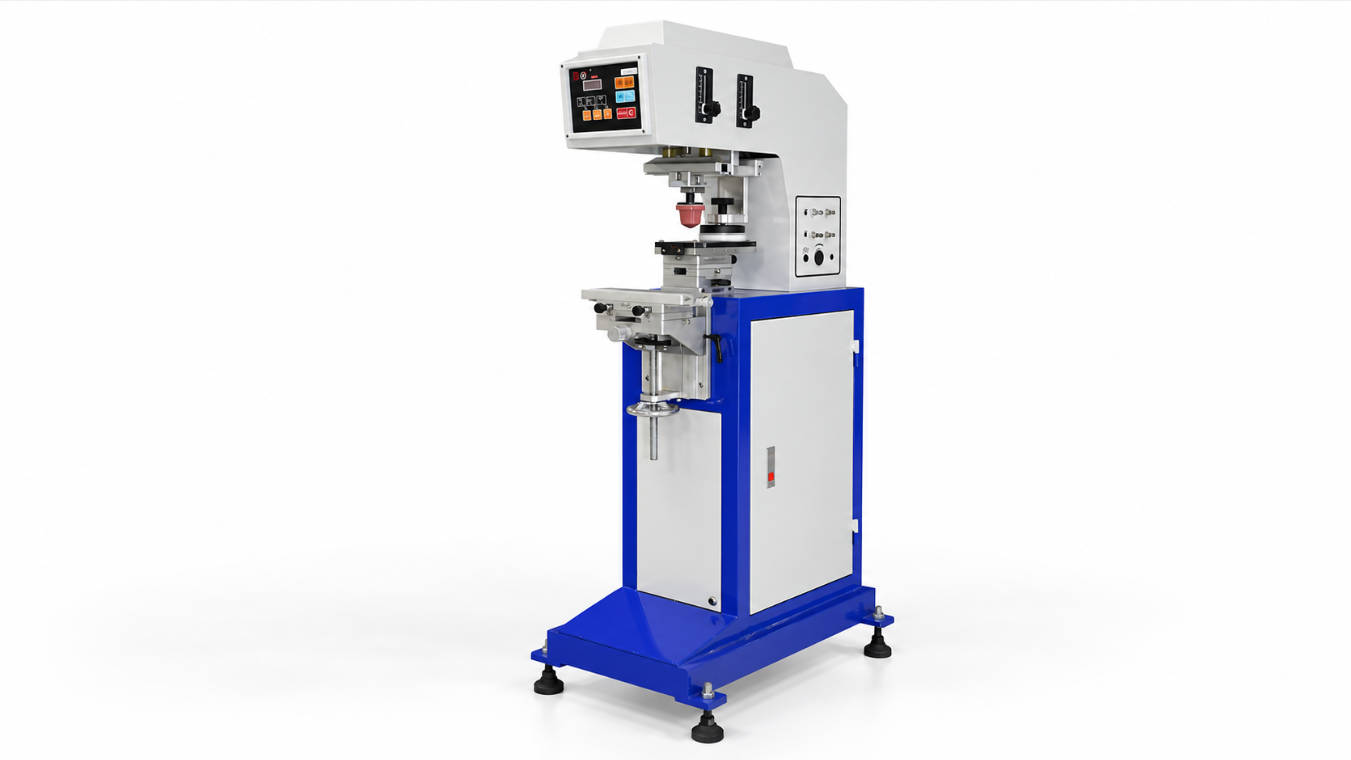
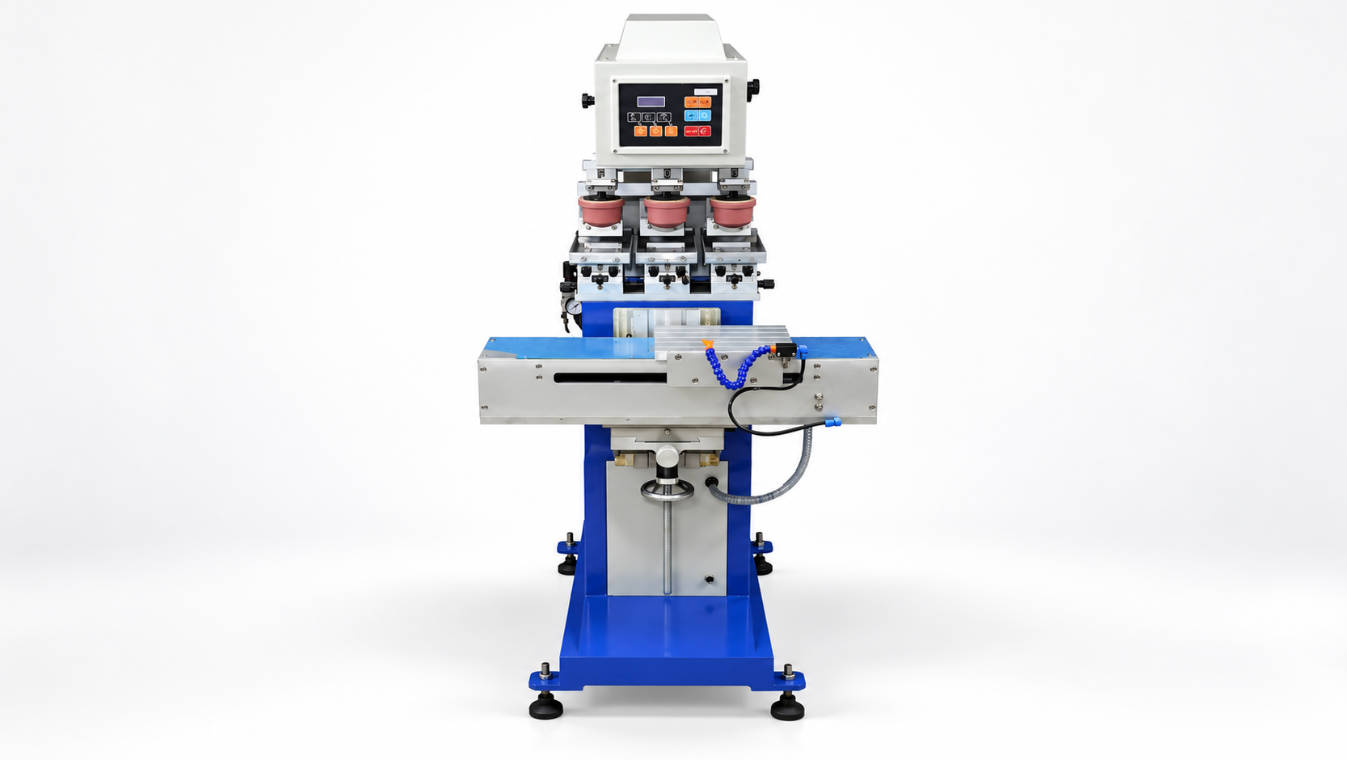
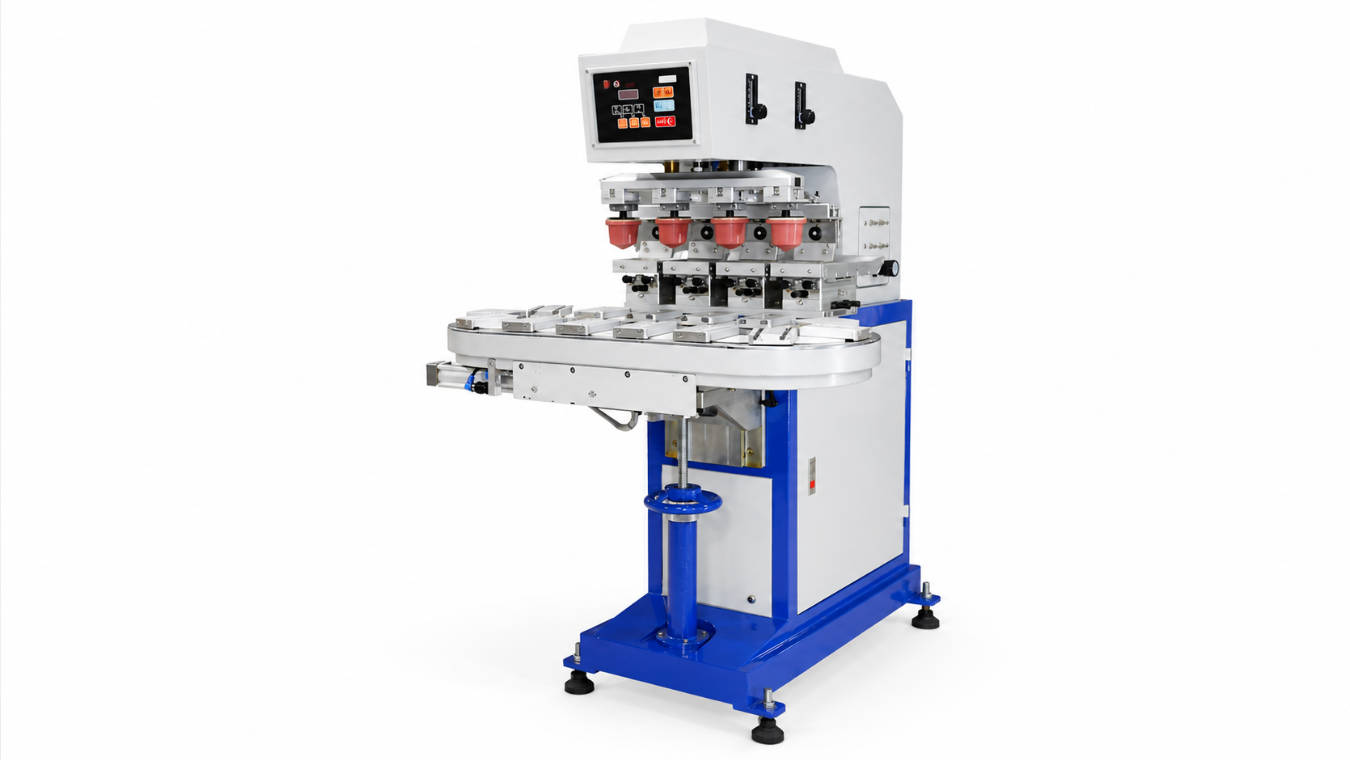
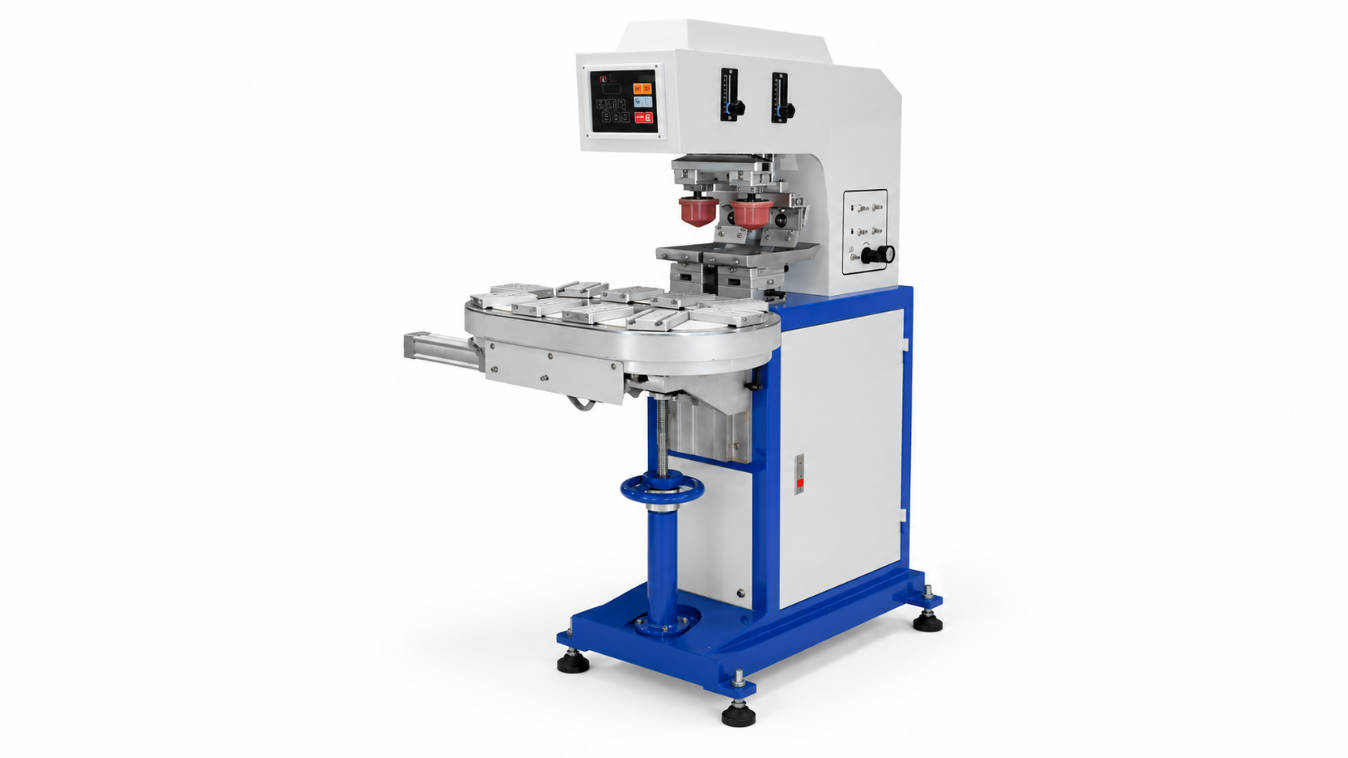
Before ordering a medical device pad printing machine, buyers should check machine type, ink cup design, material compatibility, ink adhesion, fixture design, registration accuracy, cleaning requirements, production records, and supplier support. ENGY provides pad printing machine solutions for different product decoration and marking applications, including closed ink cup and multi-color configurations.
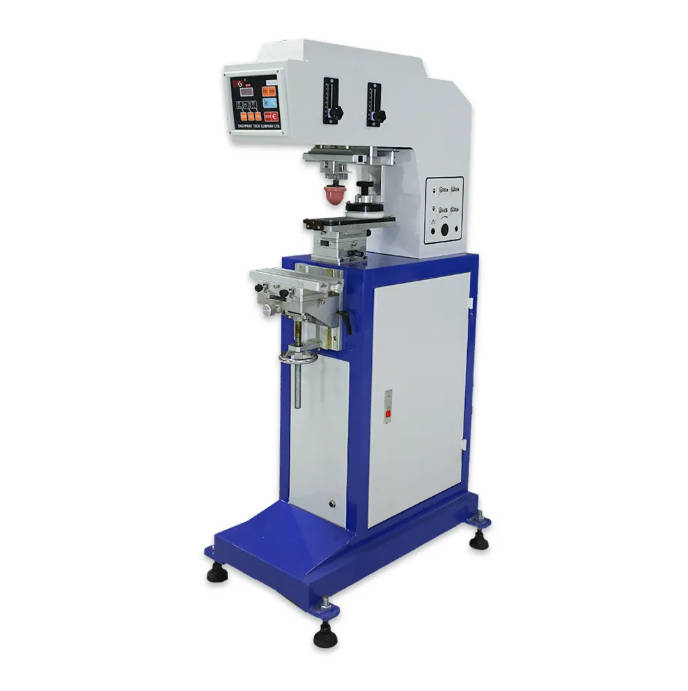
What Is a Medical Device Pad Printing Machine?
A medical device pad printing machine is a pad printer configured to print logos, graduations, symbols, text, lot-related marks, alignment indicators, functional icons, or other required markings on medical products or medical device components.
The basic pad printing process includes:
- Artwork or marking information is etched onto a cliché plate.
- Ink fills the etched image area.
- Excess ink is removed from the plate surface.
- A silicone pad picks up the inked image.
- The pad transfers the image to the device surface.
- The print is dried, cured, inspected, and documented according to process requirements.
Pad printing is useful for medical products because the silicone pad can transfer images onto shapes that are difficult to print with flat contact methods.
Medical device pad printing may be used for:
| Product or Component | Typical Printing Requirement |
| Diagnostic device housings | Brand logo, symbols, button icons |
| Medical plastic parts | Part marks, arrows, alignment indicators |
| Syringe or dispensing components | Scales, numbers, graduation marks |
| Caps and closures | Logo, color coding, product identification |
| Connectors and fittings | Orientation marks or functional symbols |
| Laboratory consumables | Identification marks or measurement indicators |
| Handheld medical tools | Logos, operating icons, warning symbols |
| Packaging-related components | Product code or traceability-related marks |
The exact requirements depend on the device classification, intended use, market, customer specification, and quality management system.
Why Medical Device Printing Requires More Control
Medical products are not ordinary consumer goods. A printing defect may create more than an appearance problem. It may affect traceability, usability, readability, process validation, customer inspection, or regulatory documentation.
For example, unclear graduation marks on a measuring component may affect reading accuracy. Poor adhesion on a reusable component may cause the mark to degrade during handling or cleaning. Inconsistent logo position may indicate poor fixture control. Missing or incorrect marks may create batch release problems.
For medical products, print quality must be evaluated as part of a controlled production process, not only as a cosmetic result.
Important concerns include:
| Concern | Why It Matters |
| Legibility | Marks must remain readable under intended conditions |
| Adhesion | Ink should remain attached through handling and use requirements |
| Clean operation | Reduces unnecessary contamination risk in production |
| Repeatability | Supports consistent batch quality |
| Traceability | Helps link printed parts to production records when required |
| Documentation | Supports internal quality and customer audits |
| Material compatibility | Prevents adhesion failure or material damage |
| Process validation | May be required under the buyer’s quality system |
Closed Ink Cup vs Open Tray for Medical Device Pad Printing
For many medical product printing applications, a closed ink cup pad printer is preferred because it helps contain ink, reduce solvent exposure, and maintain a cleaner work area. Open tray systems may still be useful for larger images or special print areas, but medical applications often prioritize cleanliness and repeatability.
| Factor | Closed Ink Cup Pad Printer | Open Tray Pad Printer |
| Ink containment | Ink is mostly enclosed inside the cup | Ink is exposed in an open tray |
| Clean operation | Usually cleaner for repeated production | Requires more operator control |
| Solvent exposure | Lower in many applications | Higher due to open exposure |
| Ink stability | Easier to maintain during production | More affected by evaporation |
| Print area | Limited by ink cup and stroke | More flexible for larger artwork |
| Medical product fit | Often suitable for small to medium marks | May fit larger symbols or special layouts |
| Maintenance focus | Cup ring, plate surface, ink sealing | Doctor blade, tray, open ink management |
For clean pad printing of medical products, a closed ink cup pad printer is often the practical starting point when the artwork fits the effective print area.
However, buyers should not choose closed ink cup automatically. If the required marking is large, the product geometry is unusual, or the artwork exceeds the ink cup working area, the supplier should review whether an open tray or customized configuration is more suitable.
Key Checks Before Ordering a Medical Device Pad Printing Machine
1. Product Material and Surface Compatibility
Medical products may use many materials, including ABS, PC, PP, PE, PET, PVC, silicone-like materials, coated plastics, metal, glass, or composite components. Each material behaves differently during printing.
| Material Type | Printing Consideration |
| ABS | Often easier to print than low-surface-energy plastics, but testing is still needed |
| PC | Requires compatible ink and controlled drying |
| PP / PE | Often require surface pretreatment for better adhesion |
| PVC | Ink compatibility and safety requirements must be reviewed |
| Metal | Surface finish and coating affect adhesion |
| Glass | Requires suitable ink and curing method |
| Silicone-like surfaces | Usually more challenging and requires specialized process review |
| Coated plastics | Ink may bond to the coating rather than the base material |
Buyers should provide exact material information, not just “plastic.” The resin grade, coating, surface treatment, additives, and sterilization exposure may all affect final print performance.
2. Ink Adhesion and Durability Requirements
Medical product marks may need to resist handling, packaging, cleaning, rubbing, alcohol wipe, sterilization exposure, or other use conditions. Requirements vary by product, so the buyer should define test expectations before ordering.
Typical checks may include:
| Test or Evaluation | Purpose |
| Tape adhesion test | Checks whether ink peels from the surface |
| Rub resistance test | Simulates repeated handling |
| Alcohol wipe test | Evaluates chemical resistance when relevant |
| Scratch resistance test | Checks surface durability |
| Sterilization compatibility review | Needed when the printed part is exposed to sterilization |
| Aging or packaging test | Evaluates stability during storage and shipping |
| Legibility inspection | Confirms printed information remains readable |
A successful sample print is not enough for medical products; buyers should define adhesion, durability, and legibility requirements before production approval.
The pad printer supplier can support machine setup, but final ink validation should be confirmed by the buyer, ink supplier, and relevant quality or regulatory teams.
3. Marking Precision and Print Position
Many medical components require precise mark placement. Even if the printed information is clear, incorrect positioning may cause rejection.
Examples include:
- Scale marks on measuring components
- Alignment arrows on connectors
- Function icons on handheld devices
- Warning symbols near operating areas
- Identification marks on small components
- Position-sensitive graphics on diagnostic devices
Precision depends on machine accuracy, fixture design, part loading repeatability, plate quality, pad shape, and operator setup. Multi-color or multi-position printing requires more careful registration control.
4. Fixture Design and Part Holding
Fixture design is critical for medical device pad printing. The fixture must hold the part securely without damaging it, contaminating it, or deforming its surface.
A medical product fixture should:
- Hold the part in a repeatable position
- Prevent movement during pad contact
- Avoid scratches or deformation
- Allow controlled loading and unloading
- Keep the print area accessible
- Support inspection and batch consistency
- Be suitable for the production environment
For small medical components, even slight movement can cause visible print shift. For curved or irregular products, customized fixtures may be required.
In medical pad printing, fixture repeatability is often as important as machine specification.
5. Clean Operation and Ink Control
Medical product printing often requires a cleaner production process than general product decoration. A closed ink cup system can help reduce exposed ink and solvent, making it easier to maintain a controlled printing area.
Buyers should check:
| Item | What to Confirm |
| Ink cup sealing | Helps reduce ink exposure |
| Cup ring quality | Affects doctoring consistency |
| Plate surface quality | Affects image clarity |
| Cleaning method | Must match workshop practice |
| Ink mixing procedure | Helps maintain viscosity consistency |
| Waste handling | Should follow internal safety procedures |
| Operator training | Reduces process variation |
Clean pad printing does not mean the machine itself creates a cleanroom. It means the machine structure and process design support cleaner, more controlled operation. If cleanroom production is required, the buyer must verify whether the machine, materials, lubricants, utilities, cleaning process, and documentation are suitable for that environment.
6. Traceability and Production Records
Some medical device manufacturers need batch records, operator records, inspection records, ink batch records, plate records, fixture records, and maintenance logs. The pad printing process should be compatible with the buyer’s quality management system.
Traceability-related information may include:
- Machine model and configuration
- Ink batch and mixing ratio
- Plate identification
- Pad identification
- Fixture identification
- Product batch number
- Operator information
- Inspection results
- Rework or rejection records
- Maintenance and cleaning records
The pad printing machine may not manage all of this automatically, but it should be easy to integrate into a controlled workflow. For higher control needs, buyers may need additional inspection systems, barcode tracking, or production data collection outside the basic machine.
7. Manual, Semi-Automatic, or Automatic Configuration
Medical device pad printing machines can be manual, semi-automatic, or automatic. The correct choice depends on production volume, part handling difficulty, quality control needs, and integration requirements.
| Machine Type | Suitable Situation | Main Consideration |
| Manual pad printer | Samples, R&D, low-volume medical parts | Flexible but operator-dependent |
| Semi-automatic pad printer | Regular production with manual loading | Practical balance of cost and repeatability |
| Automatic pad printer | High-volume repeated components | Better for output consistency and labor reduction |
| Customized system | Special medical parts, multi-step marking, integrated inspection | Requires detailed engineering review |
For many medical product suppliers, semi-automatic equipment is a practical starting point. It allows controlled printing while keeping investment manageable. For high-volume diagnostic consumables or repeated components, automation may be considered.
What Information Should Buyers Send Before Requesting a Quote?
A supplier can only recommend the correct machine after reviewing the actual product and marking requirement. Before requesting a medical product printing proposal, prepare:
| Information | Why It Is Needed |
| Product photos or drawings | Helps evaluate surface shape and print position |
| Material specification | Determines ink and pretreatment needs |
| Artwork file | Confirms mark size and detail |
| Print size | Determines plate, pad, and ink cup suitability |
| Number of colors | Determines machine stations and registration needs |
| Required output | Determines manual, semi-automatic, or automatic setup |
| Durability requirements | Defines adhesion and resistance testing |
| Cleanliness requirements | Affects machine structure and process planning |
| Traceability requirements | Helps plan records and workflow |
| Sterilization or cleaning exposure | Affects ink and process validation |
Sending clear technical information early reduces the risk of choosing the wrong machine.
Common Mistakes When Buying a Medical Product Pad Printer
Mistake 1: Treating Medical Printing Like General Logo Printing
Medical products may require legibility, durability, traceability, and documentation. A machine that works for general logo decoration may not be enough for controlled medical production.
Mistake 2: Ignoring Material and Ink Compatibility
Medical parts are made from different plastics, metals, coatings, and surface treatments. Ink adhesion should be tested on the actual material before production approval.
Mistake 3: Choosing a Machine Without Fixture Review
If the fixture cannot hold the device part repeatably, the print position may shift. This can create cosmetic defects, functional readability issues, or batch rejection.
Mistake 4: Underestimating Documentation Needs
For medical device manufacturing, process records can be important. Buyers should plan how ink batches, plates, pads, fixtures, inspections, and maintenance will be documented.
Mistake 5: Assuming “Clean Printing” Means Regulatory Compliance
A closed ink cup system may support cleaner operation, but it does not automatically make the process compliant. Compliance depends on the buyer’s full quality system, validation, documentation, materials, and applicable regulatory requirements.
How to Choose the Right Supplier
A reliable supplier for medical device pad printing should understand application review, not only machine sales. The supplier should help evaluate the device material, print size, ink system, pad selection, fixture design, repeatability, and process requirements.
Before choosing a supplier, check whether they can support:
- Product sample review
- Medical plastic material evaluation
- Closed ink cup or open tray recommendation
- Pad and plate selection
- Fixture design advice
- One-color or multi-color machine selection
- Semi-automatic or automatic configuration
- Printing test support
- Spare parts and maintenance guidance
- Technical communication for validation preparation
ENGY provides medical product pad printer options for different marking and decoration applications. Buyers can also visit the ENGY website to learn more about available pad printing equipment and company background.
Medical Device Pad Printing Machine Selection Checklist
| Selection Item | What to Check Before Ordering |
| Product material | Exact resin, coating, surface treatment, and grade |
| Print position | Flat, curved, recessed, small, or irregular area |
| Mark size | Width, height, line thickness, and fine details |
| Ink adhesion | Required tests and use conditions |
| Ink system | Closed ink cup, open tray, or customized setup |
| Clean operation | Ink containment, cleaning method, and work area control |
| Fixture design | Repeatable holding without damage |
| Pad selection | Shape, hardness, size, and distortion control |
| Production output | Manual, semi-automatic, automatic, or integrated system |
| Traceability | Records for ink, plate, pad, fixture, batch, and inspection |
| Validation support | Sample testing and process documentation readiness |
FAQ
1. What is a medical device pad printing machine used for?
A medical device pad printing machine is used to print logos, symbols, scales, icons, identification marks, or functional markings on medical products and components. It is suitable for small, curved, recessed, and irregular surfaces.
2. Can pad printing be used on medical plastic devices?
Yes, pad printing can be used on many medical plastic devices. The result depends on the plastic material, ink compatibility, surface treatment, fixture design, pad selection, and required durability testing.
3. Why is a closed ink cup pad printer often used for medical product printing?
A closed ink cup pad printer is often used because it helps contain ink, reduce solvent exposure, and support cleaner, more stable operation during repeated production.
4. What should buyers test before pad printing on medical devices?
Buyers should test ink adhesion, rub resistance, chemical resistance when relevant, legibility, print position, durability under handling, and compatibility with any cleaning, packaging, or sterilization process.
5. Does a medical product pad printer need validation?
The machine itself does not automatically determine validation needs. Medical device manufacturers may need process validation, inspection records, and documentation based on their quality system, device requirements, and applicable regulations.
6. Can pad printing mark UDI or traceability information on medical devices?
Pad printing may be used for certain human-readable marks, symbols, or identification information when the application is suitable. UDI or traceability requirements should be reviewed according to the device type, marking method, readability, durability, and applicable regulations.
7. What information should I send to get a medical product printing proposal?
Send product drawings or samples, material information, mark size, artwork file, print position, number of colors, output requirement, durability tests, cleanliness requirements, and traceability needs.
Conclusion
Choosing a medical device pad printing machine requires more than checking print size and machine price. Buyers should evaluate clean operation, ink control, substrate compatibility, marking precision, fixture repeatability, traceability needs, and documentation requirements before ordering.
For many medical product applications, a closed ink cup pad printer is a practical choice because it supports cleaner operation and stable ink control. However, the final machine selection should depend on the actual product, material, marking size, output, and quality requirements.
Before purchasing, send product samples, material details, artwork, print position, and durability requirements for technical review. ENGY can help evaluate your application and recommend a suitable medical device pad printing machine solution for clean and repeatable product marking.