How long does pad printing last?
There is no single number that applies to every pad-printed product. A correctly specified industrial pad print can remain clear and functional throughout a product’s normal service life, while an incorrectly matched ink may scratch, peel, fade, or lose adhesion much sooner.
Pad printing durability depends mainly on the substrate, ink chemistry, surface preparation, curing conditions, abrasion, chemical exposure, and the environment in which the product is used.
This is why asking whether pad printing lasts “one year” or “five years” is often the wrong starting point.
A logo printed on a promotional pen experiences completely different conditions from a marking on an automotive control button, medical component, metal tool, cosmetic container, or outdoor plastic part.
For manufacturers, the more useful question is:
What ink system and printing process will provide the required durability for this specific product?
This guide explains how pad printing ink durability works, why different ink types behave differently, and what buyers should evaluate before selecting a printing process or pad printing machine.
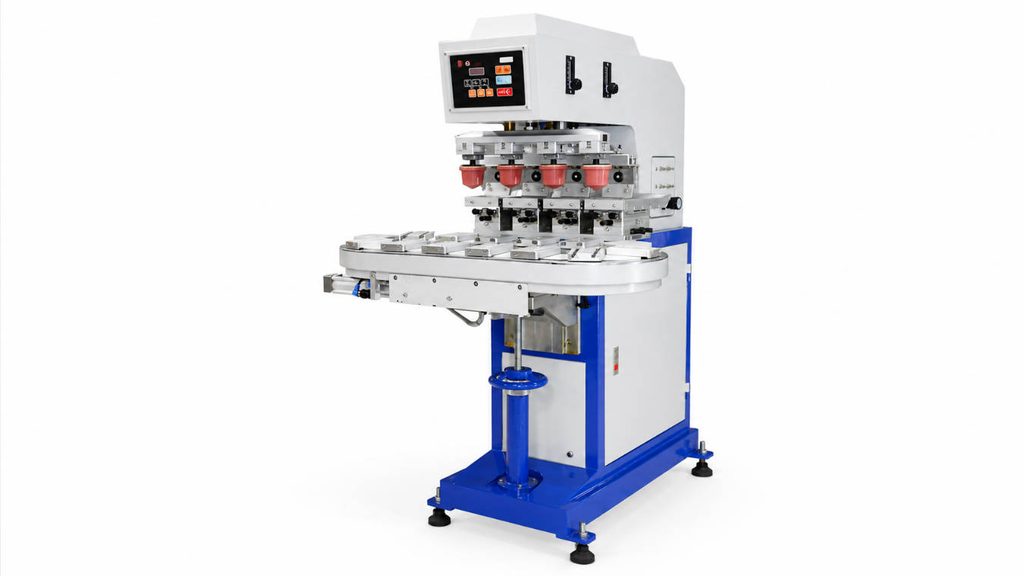
There Is No Universal Lifespan for Pad Printing
Pad printing creates a relatively thin ink film.
Its durability is therefore controlled by how well that ink film bonds to the substrate and how much stress the printed area experiences after production.
Consider these examples:
A decorative logo on a product that stays indoors and is rarely touched may remain visually acceptable for a long period.
A button pressed hundreds of times per day faces continuous abrasion.
A cosmetic bottle may come into contact with oils, alcohol, cleaners, or skin-care ingredients.
An automotive component may experience temperature changes, sunlight, abrasion, and cleaning chemicals.
A medical or laboratory component may require resistance to repeated cleaning or other process-specific exposure.
All of these can be pad printed, but they do not require the same ink or validation method.
That is why “pad printing durability” should be defined according to the application.
What Actually Causes a Pad Print to Fail?
Most durability failures fall into several categories.
Poor Adhesion
The ink does not bond properly to the product surface.
Typical symptoms include:
- peeling;
- flaking;
- easy scratching;
- ink lifting during tape testing.
This often occurs when the ink is not compatible with the substrate or when the surface requires cleaning or pretreatment.
Abrasion
The print gradually wears away because of repeated physical contact.
Examples include:
- control buttons;
- handles;
- keycaps;
- tools;
- consumer electronics;
- frequently handled plastic components.
Chemical Attack
Cleaning products, oils, fuels, alcohols, cosmetics, or other chemicals may soften or dissolve the ink film.
UV and Weather Exposure
Outdoor sunlight, heat, moisture, and temperature cycling can affect pigments and resin systems.
Incomplete Curing
A print may appear dry on the surface but may not yet have developed its intended resistance.
A print that looks dry is not necessarily fully cured.
This distinction is especially important when using two-component ink systems.
Ink Type Is One of the Biggest Durability Factors
Pad printing ink is not simply colored liquid.
The ink formulation contains a binder or resin system, pigments, solvents or other carriers, and additives designed to create a printable film.
Different formulations are designed for different substrates and performance requirements.
ENGY provides a separate guide to pad printing ink types if you need a deeper comparison of solvent-based, UV-curable, and silicone ink systems.
For durability decisions, one of the most useful distinctions is between one-component and two-component ink.
One-Component vs Two-Component Pad Printing Ink
One-Component Ink
A one-component, or 1K, ink is generally supplied ready for viscosity adjustment without adding a separate hardener.
Depending on the formulation and substrate, adhesion develops through solvent evaporation and interaction between the ink resin and the product surface.
Advantages can include:
- simpler preparation;
- no hardener mixing step;
- easier production management;
- no catalyst-related pot-life issue.
This type of ink may be suitable for many plastics and general product-decoration applications when the substrate and ink chemistry are compatible.
However, applications requiring stronger resistance to abrasion, chemicals, or harsh operating conditions may require a different formulation.
Two-Component Ink
A two-component, or 2K, system normally combines the ink with a specified hardener before printing.
The hardener participates in the curing process and helps create a more chemically resistant ink film.
Depending on the ink system, two-component inks are often considered for demanding applications involving:
- metal;
- glass;
- coated surfaces;
- industrial components;
- chemical exposure;
- higher abrasion requirements.
The trade-off is process control.
Once the hardener is added, the mixed ink generally has a limited useful working period. The mixing ratio must also follow the ink manufacturer’s specification.
Incorrect mixing can result in poor curing or inconsistent performance.
For demanding industrial applications, durability often depends more on selecting the correct ink/substrate combination than on applying a thicker layer of ink.
Pad Printing Ink Types and Their Typical Durability Considerations
| Ink System | Typical Strength | Durability Consideration | Typical Application Logic |
| One-component solvent ink | Simple processing and broad usability | Depends strongly on substrate compatibility | General plastics and product decoration |
| Two-component ink | Higher chemical and mechanical resistance in suitable systems | Mixing and curing must be controlled | Industrial parts, metal, glass, demanding products |
| UV-curable ink | Fast curing in compatible systems | Requires appropriate curing equipment and formulation | Specialized automated production |
| Silicone ink | Designed for difficult silicone substrates | Correct curing and surface condition are critical | Silicone products and elastomer applications |
| Specialized substrate ink | Formulated for a particular material | Must be matched to the specific material | Engineering plastics and special surfaces |
This table is intentionally general.
Specific performance should always be confirmed using the technical documentation for the actual ink series and, preferably, tested on the real production part.
Why the Product Material Changes Everything
Two parts can use the same pad printing machine but require completely different ink systems.
ABS and Similar Engineering Plastics
Many industrial plastics can accept appropriate pad printing inks relatively well, provided the surface is clean and compatible with the chosen formulation.
However, additives, coatings, recycled content, mold-release agents, and different resin grades can change adhesion behavior.
Never assume that two products described simply as “plastic” will print identically.
PP and PE
Polypropylene and polyethylene are low-surface-energy plastics.
Ink may have difficulty wetting and bonding to these materials without suitable preparation.
Depending on the application, pretreatment such as flame or plasma treatment may be considered to improve surface energy before printing.
Metal
Bare or coated metal requires an ink system compatible with the exact surface.
Oil contamination is particularly important.
A visually clean component may still carry manufacturing oils or residues that reduce adhesion.
Glass
Glass can require an appropriately formulated ink and controlled curing process, particularly where chemical or washing resistance matters.
Silicone
Silicone is difficult to print with ordinary ink chemistry.
A specialized silicone-compatible ink system and suitable curing process may be necessary.
This is why product material should be one of the first pieces of information provided when requesting a pad printing machine solution.
Surface Preparation Can Determine Whether the Print Stays or Peels
A high-performance ink cannot compensate for a contaminated surface.
Before printing, products may carry:
- dust;
- grease;
- mold-release agents;
- fingerprints;
- machining oil;
- silicone contamination;
- moisture.
These contaminants can create a weak boundary between the ink film and the substrate.
The print may initially appear acceptable but fail during later adhesion or abrasion testing.
For difficult substrates, manufacturers may also consider surface pretreatment.
Possible process steps can include:
- cleaning;
- drying;
- flame treatment;
- plasma treatment;
- another application-specific surface activation process;
- printing within the appropriate treatment window.
Not every product needs pretreatment.
The requirement should be determined through material evaluation and testing.
Curing: The Step That Buyers Often Underestimate
One of the most common production mistakes is judging durability immediately after printing.
Ink usually develops its final properties over a curing process.
Depending on the ink chemistry, this may involve:
- solvent evaporation;
- chemical crosslinking;
- heat;
- UV energy;
- or a combination of mechanisms.
A component may feel dry enough to handle while the ink film is still developing its final resistance.
Testing too early can therefore produce misleading results.
The opposite problem also occurs: products may be packaged, assembled, cleaned, or shipped before sufficient curing has taken place.
For this reason, production planning should consider curing as part of the printing cycle rather than treating printing as complete the moment the part leaves the machine.
Ink Viscosity Affects More Than Appearance
Ink viscosity is usually discussed as a print-quality variable, but it can indirectly influence durability as well.
If the ink is too thick:
- image pickup may become incomplete;
- transfer may become inconsistent;
- fine details may be lost.
If the ink is excessively diluted:
- color density may decrease;
- the deposited ink film may change;
- the intended formulation balance may be affected.
The correct thinner and mixing ratio should therefore be controlled according to the ink specification.
For long industrial production runs, a closed ink cup system can help reduce uncontrolled solvent evaporation compared with exposing a large quantity of ink directly to the production environment.
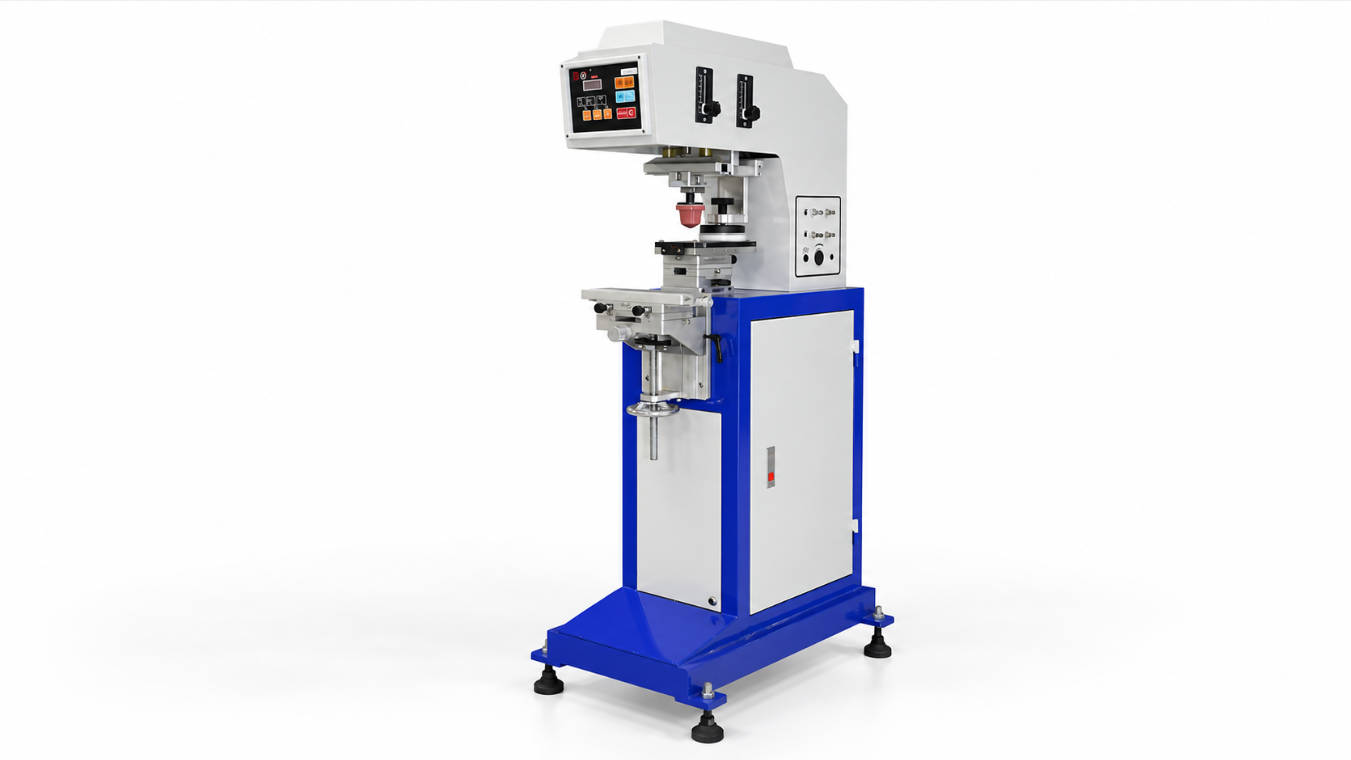
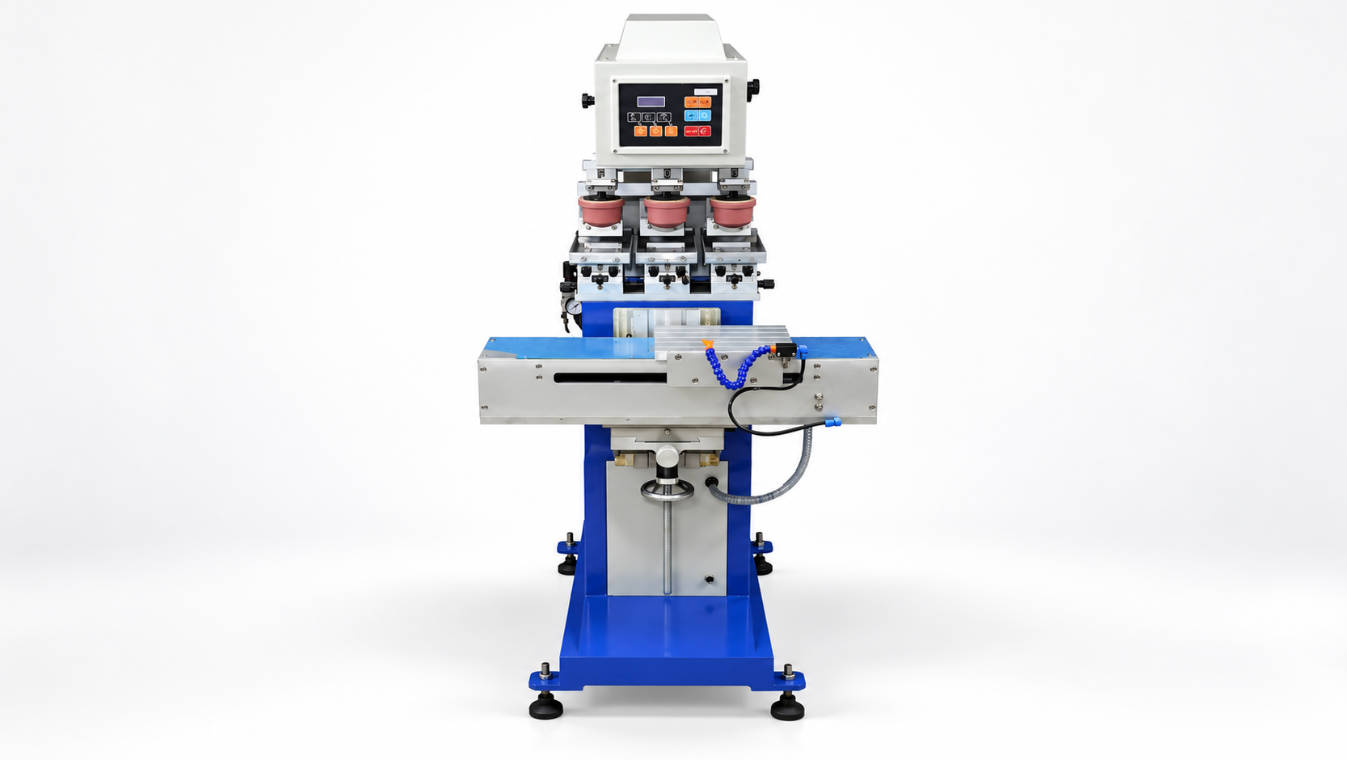
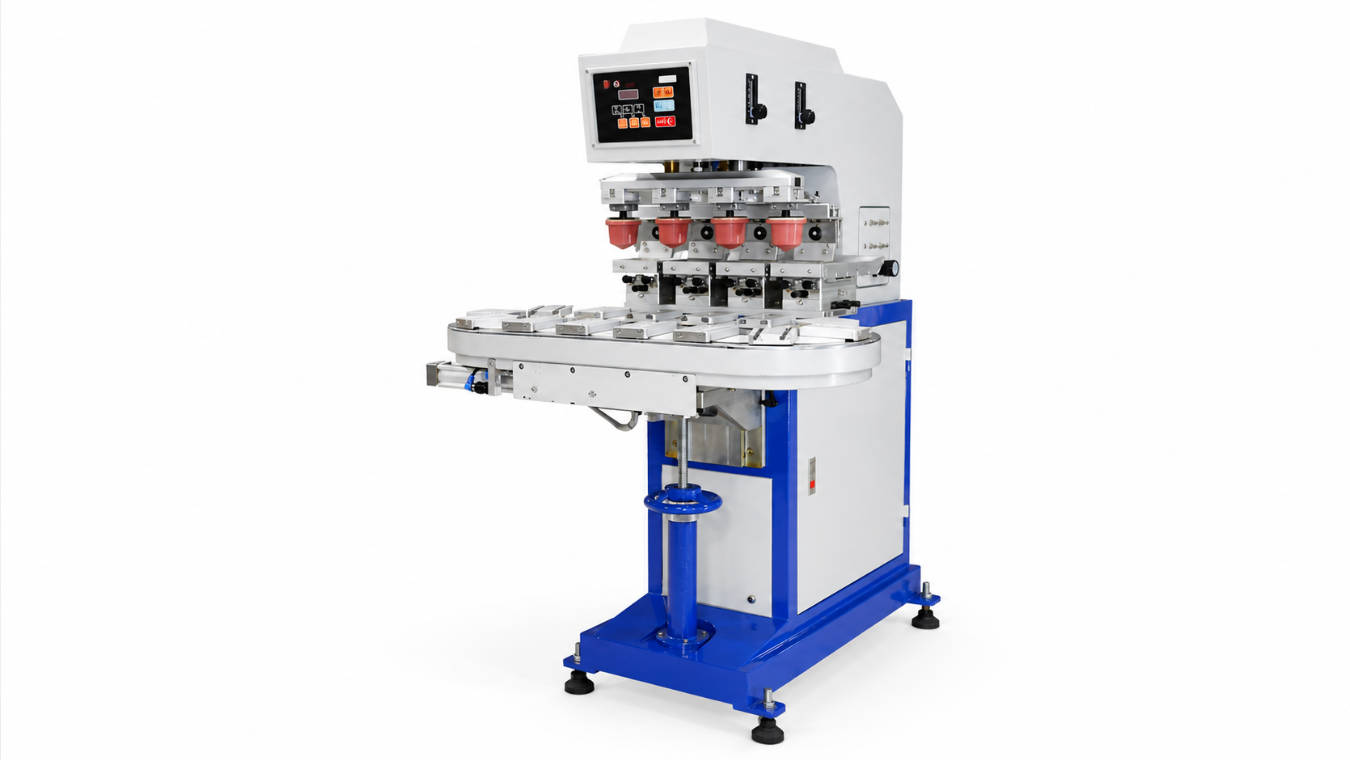
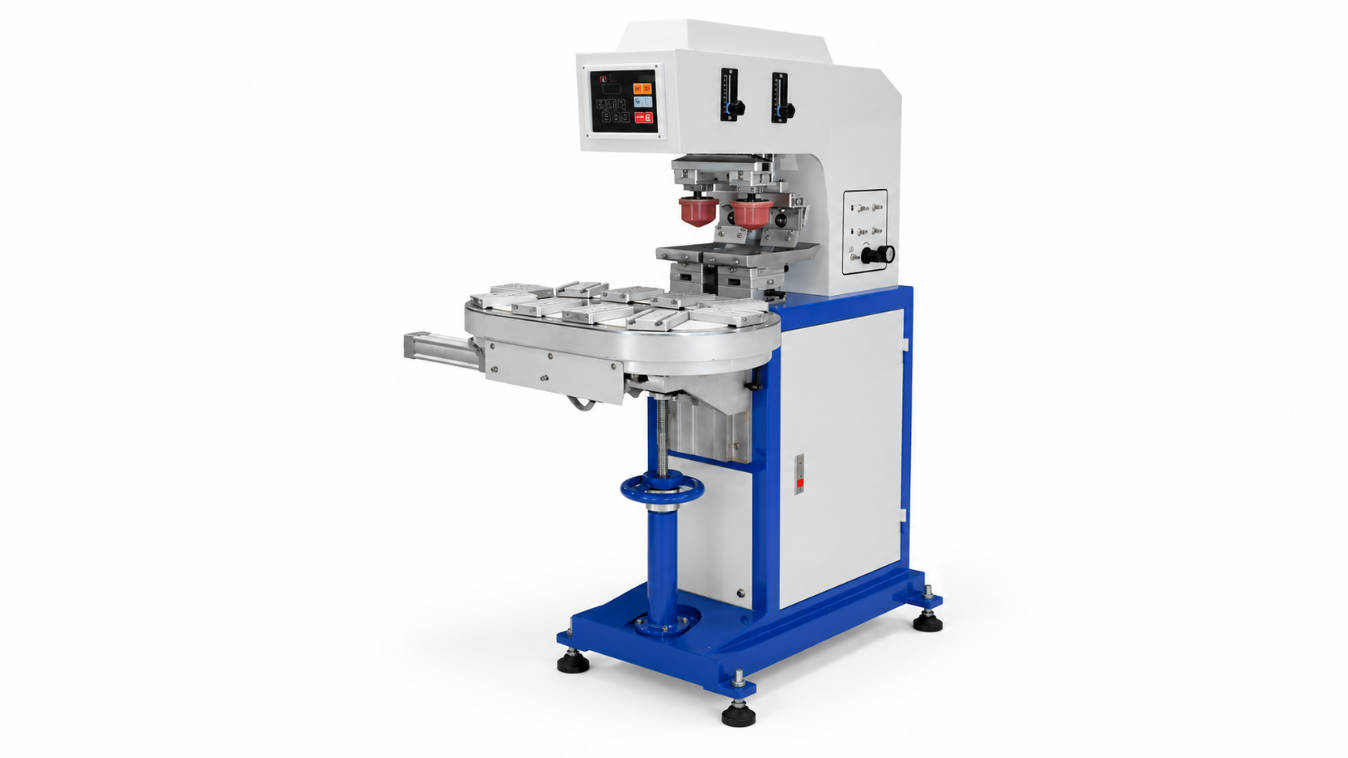
Buyers comparing different machine configurations can review ENGY’s industrial pad printing machine range for closed-cup, multi-color, conveyor, and other equipment configurations.
A Durable Print Starts Before the Machine Cycle
The complete process can be viewed as a chain:
substrate → cleaning/pretreatment → ink selection → mixing → viscosity → cliché → silicone pad → transfer → curing → testing
If one link fails, the final print can fail.
This explains why replacing only the printing machine does not automatically solve an adhesion problem.
For example:
A more precise machine cannot make an incompatible ink bond to polypropylene.
A new silicone pad cannot compensate for oil contamination.
A deeper cliché cannot correct insufficient curing.
More hardener does not automatically create a more durable print.
Durability comes from process compatibility.
How Should Pad Printing Durability Be Tested?
A manufacturer should test the characteristic that matters in the real product application.
There is little value in performing only a visual inspection if the finished component will later face repeated rubbing or chemical cleaning.
Adhesion Testing
Adhesion testing checks whether the ink remains bonded to the surface.
The exact method should follow the customer’s product or industry requirement.
Rub and Abrasion Testing
This evaluates how the printed surface responds to repeated physical contact.
It is important for:
- buttons;
- handles;
- switches;
- electronic housings;
- wearable products.
Chemical Resistance Testing
A product may need exposure to:
- alcohol;
- cleaners;
- oils;
- detergents;
- cosmetics;
- other application-specific substances.
The test liquid and exposure conditions should reflect actual use.
Environmental Testing
For products exposed to challenging environments, manufacturers may evaluate:
- heat;
- humidity;
- temperature cycling;
- light or UV exposure.
Real-Use Testing
For many B2B applications, one of the most valuable tests is simply reproducing the customer’s actual usage conditions.
The correct durability test is the test that reproduces the stresses the finished product will actually experience.
What Does the Pad Printing Machine Have to Do With Durability?
Ink chemistry determines much of the final resistance, but the machine still plays an important role.
A stable pad printing machine helps maintain:
- consistent ink transfer;
- controlled printing pressure;
- repeatable positioning;
- stable cycle timing;
- consistent multi-color registration.
If the machine produces inconsistent ink transfer, the printed film can vary from part to part.
Fixture design also matters.
If the product moves during printing, operators may increase pressure unnecessarily to compensate, creating new print-quality problems rather than solving the real cause.
The machine, tooling, ink, and process therefore need to be evaluated as one production system.
When Does a Custom Pad Printing Machine Help?
Some durability problems are actually production-process problems.
Consider a component that requires:
- surface treatment before printing;
- several colors;
- intermediate drying;
- automatic loading;
- controlled orientation;
- post-print curing.
Trying to perform these operations manually can introduce variation between parts.
For high-volume applications, a customized pad printing machine can integrate product handling, printing stations, special fixtures, pretreatment, or other process requirements into a more controlled production sequence.
Customization is particularly relevant when durability must remain consistent across large batch quantities.
Before Buying a Pad Printer, Send More Than a Product Photo
If durability matters, the supplier needs more than the logo dimensions.
Provide:
| Information | Why It Matters |
| Product material | Determines ink compatibility |
| Surface coating or treatment | Changes adhesion behavior |
| Print dimensions | Determines plate and pad requirements |
| Number of colors | Determines machine configuration |
| Expected production volume | Influences automation |
| Use environment | Defines durability requirements |
| Abrasion exposure | Helps define validation |
| Chemical exposure | Helps select ink system |
| Outdoor/indoor use | Changes environmental requirements |
| Existing adhesion problem | Helps diagnose the process |
| Physical samples | Allows realistic testing |
For uncertain applications, sample testing should happen before the complete production process is finalized.
ENGY’s custom pad printing machine service can be used as the next step when a project requires product-specific fixture design, machine configuration, or sample evaluation.
Five Ways to Improve Pad Printing Durability
1. Identify the Exact Substrate
Do not specify only “plastic.”
Identify the actual resin or surface system whenever possible.
2. Select the Ink for the Application
The color is not enough.
Evaluate adhesion, abrasion, chemicals, curing, and operating environment.
3. Control Surface Cleanliness
Remove contamination before printing and determine whether pretreatment is necessary.
4. Follow Mixing and Curing Requirements
Do not improvise hardener ratios or assume that surface-dry means fully cured.
5. Validate the Finished Part
Test the printed product under realistic use conditions before mass production.
These steps are often more effective than trying to solve a durability problem after thousands of parts have already been printed.
FAQ
How long does pad printing ink last on plastic?
There is no universal lifespan. Durability depends on the plastic type, ink compatibility, surface preparation, curing, abrasion, chemical exposure, and environmental conditions.
Is pad printing permanent?
Pad printing can produce highly durable industrial markings when the ink and process are correctly matched to the substrate. However, no printing process should be described as universally permanent under every type of wear or chemical exposure.
Does pad printing scratch off easily?
Properly specified pad printing should not simply scratch off under normal intended use. Easy scratching often indicates poor adhesion, incomplete curing, incompatible ink, contamination, or an unsuitable substrate preparation process.
Is two-component pad printing ink more durable?
Two-component inks are often selected for demanding applications because the hardener can create a chemically crosslinked ink film. Actual performance still depends on the ink formulation, substrate, mixing ratio, and curing conditions.
What is the most durable pad printing ink?
There is no single most durable ink for every product. The appropriate ink is the one formulated for the substrate and resistance requirements of the application.
Why does pad printing ink peel off plastic?
Possible causes include an incompatible ink, surface contamination, mold-release residue, low surface energy, inadequate pretreatment, incorrect mixing, or insufficient curing.
Does pad printing fade in sunlight?
Outdoor exposure can affect both pigments and the ink resin system. Products intended for prolonged UV exposure should use an appropriate ink formulation and undergo relevant weathering evaluation.
Can pad printing survive alcohol or cleaning chemicals?
Some ink systems can provide strong chemical resistance, but compatibility depends on the exact ink, substrate, curing process, chemical concentration, and exposure conditions. Testing with the actual chemical is recommended.
Conclusion
So, how long does pad printing last?
The most accurate answer is that durability is application-specific.
A pad print used as a lightly handled indoor logo and a pad print used on a frequently cleaned industrial control cannot be evaluated by the same lifespan number.
The factors that matter most are:
- substrate compatibility;
- ink chemistry;
- surface preparation;
- correct mixing;
- viscosity control;
- curing;
- abrasion;
- chemical exposure;
- environment.
A durable pad print is the result of a matched printing system—not simply a durable ink or an expensive machine.
For B2B manufacturers, the practical approach is to define the required resistance first, select the appropriate ink and process around that requirement, test the real product, and then configure the machine and automation needed for consistent production.