I. Introduction: The Quest for the “Permanent” Mark
In industrial manufacturing, the “permanence” of a mark is often the difference between a high-quality product and a liability. Whether you are marking medical devices that must survive repeated sterilization, automotive components exposed to harsh chemicals, or consumer electronics handled thousands of times a day, the question remains: Which method ensures the logo or instruction stays put for the life of the product?
Traditionally, many engineers believe that engraving is the only way to achieve true permanence because it physically alters the material. However, as the printing industry has evolved, pad printing machines equipped with advanced ink chemistry have challenged this notion. While engraving physically removes material to create a mark, pad printing utilizes a chemical “bite” into the substrate, often providing equal or superior durability in terms of chemical resistance and high-resolution legibility without compromising the structural integrity of the part.
In this guide, we will break down the science of durability to help you decide which investment—a pad printing machine or an engraving system—will truly serve your production goals and your customers’ expectations.
II. The Science of the Bond: How They Work
To understand durability, we must first understand how each method interacts with the surface of your product.
1. Engraving: The Subtractive Approach
Engraving is a subtractive process. Whether using a CO2 laser, a fiber laser, or a mechanical CNC bit, the goal is to remove layers of the material to create a void. This void forms the image.
- The Physical Change: The surface is permanently scarred. Even if the top layer is rubbed away, the indentation remains.
- The Limitation: Engraving is often monochrome (the color of the underlying material) and can create “stress risers” in delicate plastics, potentially leading to cracks under pressure.
2. Pad Printing: The Molecular Bond
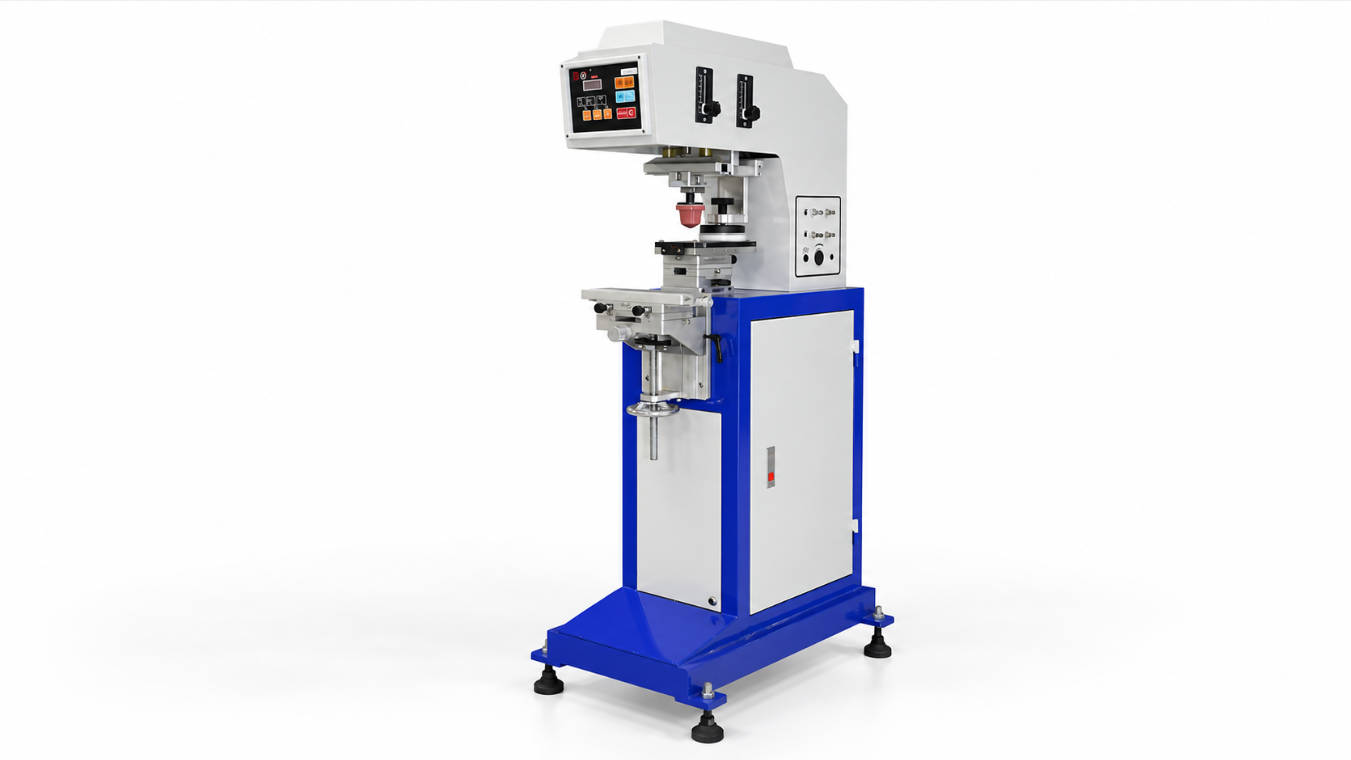
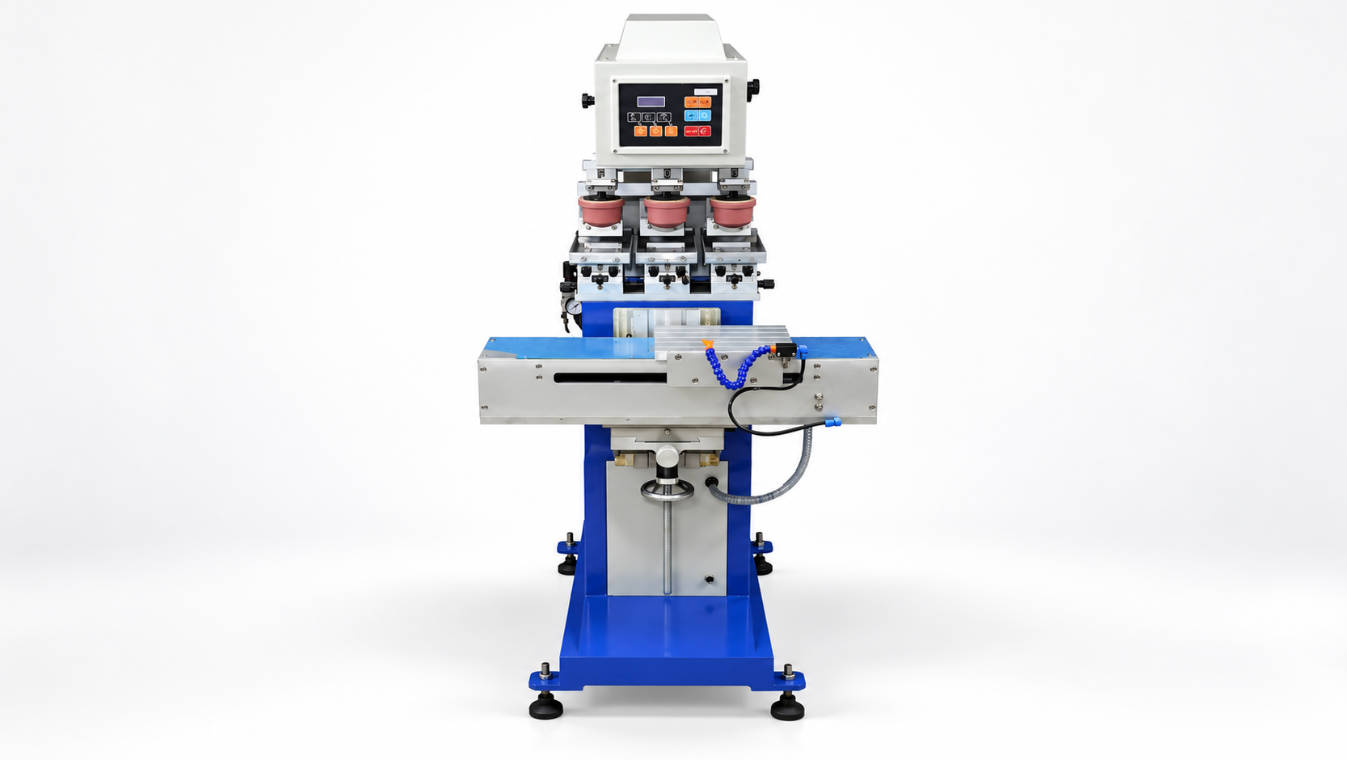
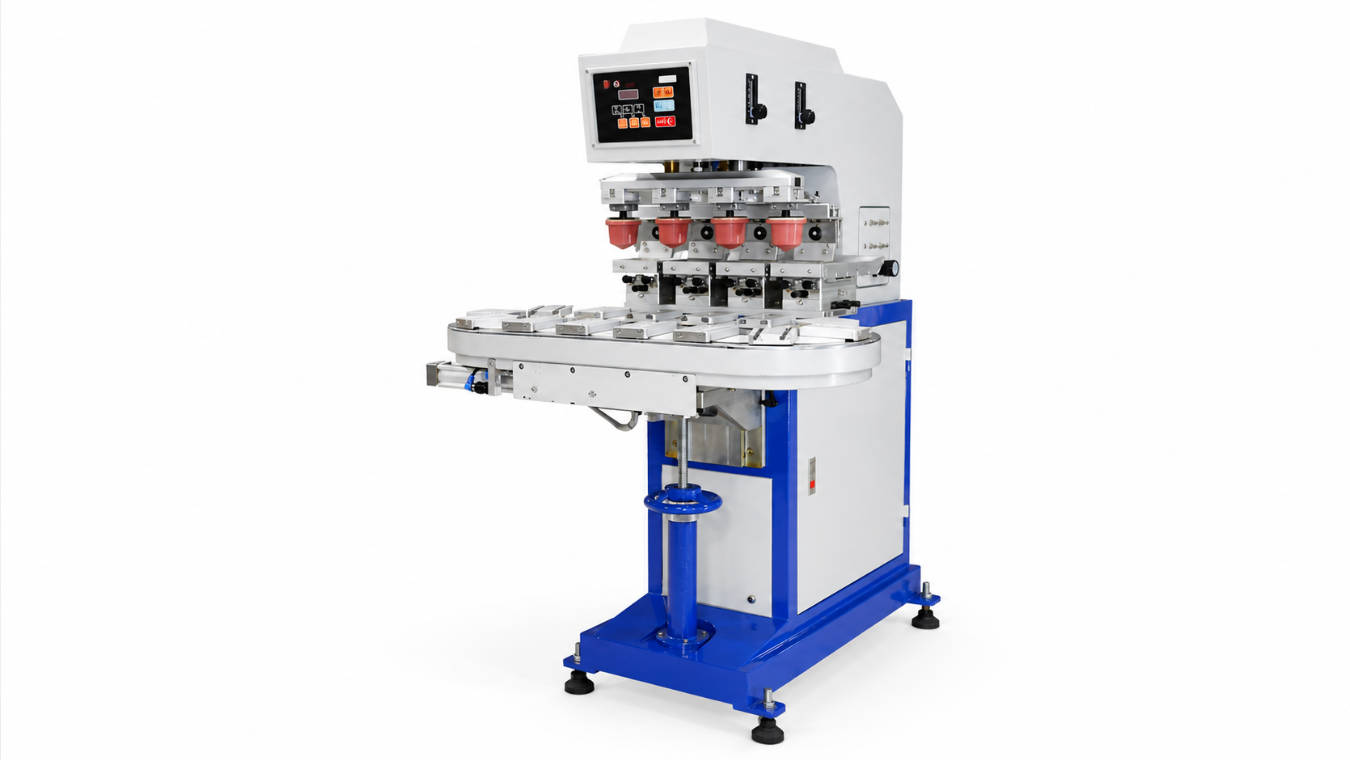
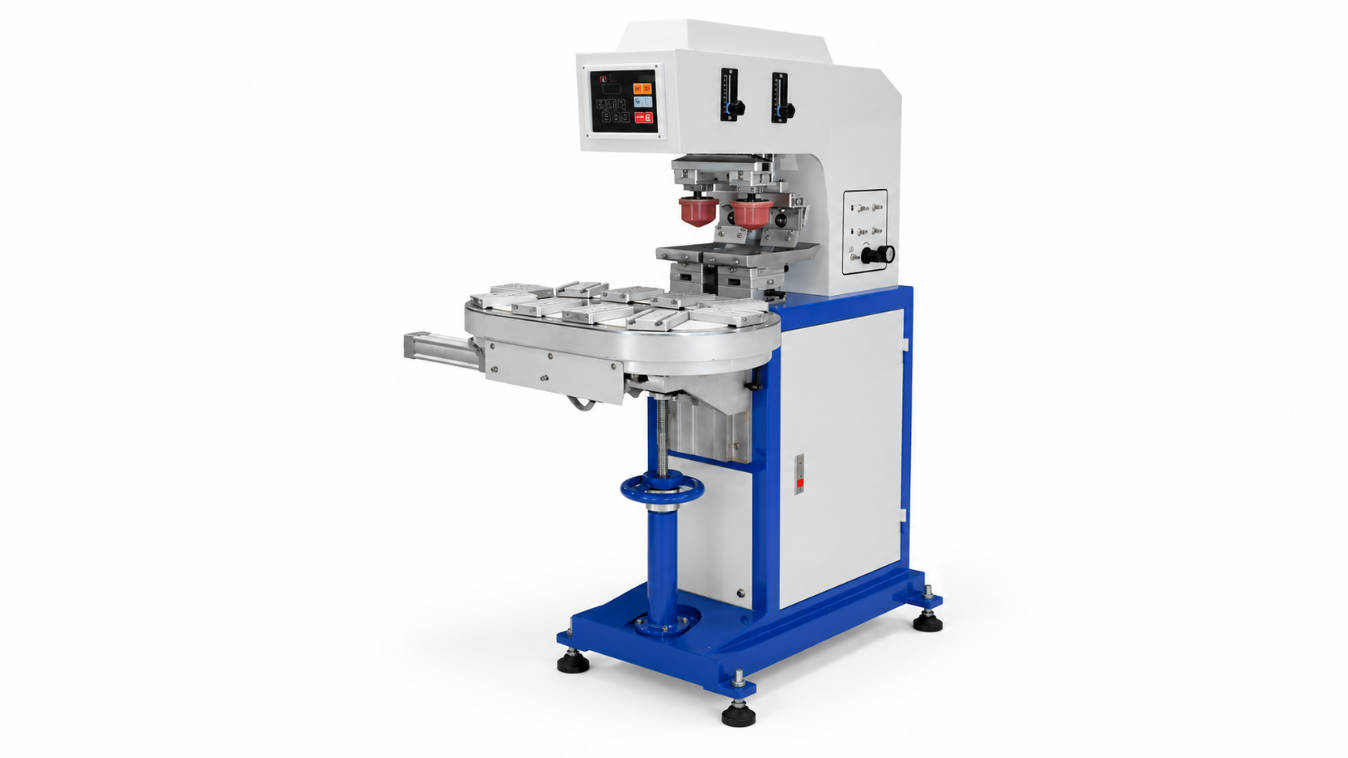
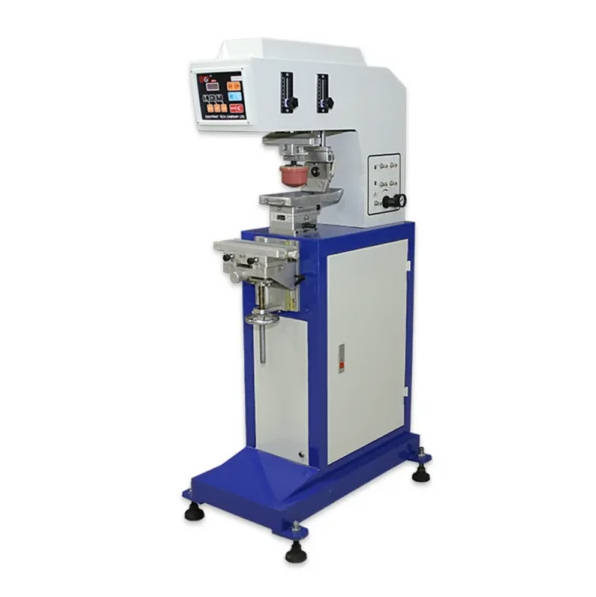
A pad printing machine performs an “additive” process, but it is far more than just “sitting ink on top.” Modern industrial pad printing relies on a transfer process using a silicone pad and a chemical cliché.
- The Chemical Bond: Industrial inks are not just “paint.” When used with a primer or a hardener (2-component ink), the solvent in the ink slightly softens the surface of the plastic or coating, allowing the ink to fuse at a molecular level.
- Cross-linking: Once cured, the ink undergoes a process called cross-linking, creating a hard, plastic-like shield that is incredibly difficult to remove.
III. The Durability Face-Off: Key Performance Metrics
When we talk about “durability,” we are usually referring to three specific types of stress: Abrasion, Chemicals, and Environmental factors.
1. Abrasion Resistance (The “Rub Test”)
How many thousands of times can a thumb slide across a button before the mark fades?
- Engraving: Scores very high here. Since the mark is recessed, it is protected from surface-level friction.
- Pad Printing: High-quality pad printing machines using 2-component (2K) epoxy inks can withstand over 100,000 cycles in a standard RCA Abrader test. For many consumer goods, this exceeds the mechanical life of the product itself.
2. Chemical and Solvent Resistance
This is where the battle gets interesting. In medical or automotive settings, products are wiped with alcohol, bleach, or gasoline.
- Engraving: Generally unaffected by chemicals, although the “recessed” areas can trap dirt and contaminants, making them harder to clean in sterile environments.
- Pad Printing: Specialized inks are specifically engineered for chemical resistance. For medical-grade applications, pad-printed markings are designed to survive hundreds of cycles in an autoclave or repeated exposure to 70% Isopropyl Alcohol without any degradation in color or legibility.
3. UV and Weathering
- Engraving: Excellent for metals. However, on certain plastics, laser engraving can actually accelerate UV degradation in the “burned” area.
- Pad Printing: Offers superior UV protection because the ink contains high-grade pigments and UV-stabilizers. It acts as a protective layer for the substrate beneath it.
IV. Comparative Durability Data (Test Results)
To provide a clearer picture, the following table compares common durability benchmarks for industrial markings on ABS Plastic and Stainless Steel.
| Durability Test | Pad Printing (2K Ink) | Laser/Mechanical Engraving |
| RCA Abrasion (Cycles) | 50,000 – 150,000 | Indefinite (Recessed) |
| Alcohol Resistance (IPA) | 200+ Double Rubs | Complete Resistance |
| Salt Spray (Corrosion) | Excellent (Protective) | Variable (Can promote rust in pits) |
| Autoclave (134°C) | 50+ Cycles (Class VI Ink) | Indefinite |
| Legibility/Contrast | High (Multi-color) | Moderate (Material dependent) |
| Surface Integrity | Non-Destructive | Subtractive (Alters surface) |
V. Material Compatibility: Where Pad Printing Shines
A common doubt among manufacturers is whether pad printing can stick to “difficult” materials. In many cases, a pad printing machine is actually more durable on modern polymers than engraving.
1. Delicate Plastics and Polymers
Many high-tech plastics used in the medical and aerospace industries are thin-walled. Engraving these surfaces can create weak points. Pad printing is a non-destructive marking method, making it the preferred choice for safety-critical components where structural integrity cannot be compromised.
2. Coated or Painted Surfaces
If you have a part that is already powder-coated or painted, engraving will cut through that coating, exposing the raw material underneath to corrosion. A pad printing machine allows you to print directly on top of the coating, creating a secondary bond that maintains the protective integrity of the original finish.
VI. Aesthetic Durability: Beyond Just “Staying Put”
When manufacturers discuss durability, they often overlook Legibility Over Time. A mark that is technically “there” but impossible to read is a failure. This is a critical area where a pad printing machine often outperforms engraving, especially in low-light or high-stress environments.
1. High-Contrast and Color Retention
Engraving relies on the natural color of the substrate or the “char” left by a laser. On dark plastics or certain metals, the resulting mark can be “tone-on-tone,” offering very low contrast. Pad printing allows for the use of vibrant, high-opacity inks that provide maximum contrast against any substrate color, ensuring that safety warnings and branding remain perfectly legible even after years of surface wear.
2. Surface Smoothness and Hygiene
In the medical and food industries, “durability” also involves the ability to remain clean.
- The Engraving Flaw: Because engraving creates a physical “valley” in the material, these recesses can act as traps for bacteria, skin oils, and industrial grime. Over time, the mark becomes “clogged,” reducing legibility and hygiene.
- The Pad Printing Advantage: Pad printing adds a microscopic layer (typically 5-10 microns) that is flush with the surface. Modern medical-grade pad printing inks are designed to be non-porous, making the part easier to sanitize without the mark degrading.
VII. The Efficiency Factor: Durability at Scale
In a high-volume factory, the “cost of durability” is a major KPI. We must look at how long it takes to achieve a durable mark.
1. Throughput Comparison
One of the most compelling reasons to choose a pad printing machine for industrial marking is the speed of delivery; while a laser might take 15–30 seconds to deep-engrave a complex logo, a pad printer can transfer that same high-durability image in less than 2 seconds.
When you multiply this across 100,000 units, the labor and energy savings of pad printing are astronomical. You aren’t just buying durability; you are buying durable throughput.
2. Consistency of the Mark
Mechanical engraving bits wear down, and laser lenses can smudge, leading to “shallow” or “weak” marks toward the end of a shift. A pad printing machine, using a closed-cup ink system, maintains a consistent ink viscosity and film thickness from the first part to the last, ensuring that every customer receives the same level of durability.
VIII. Common Doubts & Expert Solutions: Testing for Reality
As a manufacturer, you shouldn’t take a salesperson’s word for it. You need to verify durability. If you are considering a pad printing machine, we recommend three “Golden Tests” to prove its worth against engraving.
1. The Cross-Hatch Tape Test (ISO 2409)
This is the industry standard for adhesion. You use a blade to cut a grid into the printed area and apply a specific pressure-sensitive tape.
- The Result: If the ink remains on the part after the tape is ripped away, the chemical bond is successful. Properly cured pad printing ink on a treated substrate will consistently achieve a 5B rating (the highest possible score), proving it is functionally inseparable from the material.
2. The Solvent Rub Test (ASTM D5402)
Soak a cloth in MEK (Methyl Ethyl Ketone) or Isopropyl Alcohol and rub the mark with consistent pressure.
- Why it matters: This simulates years of cleaning. High-quality 2-component (2K) pad printing inks are designed to withstand over 200 “double rubs,” which often exceeds the chemical resistance of the product’s housing itself.
3. The Autoclave or Dishwasher Test
For consumer goods or medical tools, moisture and heat are the enemies.
- Expert Insight: While engraving handles heat well, it doesn’t solve the contrast issue. Many of our clients find that UV-curable pad printing inks provide a “harder” finish that resists the “blanching” or fading typically seen in standard digital or screen-printed labels when exposed to high-temperature steam.
IX. Practical Decision Guide: Which One Should You Choose?
To make your investment decision easier, we’ve developed this sincerity-based framework. Ask yourself these three questions:
1. Does the part have a critical structural function?
If you are marking a thin-walled pressure vessel or a high-stress aerospace clip, Choose Pad Printing. Avoid the “stress risers” caused by cutting into the material with a laser or bit.
2. Is the environment’s temperature above 300°C?
If you are marking an engine block or a furnace component, Choose Engraving. No organic ink can survive direct flame or extreme volcanic heat, whereas a physical indentation will remain.
3. Do you need high-speed branding and multiple colors?
If you are marking 5,000+ items per day and want your logo to “pop” with brand-accurate colors, Choose a Pad Printing Machine. It is the only way to achieve industrial-grade durability without sacrificing the aesthetic beauty of your product.
X. Conclusion: Investing in the Right Technology
Durability is not a “one-size-fits-all” concept. While engraving offers a unique tactile “permanence,” it often falls short in terms of contrast, speed, and material integrity.
For the vast majority of modern industrial and medical applications, a pad printing machine provides the most cost-effective and versatile path to a durable mark. By utilizing the latest in ink chemistry—such as 2-component epoxy systems and UV-curable polymers—you can achieve a bond that is functionally as permanent as the part itself.
If you are looking for a solution that balances legendary durability with low operating costs, the pad printing process remains the “gold standard” in the decoration industry.
FAQ: Quick Review for Decision Makers
1. Can pad printing ink really be as permanent as engraving? In terms of daily use, yes. While engraving is physically deeper, pad printing inks with hardeners create a chemical bond that makes the ink a physical part of the plastic substrate, resisting even heavy industrial solvents.
2. Is pad printing better for medical devices than laser engraving? Often, yes. Pad printing is non-destructive, meaning it doesn’t create pits where bacteria can grow. Furthermore, medical-grade pad printing inks are certified for biocompatibility and can survive repeated sterilization cycles in an autoclave.
3. Does pad printing wear off on handheld electronics? Not if done correctly. The “fading” people see on cheap electronics is usually the result of 1-component ink without proper surface pre-treatment. Using a professional pad printing machine with 2-component ink and corona/plasma treatment ensures the mark lasts for the life of the device.
4. What is the main maintenance difference? Engraving machines (especially mechanical ones) require bit replacements and vacuum systems for debris. Pad printing requires ink-cup cleaning and occasional pad replacement. In terms of “downtime,” pad printing is generally easier for a standard operator to maintain.
5. How do I know which ink to use for maximum durability? This depends on your substrate. Always consult with your machine supplier to perform an adhesion test. They can recommend whether you need a solvent-based, 2-component, or UV-LED ink to meet your specific durability requirements.