When choosing a pad printing machine, one of the first questions buyers face is whether to use a closed ink cup pad printer or an open tray pad printer. Both systems can print logos, marks, patterns, and product information on irregular surfaces, but they are designed for different production needs.
A closed ink cup pad printer is better for stable ink control, lower solvent evaporation, cleaner operation, and medium or small printing areas. An open tray pad printer is often preferred when the image area is larger, the printing plate size is bigger, or the production requires more flexible ink adjustment.
For buyers printing on pens, bottle caps, toys, golf balls, medical parts, electronic components, or plastic products, understanding the difference between these two systems can help reduce printing defects, improve efficiency, and choose the right pad printing equipment.
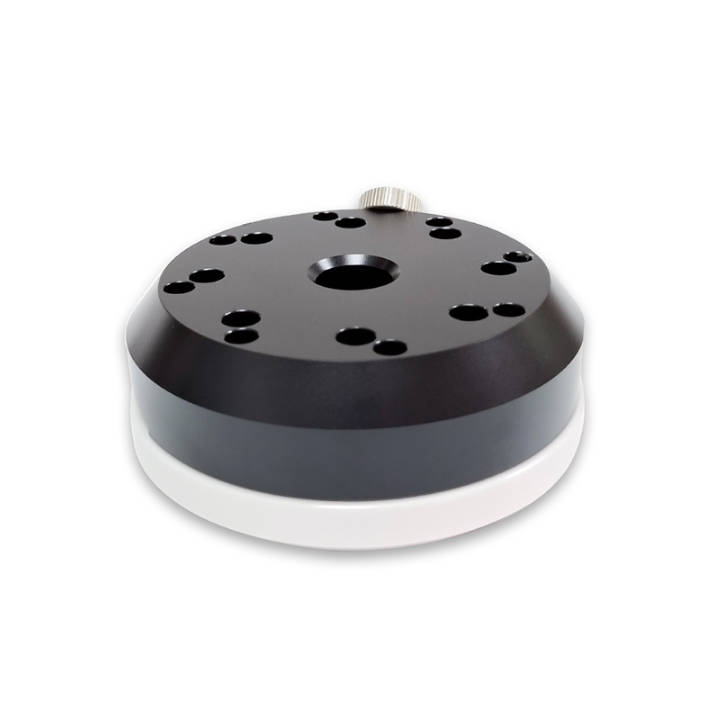
What Is a Closed Ink Cup Pad Printer?
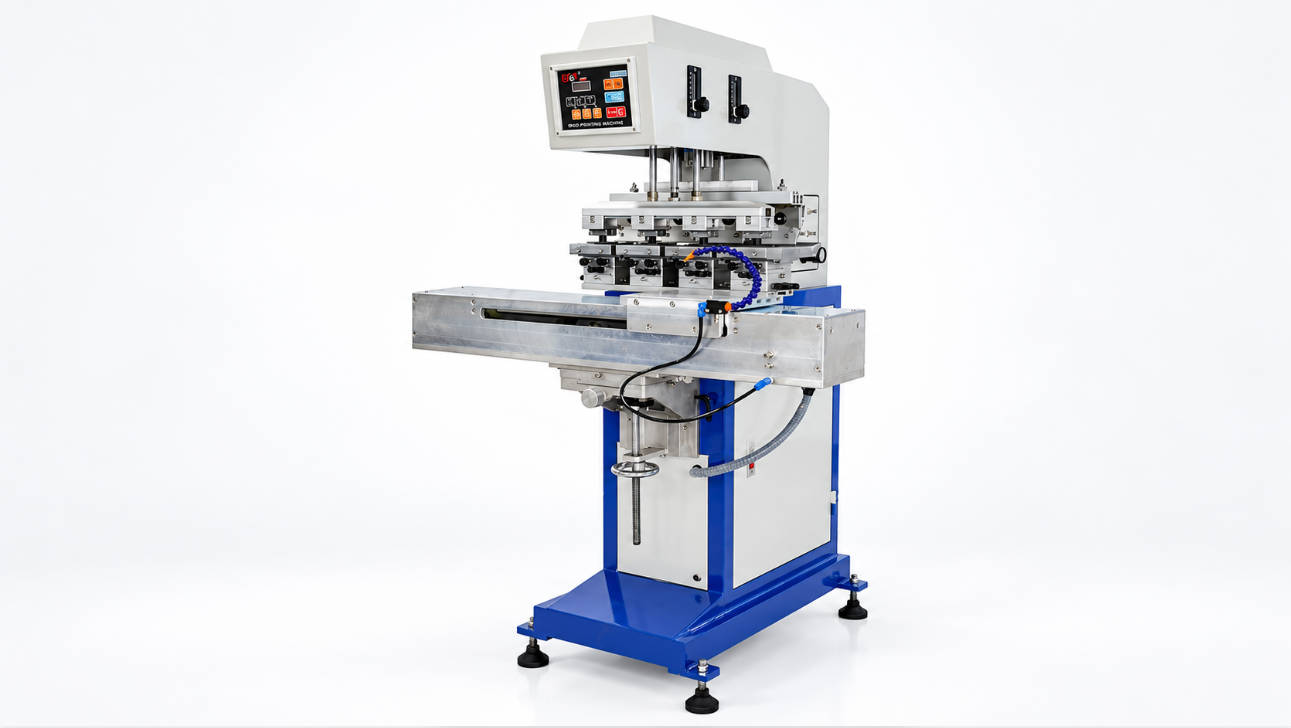
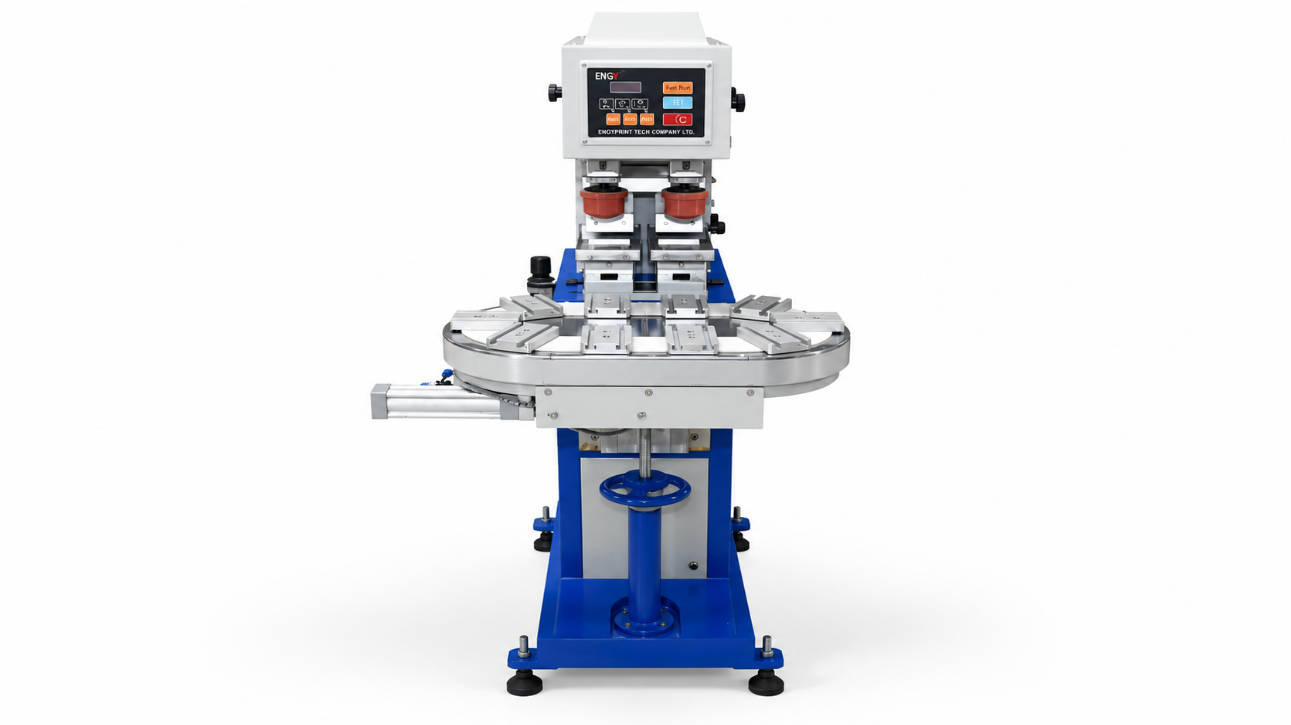
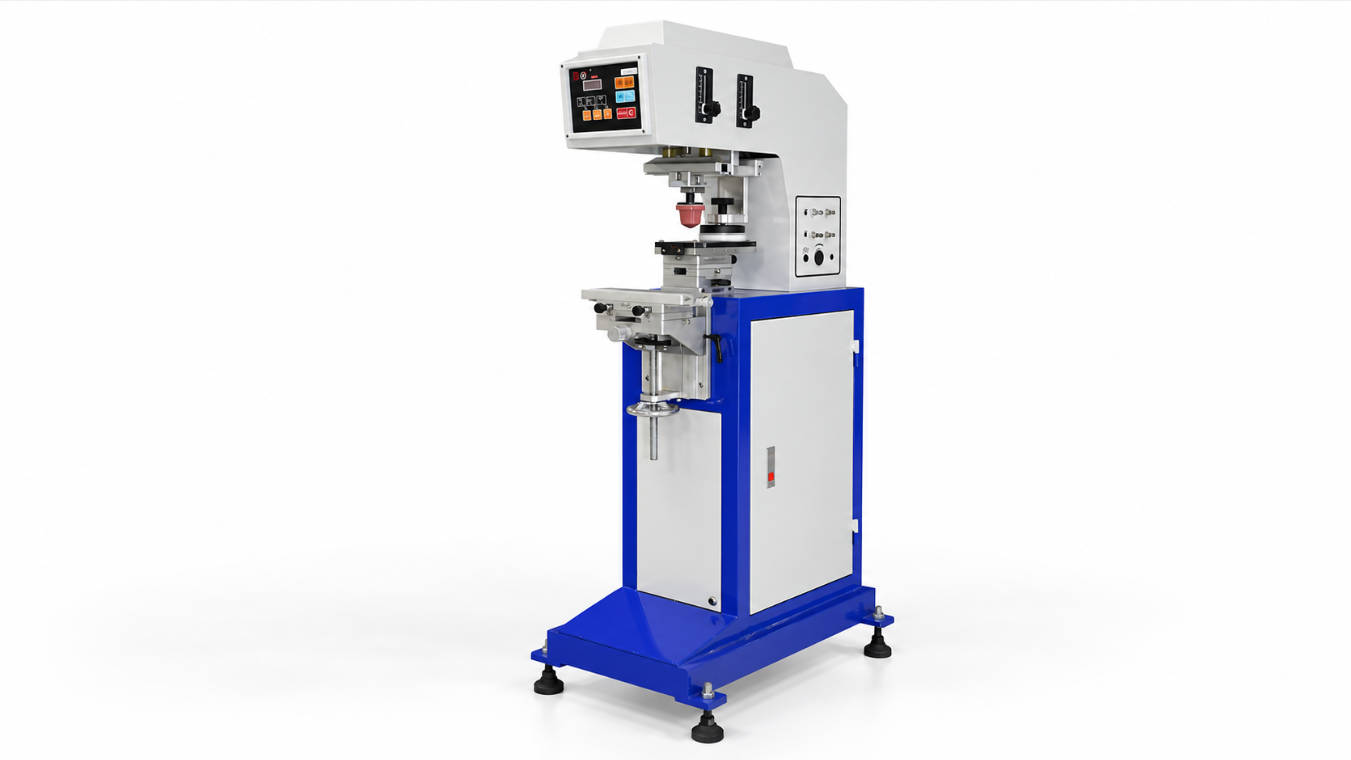
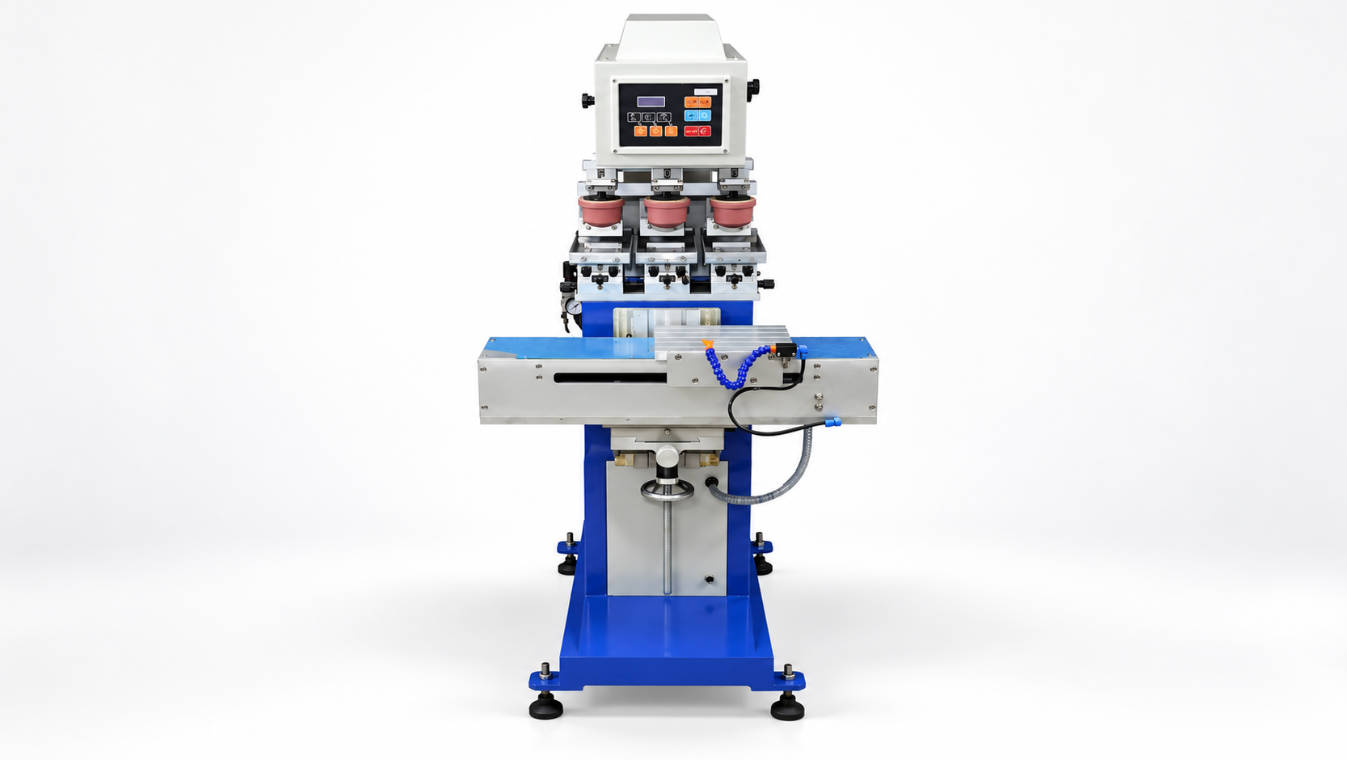
A closed ink cup pad printer, also called a sealed ink cup pad printer or closed cup pad printing machine, uses a sealed ink cup to hold and transfer ink across the printing plate. The ink cup usually includes a ceramic or carbide ring that scrapes the plate surface while keeping the ink inside the cup.
Because the ink is sealed inside the cup, the system helps reduce solvent evaporation and keeps the ink condition more stable during production.
This type of pad printer is widely used for industrial product decoration, especially for small to medium print areas where clean operation and consistent printing quality are important.
Common applications include:
- Pens and promotional products
- Bottle caps and closures
- Medical devices
- Electronic parts
- Plastic components
- Golf balls
- Small metal parts
- Cosmetic packaging
What Is an Open Tray Pad Printer?
An open tray pad printer, also known as an open inkwell pad printer or open ink tray pad printing machine, uses an open ink tray to hold the ink. The doctor blade moves across the plate to flood the image area and remove excess ink.
Compared with a sealed ink cup system, the open tray structure gives more flexibility for larger plate sizes and wider image areas. It is often used when the print design is large, the artwork is long, or the production process requires frequent ink adjustment.
Open tray pad printers are commonly used for:
- Garments and gloves
- Notebooks
- Larger plastic parts
- Toys
- Household products
- Watch parts
- Camera parts
- Special-shaped industrial products
Closed Ink Cup vs Open Tray Pad Printer: Main Differences
| Comparison Item | Closed Ink Cup Pad Printer | Open Tray Pad Printer |
| Ink system | Sealed ink cup | Open ink tray |
| Solvent evaporation | Lower | Higher |
| Ink stability | More stable during long runs | Requires more frequent adjustment |
| Cleaning | Cleaner and easier | More ink exposure, more cleaning required |
| Print area | Better for small to medium images | Better for larger images |
| Running cost | Usually lower ink and solvent waste | May use more solvent and ink |
| Odor control | Better | Weaker |
| Operation environment | Cleaner | More exposed ink |
| Plate requirement | Must match ink cup size | More flexible for large plates |
| Best for | Stable industrial printing | Large-area or flexible printing |
Which System Has Better Ink Control?
The closed ink cup pad printer usually provides better ink control because the ink is sealed inside the cup. This helps reduce changes caused by air exposure, evaporation, dust, and operator handling.
For production lines that need stable color, repeatable logo quality, and less manual adjustment, the sealed ink cup system is often the better choice.
If your product requires consistent printing quality over repeated batches, a closed ink cup pad printer is usually the safer option.
However, an open tray pad printer can still perform well when operated by experienced workers. It allows easier visual checking and manual adjustment of the ink, which can be useful for special printing jobs.
Which System Reduces Solvent Evaporation?
Solvent evaporation is one of the biggest differences between these two pad printing systems.
In an open tray system, the ink is exposed to air. This means the solvent evaporates faster, and the ink viscosity can change during production. When the ink becomes too thick or unstable, printing defects may appear, such as poor ink transfer, uneven color, broken lines, or unclear edges.
In a closed ink cup system, the ink is covered inside the cup. This helps slow down solvent evaporation and keeps the ink more stable.
For factories that care about lower odor, cleaner operation, and reduced solvent consumption, a sealed ink cup pad printer is usually more suitable than an open tray pad printer.
Which System Is Better for Large Printing Areas?
If your print image is large, an open tray pad printer may be more suitable.
The reason is simple: a closed ink cup system is limited by the ink cup diameter. The image area must fit within the workable cup size. If the artwork is too large, the ink cup may not cover the full image properly.
Open tray pad printers are more flexible for large printing plates and long artwork. This makes them useful for products that require bigger logos, wider patterns, or long text.
Choose an open tray pad printer when:
- The logo or pattern is larger than the ink cup area
- The plate size is big
- The product needs long text or a wide printing design
- The printing job changes frequently
- Manual ink adjustment is acceptable
Which System Has Lower Running Cost?
In many cases, a closed ink cup pad printer can reduce running cost because it helps control ink and solvent usage. Less evaporation means less solvent needs to be added during production. The cleaner system also reduces ink waste and cleaning time.
But the total cost depends on your production situation.
A closed ink cup system may require higher-quality ink cups, ceramic rings, carbide rings, and matched plates. If the cup or ring is worn, printing quality can be affected.
An open tray system may have a lower initial setup cost, but it can consume more solvent and require more cleaning during operation.
For long-term production, buyers should compare:
- Ink consumption
- Solvent consumption
- Cleaning time
- Spare parts cost
- Operator skill requirement
- Production stability
- Defect rate
Which System Is Easier to Operate?
A closed ink cup pad printer is generally easier for stable repeated production. Since the ink is sealed, operators do not need to adjust the ink as frequently. This is helpful for factories with regular orders and repeated product decoration.
Open tray pad printers require more operator experience. Workers need to monitor ink viscosity, solvent evaporation, doctor blade pressure, and plate cleaning more carefully.
If your factory has experienced pad printing operators, open tray machines can be flexible. But if you want a cleaner and more stable process, a closed ink cup system may be easier to manage.
Product Applications: Which Pad Printer Should You Choose?
Pens and Promotional Products
For pens, small plastic parts, and promotional gifts, a closed ink cup pad printer is often recommended. These products usually have small logos and require consistent printing quality.
Recommended system: Closed ink cup pad printer
Bottle Caps and Closures
Bottle caps can be printed with either system depending on the logo size and production volume. For small logos and stable batch production, closed ink cup is better. For larger decoration areas, open tray may be considered.
Recommended system: Closed ink cup for small logos; open tray for larger artwork
Golf Balls
Golf ball printing usually requires accurate positioning, stable ink control, and repeatable quality. Closed ink cup pad printers are commonly used, especially for multi-color systems with fixtures or conveyors.
Recommended system: Closed ink cup pad printer
Medical Devices
Medical products often require clean production, accurate marking, and stable printing results. A sealed ink cup system is usually more suitable because it reduces ink exposure and keeps the working environment cleaner.
Recommended system: Closed ink cup pad printer
Larger Plastic Products
For larger plastic products with wide logos or bigger patterns, an open tray pad printer may be more suitable because it can support larger plate sizes.
Recommended system: Open tray pad printer
When Should You Choose a Closed Ink Cup Pad Printer?
You should choose a closed ink cup pad printer if:
- Your print area is small or medium
- You need stable ink performance
- You want to reduce solvent evaporation
- You want a cleaner working environment
- You print repeated batches
- You need better control of ink consumption
- You print pens, caps, medical parts, electronics, golf balls, or small plastic products
A sealed ink cup pad printer is best for buyers who need stable quality, cleaner operation, and lower solvent exposure in regular industrial production.
When Should You Choose an Open Tray Pad Printer?
You should choose an open tray pad printer if:
- Your print image is large
- Your printing plate is bigger
- You need more flexible ink adjustment
- Your product shape or artwork changes often
- You have experienced operators
- You print larger plastic parts, notebooks, gloves, garments, toys, or special industrial parts
An open tray pad printer is more suitable for large-area printing, flexible production, and applications where the artwork cannot fit within a standard ink cup size.
Common Mistakes When Choosing a Pad Printing Machine
Many buyers only compare machine price, but this can lead to the wrong choice. Before purchasing, you should check the complete printing requirement.
Important factors include:
- Product material
- Product shape
- Print area size
- Logo position
- Number of colors
- Required output per hour
- Ink type
- Fixture design
- Plate size
- Operator skill level
- Cleaning and maintenance requirements
A low-cost machine may not be the best choice if it cannot print your product clearly or consistently.
How to Choose the Right System for Your Product
Before selecting a pad printing machine, prepare the following information for your supplier:
- Product photos or samples
- Product material
- Logo size and artwork file
- Printing position
- Required number of colors
- Expected production capacity
- Current printing problems, if any
- Whether you need manual, semi-automatic, or automatic operation
The most reliable way to choose between a closed ink cup and open tray pad printer is to test your real product sample.
Final Recommendation
Both closed ink cup and open tray pad printers are useful, but they serve different production needs.
If you need stable ink control, lower solvent evaporation, cleaner operation, and consistent printing quality, choose a closed ink cup pad printer.
If you need a larger printing area, bigger plate size, or more flexible ink adjustment, choose an open tray pad printer.
For most industrial buyers, the best choice depends on the product size, logo area, material, output requirement, and printing quality standard.
Need Help Choosing the Right Pad Printing Machine?
If you are not sure whether your product needs a closed ink cup pad printer or an open tray pad printer, send us your product photo, logo size, and printing requirements.
Our team can help you evaluate the print area, ink system, fixture design, and machine model.
Ask for a sample product printing test before ordering. This is the most direct way to confirm printing quality and machine suitability.
FAQ
Is a closed ink cup pad printer better than an open tray pad printer?
A closed ink cup pad printer is better for stable ink control, lower solvent evaporation, and cleaner production. An open tray pad printer is better for larger print areas and more flexible ink adjustment.
What is the difference between sealed ink cup and open inkwell pad printing?
Sealed ink cup pad printing keeps the ink inside a closed cup, while open inkwell pad printing uses an exposed ink tray. The sealed system reduces solvent evaporation, while the open system supports larger image areas.
Which pad printer is better for small logos?
For small logos on pens, caps, golf balls, medical parts, and electronic components, a closed ink cup pad printer is usually better.
Which pad printer is better for large logos?
For large logos, long text, or wide patterns, an open tray pad printer may be better because it can work with larger printing plates.
Does a closed ink cup pad printer reduce ink waste?
Yes. Because the ink is sealed inside the cup, it can reduce solvent evaporation and help control ink waste during production.
Can both systems print on curved surfaces?
Yes. Both closed ink cup and open tray pad printers can print on curved, irregular, and uneven surfaces. The final result depends on the silicone pad, fixture, ink, plate, and machine adjustment.
Related Reading
- Pad Printing Machine vs Screen Printing Machine
- Closed Ink Cup vs. Open Ink Tray: Which Pad Printing System is Right for You
- Closed Ink Cup vs. Open Ink Tray: Which Pad Printing System is Right for You
- Open Tray Pad Printer: When Is It Better Than a Closed Ink Cup System
- How does Four Color Closed Ink Cup Pad Printer achieve intricate designs