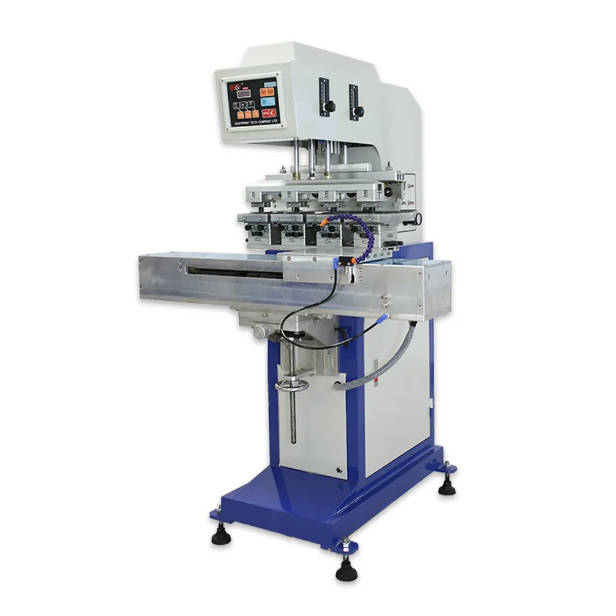
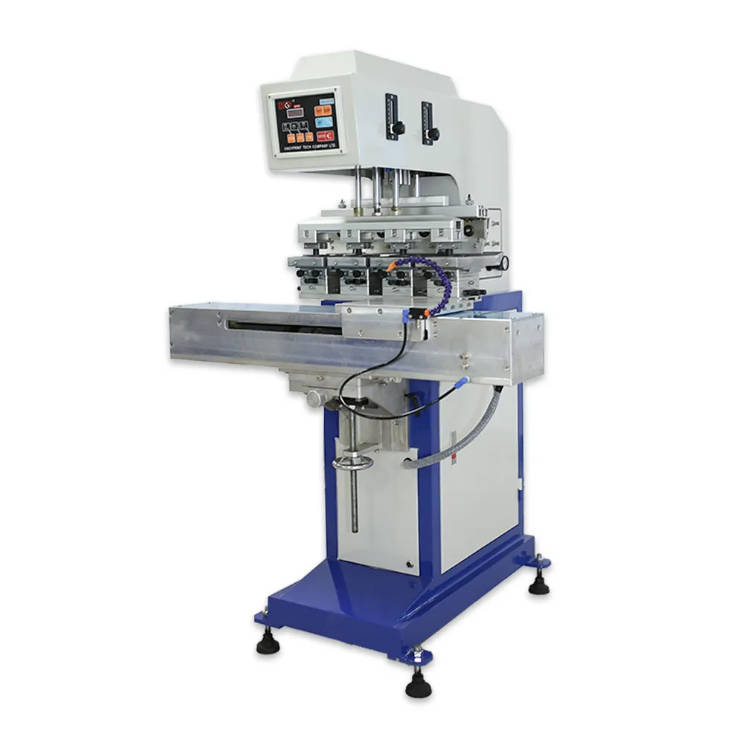
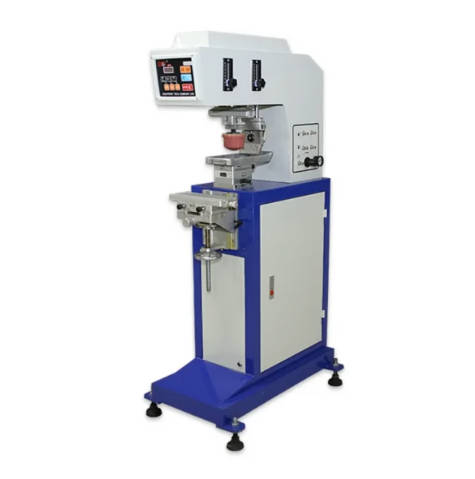
In the modern manufacturing landscape, the ability to mark products with high-quality logos, serial numbers, and instructions is non-negotiable. However, choosing between a traditional pad printing machine and a modern laser marking system is often a source of confusion for production managers. Both technologies have evolved significantly, but they serve distinct needs in terms of aesthetics, material compatibility, and long-term ROI.
For brands like ENGY, specializing in precision-engineered pad printing solutions, the goal is to provide a machine that doesn’t just “mark” a part, but enhances its value. This guide dives deep into the technical and financial nuances of Pad Printing vs. Laser Marking to help you make a data-driven investment for your production line.
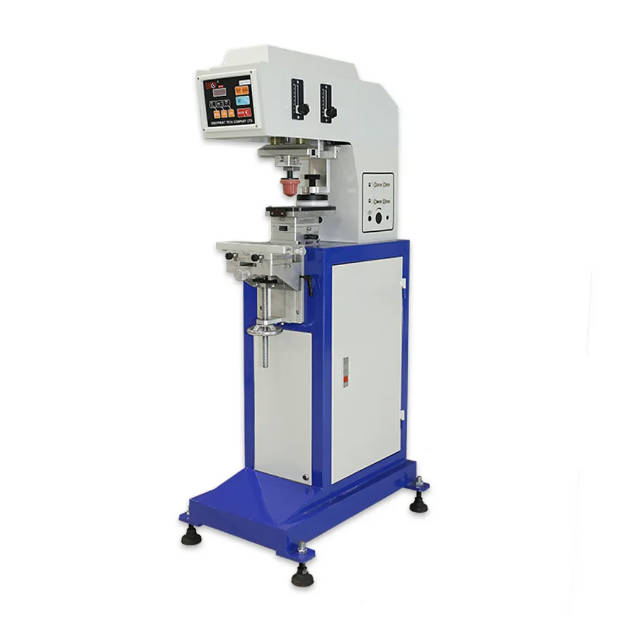
I. Introduction: Defining the Industrial Marking Standard
Industrial marking is generally divided into two categories: additive (adding material, like ink) and subtractive/transformative (altering the material surface).
- Pad Printing: An indirect offset printing process. A silicone pad takes a 2D image from an etched plate (cliché) and transfers it onto a 3D object. It is the gold standard for high-fidelity color and irregular surfaces.
- Laser Marking: A non-contact process that uses a concentrated beam of light to “burn,” “foam,” or “ablate” the surface of a part. It is purely digital and eliminates the need for physical consumables like ink.
The primary difference between pad printing and laser marking is that pad printing uses physical ink to create high-contrast, multi-color designs on almost any surface, while laser marking uses thermal energy to create permanent, monochrome marks by altering the substrate itself.
II. Quality & Aesthetics: Why Color Matters
When it comes to brand identity, color is everything. This is where the ENGY pad printing machine shines compared to laser systems.
1. The Power of Pantone Matching
Laser marking is essentially a “burn” or a “chemical reaction.” While you can achieve shades of black, white, and grey (and sometimes “annealed” colors on titanium or steel), you cannot achieve a specific “Ferrari Red” or “Tiffany Blue.”
Pad printing is the only industrial marking method that allows for 100% accurate Pantone color matching and the use of metallic, fluorescent, or high-opacity white inks on dark substrates.
2. Resolution and Tactile Feel
While lasers are incredibly precise (down to microns), the resulting mark often lacks the “premium” feel of ink. Pad printing creates a microscopic “raised” layer of ink that provides a tactile quality often associated with high-end consumer electronics and automotive interiors.
III. Material Compatibility: Where Do They Work?
A common question for buyers is: “Will this mark stay on my product?” The answer depends heavily on the material’s reaction to heat vs. its reaction to ink solvents.
1. Substrate Sensitivity
- Pad Printing: Because it is a “cold” process, it is exceptionally gentle. You can print on heat-sensitive plastics, glass, ceramics, and even medical-grade silicone without compromising the structural integrity of the part.
- Laser Marking: The heat generated by a CO2 or Fiber laser can cause “charring” or “melting” in certain plastics. For thin-walled parts, the laser can even warp the material.
2. Surface Geometry: The 3D Advantage
Pad printing is significantly more effective than laser marking for 3D, curved, or recessed surfaces because the flexible silicone pad can conform to irregular shapes, whereas a laser beam has a limited “depth of focus” and may become blurry on high-curvature areas.
ENGY machines are designed with high-tonnage pressure and specialized pad strokes to ensure that even a deep-recessed button or a spherical golf ball receives a crisp, undistorted image.
IV. The Cost Analysis: CAPEX vs. OPEX
When evaluating the cost of a pad printing machine versus a laser, you must look beyond the sticker price and calculate the Total Cost of Ownership (TCO).
1. Initial Investment (CAPEX)
Generally, a high-quality, entry-level pad printing machine (like those from ENGY) is more affordable than a high-performance Fiber or UV laser marking system. While industrial lasers have come down in price, a system capable of marking complex parts often requires expensive 3D-galvo heads.
2. Operational Costs (OPEX)
This is where the debate gets interesting.
- Laser Marking: Often marketed as “consumable-free.” While true (no ink), you must account for high electricity usage, fume extraction filters, and the eventual replacement of the laser source (which can cost thousands).
- Pad Printing: Requires ink, solvent, pads, and clichés. However, the cost per part in high-volume production is remarkably low.
Table 1: Cost Comparison Over 1 Million Impressions
| Expense Category | Pad Printing (ENGY Machine) | Fiber Laser Marking System |
| Consumables | Ink, Solvents, Pads ($0.002 – $0.005/part) | None (Filters only) |
| Electricity | Low (Pneumatic/Electronic) | High (Laser Source + Cooling) |
| Maintenance | Regular Cleaning/Lubrication | Specialized Tech (Source Replacement) |
| Setup Time | 15-20 mins (Plate/Ink) | 1-2 mins (Digital) |
| Total Cost Per Part | Lower for high-volume color branding | Lower for serialized/variable data |
V. Durability and Permanence
Buyers often lean toward lasers because the mark is “permanent”—it is literally part of the material. However, ENGY’s advanced ink technology has closed this gap.
In industrial applications, pad printing ink durability can match laser marking permanence through the use of two-component (2K) inks and specialized curing processes, making the mark resistant to aggressive chemicals, sterilization, and heavy abrasion.
For medical devices that undergo autoclave sterilization or automotive parts exposed to gasoline and oils, a high-quality pad-printed mark often outlasts the functional life of the part itself.
VI. Throughput and Efficiency: Which is Faster?
- For Variable Data (Serial Numbers): Laser wins. Since there is no plate to change, the laser can change the text for every single part instantly.
- For Constant Branding (Logos): Pad Printing wins. An ENGY pad printer can cycle thousands of times per hour. In a multi-cavity setup, one stroke of a large pad can print 10 or 20 parts simultaneously—something a scanning laser beam cannot do without significantly increasing the cycle time.
VII. Comparison Summary Table
| Metric | Pad Printing (Winner for Branding) | Laser Marking (Winner for Tracking) |
| Color | Unlimited (Full CMYK + Spot) | Monochrome (Grey/Black/White) |
| Surface | Irregular/3D/Curved | Mostly Flat/Slight Curves |
| Material | All (Plastics, Metal, Glass, Wood) | Substrate Dependent (Metal/Plastic) |
| Consumables | Yes (Ink, Pads, Plates) | No (Fume filters only) |
| Portability | Fixed Machine | Handheld or Integrated |
| Setup | Physical Setup Required | Digital Setup |
VIII. Common FAQs for Pad Printing Machine Buyers
Q: Can I achieve “photo-quality” images with an ENGY pad printer?
A: Yes. Through 4-color process (CMYK) pad printing and high-resolution etched clichés, you can achieve photographic gradients that laser marking simply cannot replicate.
Q: Is the ink environmentally friendly?
A: ENGY supports the use of medical-grade and eco-friendly inks that meet REACH and RoHS standards, ensuring safety for toys, medical devices, and food-contact packaging.
Q: What is the maintenance delta?
A: Pad printers require daily cleaning of the ink cup and cliché. Lasers are “set and forget” until the laser source fails or the lens becomes contaminated, at which point the repair cost is significantly higher than any pad printer part.
IX. Conclusion: Which Machine Should You Choose?
The decision between pad printing and laser marking isn’t about which technology is “better,” but which is right for your application.
You should choose an ENGY Pad Printing Machine if:
- Brand identity is critical: You need specific Pantone colors and high-contrast logos.
- Your parts are 3D or irregular: You need to mark on spheres, cylinders, or recessed areas.
- Material sensitivity: You are working with materials that might burn or discolor under a laser.
- High-volume ROI: You want the lowest cost-per-part for consistent, high-speed branding.
You should choose Laser Marking if:
- Variable data is required: You need unique serial numbers or QR codes on every part.
- Zero-consumable workflow: You have a clean-room environment where liquid inks are prohibited.
At ENGY, we believe in the enduring power of the pad printing process. For manufacturers who care about the “look and feel” of their product, no digital laser can match the vibrancy and versatility of a well-executed pad print.