In the world of industrial marking and product decoration, selecting the right technology is not just about aesthetics—it is about adhesion, durability, and cost-efficiency. Whether you are manufacturing automotive components, medical devices, or electronic housings, the “Pad Printing vs. Inkjet Printing” debate is central to your production line’s success.
This guide provides a comprehensive technical breakdown to help you decide which machine fits your specific industrial application, with a particular focus on why pad printing remains the gold standard for complex 3D surfaces and high-durability requirements.
I. Introduction: The Evolution of Industrial Marking
Manufacturing in 2026 demands more than just a clear logo. Products are subjected to harsh chemicals, extreme temperatures, and constant physical handling. Historically, pad printing has dominated the industrial landscape due to its mechanical versatility. However, the rise of digital inkjet printing has introduced a “non-contact” alternative that appeals to those needing variable data and full-color gradients.
The main difference between pad printing and inkjet printing is that pad printing is an indirect offset process using a flexible silicone pad to transfer ink onto 3D objects, whereas inkjet is a digital, non-contact process that sprays ink droplets directly onto a surface.
II. Understanding Pad Printing Technology: The Mechanical Powerhouse
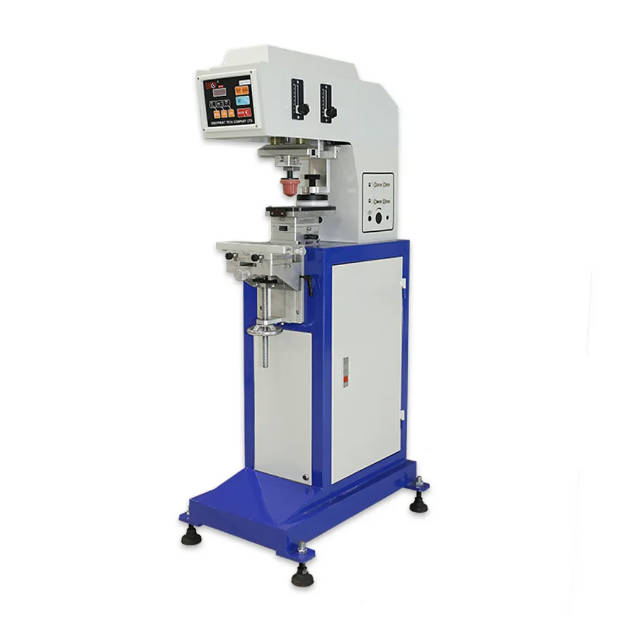
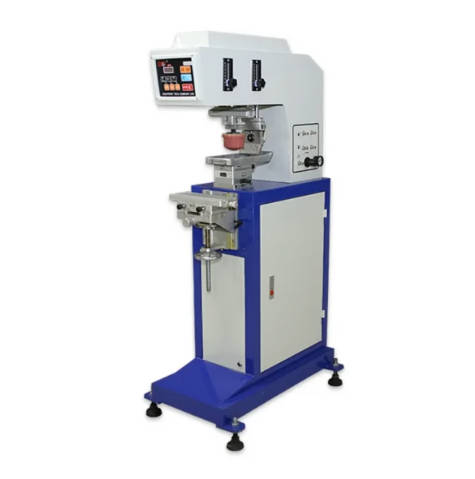
Pad printing (also known as tampography) is a specialized printing process that excels where others fail. It involves three primary components: the cliché (printing plate), the ink cup, and the silicone pad.
The Transfer Process
- Inking: The sealed ink cup slides over the cliché, filling the etched image area with ink.
- Doctoring: As the cup moves back, it scrapes the excess ink off, leaving ink only in the etched areas.
- Picking: A soft silicone pad presses down onto the cliché. Because the ink’s solvents evaporate slightly, it becomes tacky and sticks to the pad.
- Printing: The pad moves to the product and presses down. The ink’s bond to the substrate is stronger than its bond to the silicone, allowing for a 100% transfer.
The Component Advantage
- The Silicone Pad: The “heart” of the machine. Pads come in various shapes, sizes, and durometers (hardness). This flexibility allows the machine to wrap around curves or dip into deep recesses.
- The Cliché: Available in photopolymer or thin steel, these plates allow for extremely high-resolution fine lines that digital printers often struggle to replicate without “stair-stepping” or pixelation.
III. Understanding Inkjet Printing: The Digital Alternative
Digital inkjet printing for industrial use typically falls into two categories: UV Inkjet and Solvent Inkjet. Unlike pad printing, there are no plates or pads.
The Digital Workflow
Inkjet heads contain hundreds of tiny nozzles that “fire” ink droplets across a small gap (usually 1mm–5mm) onto the product.
- UV Inkjet: Uses ultraviolet light to instantly cure the ink.
- Solvent Inkjet: Uses solvent evaporation to dry the ink.
While inkjet is revolutionary for flat panels and signage, it faces significant challenges when dealing with irregular geometries because the “throw distance” of the ink droplets is limited. If the surface is too curved, the image becomes blurry or distorted.
IV. Technical Comparison: Pad Printing vs. Inkjet
To make an informed investment in a printing machine, you must compare these technologies across several industrial metrics.
| Feature | Pad Printing (Machine Focus) | Industrial Inkjet Printing |
| Surface Geometry | Exceptional for 3D, curved, or recessed shapes. | Primarily limited to flat or cylindrical surfaces. |
| Material Adhesion | High (Works on untreated plastics, metals, glass). | Moderate (Often requires specialized primers). |
| Setup Time | 15–30 minutes (Plate making & ink mixing). | Near Zero (Digital file upload). |
| Variable Data | No (Each plate is static). | Yes (Serialization, barcodes, QR codes). |
| Color Complexity | Best for PMS/Spot colors and metallic inks. | Best for CMYK gradients and photos. |
| Durability | Extreme (Chemical, abrasion, and UV resistant). | Moderate (UV ink can sometimes chip on flexible parts). |
| Operating Cost | Very Low per impression (Inexpensive ink/pads). | High (Expensive proprietary inks/printheads). |
V. Why Pad Printing is the Industry Standard for 3D Parts
For users specifically looking for a pad printing machine, the primary motivation is almost always the geometry of the part.
Pad printing is superior for printing on 3D, curved, or recessed surfaces because the flexible silicone pad can conform to irregular shapes that non-contact inkjet nozzles cannot reach without losing focus and resolution.
1. The “Wrap-Around” Capability
Imagine printing a logo on a golf ball or a curved medical syringe. An inkjet nozzle would have to move around the object, or the object would have to rotate perfectly under the head, which is mechanically complex and slow. A pad printing machine simply uses a “conforming” pad that wraps around the curve in a single stroke.
2. Superior Ink Chemistry
Pad printing inks are highly specialized. You can use two-component (2K) inks that involve a hardener. Once cured, these inks are nearly impossible to remove, making them ideal for:
- Medical Devices: Withstanding autoclave sterilization.
- Automotive Interiors: Resisting skin oils, cleaning agents, and high UV exposure.
- Electronic Buttons: Withstanding millions of finger presses without fading.
3. Opacity and Special Inks
If you need to print a bright white logo on a black plastic housing, pad printing provides superior opacity. Inkjet inks are thinner to prevent nozzle clogging, often requiring multiple passes to achieve the same vibrance that a single pad print stroke provides. Additionally, pad printing can easily handle metallic (gold/silver) and fluorescent inks.
VI. Critical Factors: Which Machine Should You Buy?
1. Production Volume (ROI)
If you are printing the same logo on 50,000 parts, a pad printing machine is significantly more cost-effective. While the initial setup (cliché and ink mixing) takes time, the “cost per print” is a fraction of a cent. Inkjet ink is significantly more expensive per milliliter, and printhead maintenance can be a major “hidden cost.”
2. The Nature of the Substrate
Is the material difficult to bond with?
- Pad Printing: Offers a wider range of ink series for “difficult” plastics like PP, PE, and POM.
- Inkjet: Often requires a pre-treatment (Corona/Flame) or a digital primer to ensure the ink doesn’t scratch off.
3. Image Requirements
- Choose Pad Printing if: You need precise PMS color matching, fine text (under 4pt), or printing on a non-flat surface.
- Choose Inkjet if: You need to change the serial number on every part or print a high-resolution photograph on a flat surface.
VII. FAQs for Pad Printing Machine Buyers
Q: Is pad printing slower than inkjet?
In terms of raw cycle time, a high-speed automated pad printing machine can mark up to 3,000 parts per hour. While inkjet has no “setup” time, the actual printing process for high-quality images can be slower than the mechanical “stamp” of a pad printer.
Q: Can I print multiple colors with a pad printing machine?
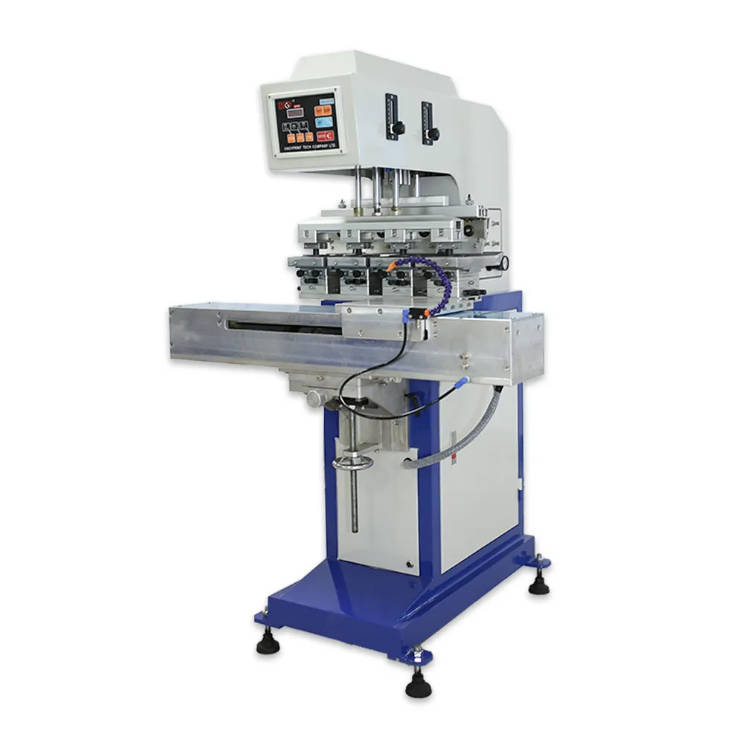
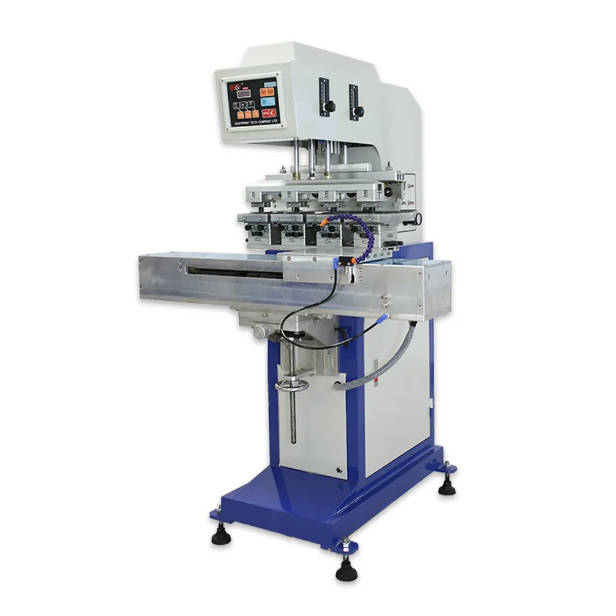
Yes. Modern machines come in 1 to 12-color configurations using shuttle systems or carousel conveyors. While not as easy as “clicking print” on a digital file, pad printing produces more consistent spot colors for brand identity.
Q: How long do the clichés and pads last?
A high-quality steel cliché can last for over 1,000,000 impressions. A silicone pad typically lasts between 20,000 to 50,000 impressions, depending on the geometry and ink type.
VIII. Conclusion: The Verdict for Industrial Users
When choosing between these two technologies, the decision usually boils down to Geometry vs. Variability.
If your production involves consistent branding on complex 3D shapes, high-durability requirements, and high volumes, a pad printing machine is the only logical investment. It offers a level of physical conformity and chemical adhesion that digital inkjet technology simply cannot match in a rugged industrial environment.
Conversely, if you are a “print-on-demand” shop dealing with flat substrates and frequent artwork changes, inkjet provides the flexibility you need. However, for the serious manufacturer, the pad printing machine remains the workhorse of the factory floor.