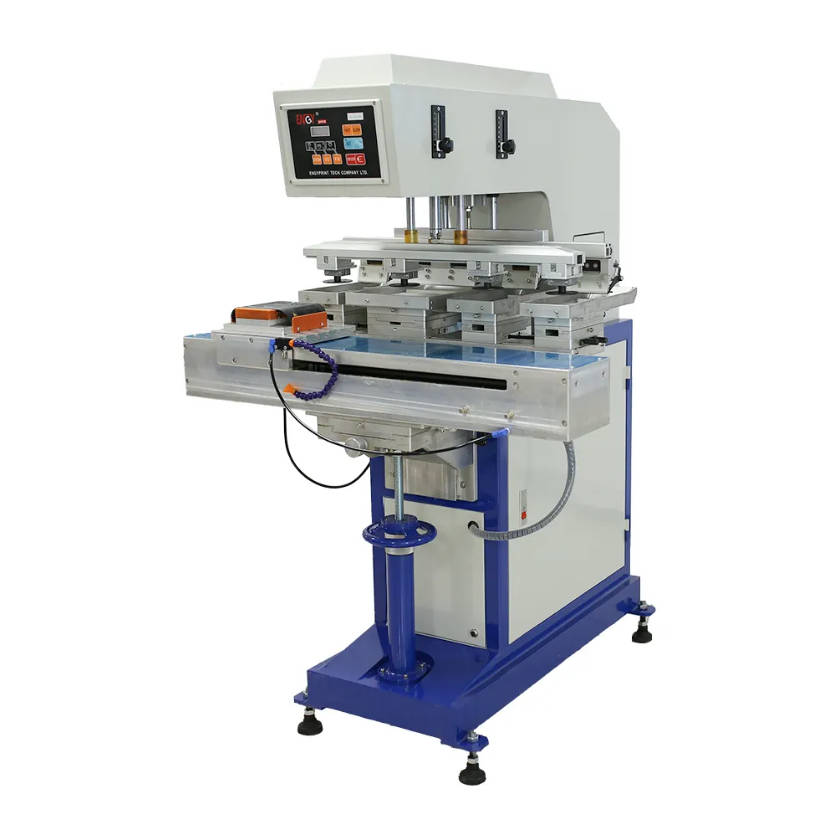
Pad printing machines for automotive parts offer an unparalleled solution for marking complex, irregularly shaped components with high precision and durability. This printing method is essential for applying functional and decorative markings—such as warning symbols on fluid caps, icons on dashboard buttons, and logos on engine covers—that must withstand the harsh automotive environment. The process involves transferring a 2D image from an etched plate (cliché) onto a 3D object using a flexible silicone pad, making it ideal for the diverse materials and geometries found in modern vehicles.
The automotive industry operates under some of the most stringent quality and durability standards of any manufacturing sector. Every component, down to the smallest printed icon, must perform flawlessly for the vehicle’s entire lifespan. This is where the challenge—and the opportunity—for pad printing technology lies. Unlike other marking methods, pad printing excels at adapting to the curved, textured, and recessed surfaces that are commonplace in automotive design, from interior control panels to under-the-hood components. This guide provides an in-depth exploration of the critical requirements for automotive pad printing and the comprehensive solutions available to meet these demands.
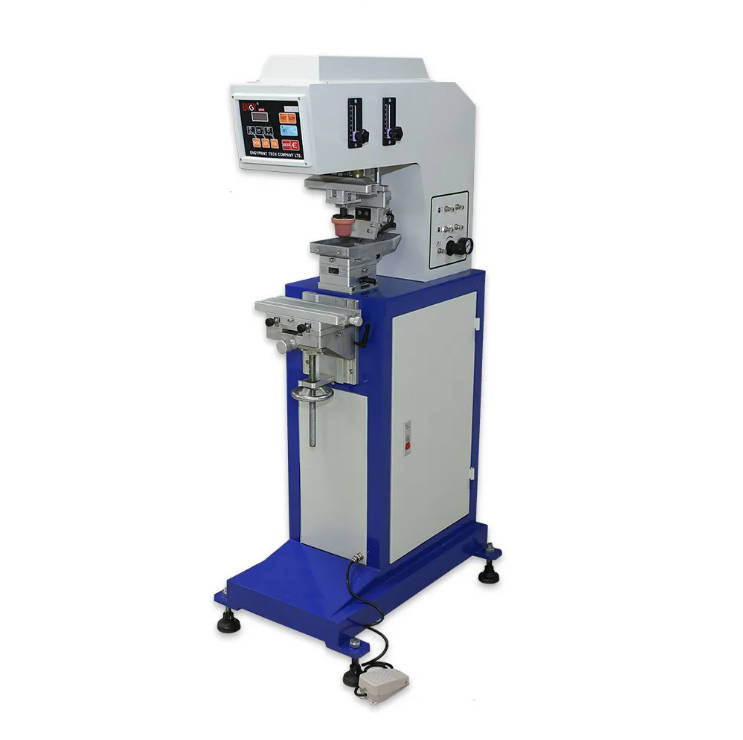
Table of Contents
- Why is Pad Printing the Go-To Choice for the Automotive Industry?
- Critical Requirements for Printing on Automotive Components
- Comprehensive Pad Printing Solutions for Automotive Challenges
- How Do You Choose the Right Pad Printing System and Partner?
- The Future of Automotive Part Marking: Beyond Traditional Pad Printing
- Frequently Asked Questions (FAQ)
Why is Pad Printing the Go-To Choice for the Automotive Industry?
While other technologies like laser marking and screen printing have their place, pad printing holds a unique and dominant position in the automotive sector due to its remarkable versatility. Its core advantage is the silicone pad’s ability to conform to virtually any surface shape—concave, convex, textured, or multi-surfaced. This makes it possible to print crisp, clear graphics on components like steering wheel controls, HVAC dials, indicator stalks, and branded bezels, where other methods would fail or produce distorted results. This adaptability ensures brand consistency and functional legibility across the vehicle’s interior and exterior.
Furthermore, pad printing is highly cost-effective for multi-color applications on 3D objects. Machines can be configured with multiple pads and clichés to apply several colors in a single machine cycle, a process essential for complex icons like day/night dashboard symbols or multi-colored logos. This capability, combined with the technology’s ability to handle a wide range of substrates from hard plastics to soft-touch coatings, makes it an indispensable tool for automotive manufacturers and their tiered suppliers striving for both aesthetic excellence and functional longevity.
Critical Requirements for Printing on Automotive Components
Marking automotive parts is not merely about aesthetics; it’s about long-term performance under extreme conditions. Any pad printing solution must be engineered to meet a demanding set of requirements that ensure safety, functionality, and brand integrity.
Unyielding Durability and Environmental Resistance
Automotive components are subjected to a brutal range of environmental stressors. A printed mark on an engine fluid cap must resist degradation from gasoline, oil, brake fluid, and coolant. Interior markings on buttons and controls must withstand constant physical abrasion from fingers, as well as exposure to cleaning chemicals, lotions, and relentless UV radiation from the sun, which can cause fading and cracking. The print must also endure extreme temperature cycles, from freezing winters (-40°C) to scorching summer heat inside a parked car (up to 120°C). The requirement is clear: the print must be as durable as the part itself, maintaining its legibility and adhesion for 10-15 years or more.
Absolute Precision on Complex Geometries
Precision is non-negotiable. Pad printing is frequently used for safety-critical information, such as warning lights, gear shift indicators (P, R, N, D), and airbag labels. These markings must be perfectly placed, with sharp edges and no distortion, regardless of the part’s shape. This challenge is amplified on components with compound curves or recessed areas, like the intricate dials of an infotainment system or the curved surface of a key fob. The solution must guarantee repeatable accuracy to the sub-millimeter level to ensure that every part meets OEM specifications for fit and finish.
Superior Adhesion Across Diverse Automotive Substrates
The modern vehicle is a complex assembly of advanced polymers. Pad printing must achieve tenacious adhesion on a variety of plastics, many of which have low surface energy (LSE) and are notoriously difficult to print on. Key substrates include:
- Polypropylene (PP) and Talc-Filled PP: Common for interior trim and under-the-hood parts.
- Thermoplastic Olefins (TPO): Used for bumpers and dashboards.
- Acrylonitrile Butadiene Styrene (ABS): Frequently used for rigid interior components.
- Nylon (Polyamide – PA): Valued for its strength in engine components.
- Polycarbonate (PC): Used for clear lenses and displays.
- Painted or Coated Surfaces: Including soft-touch coatings that provide a premium feel.
Achieving permanent adhesion often requires a systematic approach involving substrate-specific inks and surface pre-treatment methods like flame, Corona, or plasma treatment to increase surface energy and ensure a robust chemical bond.
Efficiency for High-Volume Production and Automation
The automotive supply chain is built on speed and efficiency. A pad printing process must integrate seamlessly into a high-volume production line, often operating 24/7. This means cycle times (takt time) must be minimal, often just a few seconds per part. To achieve this, automation is key. The solution should support robotic part handling (loading and unloading), in-line pre-treatment, and automated post-print curing. A reliable, low-maintenance system is crucial to minimize downtime and meet the rigorous production quotas demanded by OEMs.
Strict Compliance with Automotive Quality Standards
Every printed part must meet a battery of OEM-specific tests and international standards like ISO. These standards dictate precise color matching (using systems like Pantone, RAL, or Munsell), gloss levels, and performance criteria. For example, a print will undergo cross-hatch adhesion tests (ASTM D3359), chemical rub tests, and accelerated weathering tests. The entire printing process—from ink mixing to curing parameters—must be documented and controlled to ensure 100% compliance and full traceability, which is a cornerstone of quality management systems like IATF 16949.
Comprehensive Pad Printing Solutions for Automotive Challenges
Meeting the stringent requirements of the automotive industry requires a holistic approach that considers the machine, ink, pad, and process as interconnected parts of a single system.
How to Select the Right Pad Printing Machine?
The choice of machine is foundational. For automotive applications, sealed ink cup systems are overwhelmingly preferred over open inkwell systems. Sealed cups contain the ink and solvents, providing a stable viscosity, reducing solvent evaporation and VOC emissions, and ensuring a more consistent print quality over long production runs—all critical factors in a controlled automotive environment.
The machine configuration depends on the application’s complexity. A simple, single-color logo on a flat part might only need a one-color machine. However, a day/night dashboard button with multiple colors and a translucent layer requires a sophisticated multi-color machine. Rotary or turntable-based pad printers are ideal for high-speed, multi-step processes, allowing for simultaneous loading, pre-treatment, printing of several colors, and curing in a single, continuous rotation.
| Machine Type | Typical Automotive Application | Key Advantages |
|---|---|---|
| 1-2 Color Sealed Cup Printer | Logos on engine covers, warning symbols on fluid caps, single-color icons. | Cost-effective, simple setup, reliable for basic tasks. |
| 4-6 Color Linear/Shuttle Printer | Multi-color graphics, complex icons on control panels, day/night back-lit buttons. | Precise registration between colors, can handle complex part fixtures. |
| Rotary/Turntable Printer | High-volume, multi-process parts (e.g., pre-treat, print 4 colors, cure). | Highest throughput, integrates multiple steps, ideal for full automation. |
The Crucial Role of Automotive-Grade Inks
Ink is arguably the most critical component for meeting durability requirements. Standard graphic arts inks will not survive in an automotive environment. Specialized, automotive-grade inks are formulated for specific substrates and performance characteristics. The most common are two-component inks, which consist of an ink and a hardener. Once mixed, they undergo a chemical cross-linking reaction during curing, creating an exceptionally tough and resistant print.
Selecting the right ink series is a science. For instance, an ink designed for polypropylene (PP) will be different from one designed for ABS or a painted surface. Leading ink manufacturers offer specific series tailored for automotive use, each having passed rigorous OEM testing for chemical, abrasion, and UV resistance. For back-lit “day/night” graphics, special translucent inks are used that appear opaque in daylight but allow light to pass through when illuminated from behind.
Choosing the Perfect Pad and Cliché for the Job
The silicone pad is the heart of the transfer process. Its shape, size, and hardness (durometer) must be carefully selected based on the part’s geometry and the image size. A harder pad provides a sharper print but is less forgiving on irregular surfaces. A softer pad conforms better to curves but may cause image distortion if not chosen correctly. The “angle of attack”—how the pad rolls across the cliché and the part—is also a critical parameter for achieving a perfect, air-free transfer.
The cliché or printing plate holds the etched artwork. For the high volumes and high precision of automotive production, thick steel clichés are the standard. They offer extreme durability, capable of producing millions of impressions before showing wear, ensuring print consistency over the entire life of a vehicle model’s production run. The etch depth of the cliché is precisely controlled to manage the amount of ink deposited, which affects opacity and print quality.
Integrating Automation and Advanced Quality Control
To achieve the speed and consistency required, a modern automotive pad printing solution is rarely a standalone machine. It is part of a larger automated cell. This can include:
- Robotic Systems: 6-axis robots or SCARA robots for loading raw parts onto fixtures and unloading finished parts.
- Surface Pre-treatment: In-line flame or plasma stations that automatically treat the part’s surface just before printing to ensure maximum ink adhesion.
- Vision Systems: Cameras and software that inspect each printed part for presence, position, and defects, automatically rejecting any non-conforming items. This provides 100% quality control without slowing production.
- Curing Systems: Conveyorized hot air ovens or IR/UV curing units that ensure the ink is fully cured according to specifications before the part moves to the next assembly stage.
How Do You Choose the Right Pad Printing System and Partner?
Selecting a pad printing solution is more than buying a machine; it’s about finding a partner with deep automotive expertise. When evaluating suppliers, ask critical questions: What is their experience with my specific substrate? Can they prove their inks meet OEM standards? Can they conduct feasibility studies and provide sample prints on my actual parts? A trustworthy partner will guide you through a systematic process:
- Project Definition: Clearly define the substrate, print requirements (colors, size), durability specifications, and production volume.
- Feasibility and Testing: The supplier should test various ink, pad, and pre-treatment combinations on your physical parts to find the optimal solution.
- System Design: Based on testing, they will recommend a complete system, including the machine, automation, and all consumables.
- Installation and Training: The partner should provide on-site installation, integration, and comprehensive training for your operators and maintenance staff.
- Ongoing Support: Look for a partner who offers robust technical support, spare parts availability, and ongoing process optimization advice.
The Future of Automotive Part Marking: Beyond Traditional Pad Printing
While pad printing remains dominant, technology continues to evolve. UV-LED curing is gaining traction, offering instant curing, lower energy consumption, and the elimination of heat, which is beneficial for heat-sensitive substrates. Additionally, advanced digital printing technologies, such as direct-to-object inkjet, are emerging as potential alternatives for applications requiring high customization or complex, full-color graphics. However, for a majority of functional, high-volume automotive markings on complex surfaces, pad printing’s unique combination of flexibility, durability, and cost-effectiveness ensures it will remain a cornerstone of automotive manufacturing for the foreseeable future.
Frequently Asked Questions (FAQ)
What is the best ink for polypropylene (PP) automotive parts?
The best ink for polypropylene is typically a specialized two-component ink series designed for LSE plastics. To achieve permanent adhesion, the PP surface must almost always be pre-treated using methods like flame treatment, Corona discharge, or a chemical adhesion promoter (primer) before printing.
Can pad printing be used for day/night designs on dashboard buttons?
Yes, pad printing is the primary method for creating day/night designs. It involves a multi-step process, typically printing a translucent white or colored layer first, followed by an opaque black or dark gray topcoat. When the dashboard is unlit, the icon appears as the topcoat color. When back-lit, light shines through the translucent layer, illuminating the symbol.
Pad printing vs. Laser Marking: Which is better for automotive parts?
It depends on the application. Laser marking is excellent for creating permanent, abrasion-proof marks through material ablation or foaming, especially for serialization or VIN tags on metal or certain plastics. However, it cannot produce color and can struggle with achieving high contrast on some substrates. Pad printing is superior for any application requiring color, printing on highly irregular surfaces, or when a specific aesthetic finish is required.
How do you ensure consistent color in a high-volume pad printing process?
Color consistency is maintained through a controlled process. This includes using a sealed ink cup to maintain stable ink viscosity, precise ink mixing using a gram scale, and utilizing a spectrophotometer to measure and verify color against a master standard before and during the production run.
Pad Printing Machines for Automotive Parts, automotive pad printing, pad printing solutions, automotive part marking, requirements for automotive printing, durable ink for automotive components, pad printing on curved automotive surfaces, automated pad printing systems, pad printer for plastic car parts, industrial printing for automotive