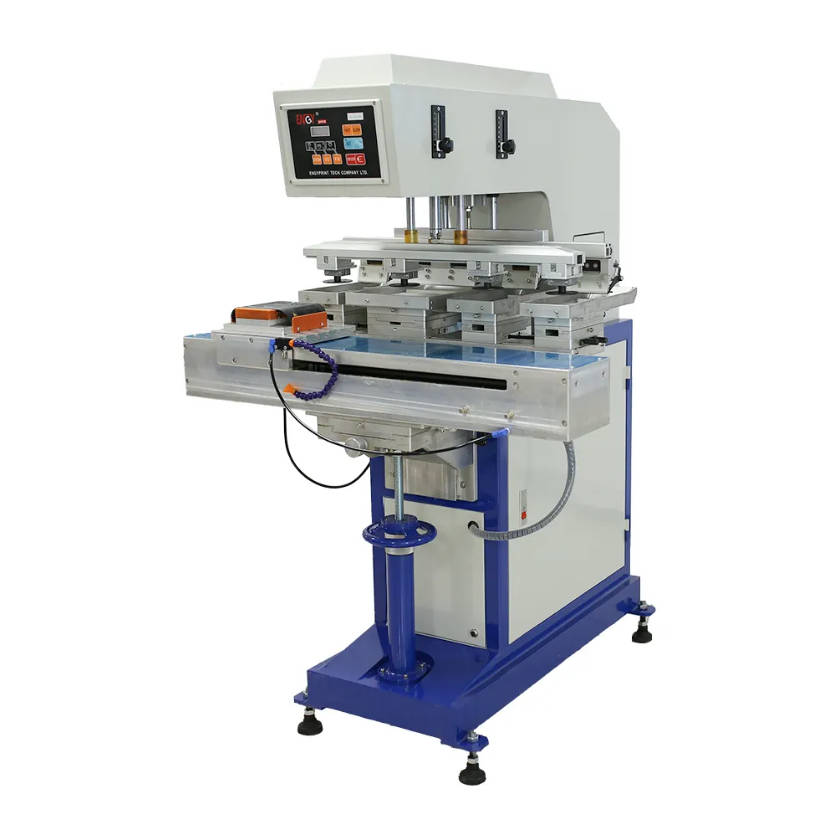
In the highly regulated world of medical device manufacturing, the clarity, durability, and safety of product markings are non-negotiable. From life-saving syringes and catheters to complex orthopedic implants, every mark serves a critical purpose—whether it’s dosage instructions, brand identification, or Unique Device Identification (UDI) for traceability.
Among various marking technologies, pad printing (also known as tampon printing) has emerged as the industry standard. This article explores the technical advantages, regulatory compliance factors, and cost-efficiencies that make pad printing machines the primary choice for medical manufacturers worldwide.
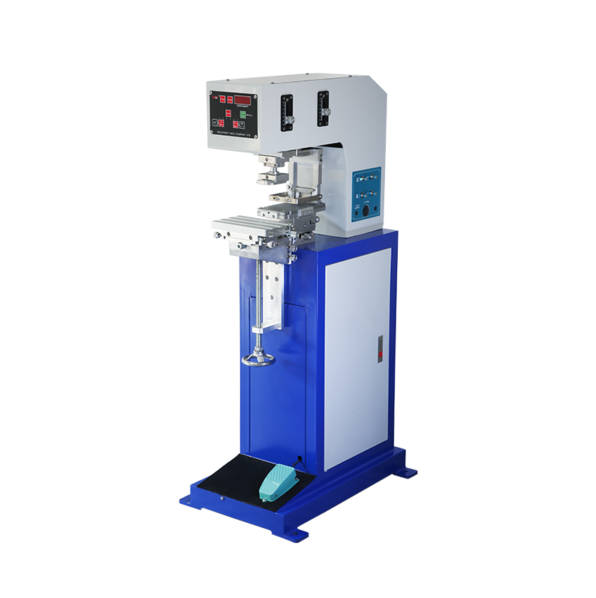
The Critical Role of Marking in the Medical Industry
Marking a medical device is far more than an aesthetic requirement. It is a vital safety feature. Inaccurate or faded markings on a surgical tool or a medication delivery device can lead to catastrophic medical errors.
Furthermore, the medical industry utilizes specialized materials like PEEK, medical-grade silicone, and fluoropolymers. These “low surface energy” materials are notoriously difficult to print on. Pad printing is ideal for medical device printing because it utilizes high-opacity, biocompatible inks and flexible silicone pads that can transfer intricate designs onto virtually any three-dimensional surface or irregular geometry.
1. Exceptional Versatility for Complex Geometries
Unlike screen printing or digital inkjet, which generally require flat or cylindrical surfaces, pad printing is a “soft touch” technology.
Handling 3D Shapes and Irregular Surfaces
The heart of the process is the silicone transfer pad. Because these pads are compressible, they can “wrap” around complex shapes.
- Concave and Convex Surfaces: Ideal for the ends of tubes or curved surgical handles.
- Recessed Areas: Reaching into indentations that a laser or roller cannot access.
- Spherical Objects: Maintaining image integrity on balls or rounded valves.
Case Study: Catheter Hub Marking
Catheters often require tiny, high-contrast markings on the hub. These hubs are usually molded from materials like Pebax or Nylon. A medical-grade pad printing machine allows for 360-degree orientation and ultra-fine text that remains legible even under high magnification.
2. Meeting Stringent Regulatory and Safety Standards
For medical buyers, the machine is only half of the equation; the ink is the other. In the medical field, ink must be more than just “permanent”—it must be biologically safe.
Biocompatible and Medical-Grade Inks
Medical device pad printing requires inks that have passed rigorous testing, specifically USP Class VI and ISO 10993. These certifications ensure that the ink, once cured, does not cause toxicity, skin irritation, or systemic reactions when it comes into contact with human tissue or fluids.
Key Compliance Standards for Medical Inks:
| Standard | Description | Relevance to Pad Printing |
| USP Class VI | Highest grade of plastic/ink safety testing. | Required for implants and long-term contact devices. |
| ISO 10993 | International standard for biological evaluation. | Ensures no cytotoxic or mutagenic effects. |
| UDI Compliance | Unique Device Identification (FDA mandate). | Requires high-resolution 2D barcodes for tracking. |
| RoHS/REACH | Restriction of Hazardous Substances. | Ensures the absence of heavy metals like lead or cadmium. |
To achieve FDA compliance for medical device marking, manufacturers must use a closed-cup pad printing system that prevents ink contamination and ensures consistent viscosity, resulting in a repeatable, non-toxic print layer.
3. Unmatched Durability Against Sterilization
Medical devices are rarely “one-and-done.” They must endure harsh sterilization cycles without the markings fading, peeling, or cracking.
Resistance to Sterilization Methods
Pad printing inks are formulated as two-component (2K) systems. When mixed with a hardener and heat-cured, they create a chemical bond with the substrate that is incredibly resilient.
- Autoclave (Steam): Resists high pressure and temperature (up to 134°C).
- Gamma Radiation: Stays stable under high-energy sterilization.
- Ethylene Oxide (EtO): Remains chemically inert during gas sterilization.
Chemical and Abrasion Resistance
In a clinical setting, devices are frequently wiped down with 70% Isopropyl Alcohol (IPA) or bleach. Pad-printed marks are designed to withstand hundreds of “rub cycles” without degradation, ensuring that critical safety information remains visible for the entire lifespan of the device.
4. High Precision and Micro-Printing Capabilities
As medical devices become smaller and more complex (e.g., micro-catheters and hearing aid components), the need for high-resolution printing grows.
Pad printing machines can achieve micro-printing levels, producing legible text as small as 2pt font and high-density GS1 DataMatrix codes. This precision is achieved through the use of laser-etched “cliché” plates (printing plates) that hold the ink in precise depths, often measured in microns.
Comparison: Pad Printing vs. Other Technologies
| Feature | Pad Printing | Laser Marking | Inkjet Printing |
| Substrate Versatility | High (Plastics, Metal, Silicone) | Medium (Mainly Metals/Certain Plastics) | Medium (Mostly Flat) |
| Color Options | Full range (Pantone matching) | Limited (Depends on material reaction) | Full CMYK |
| Initial Cost | Moderate | High | Moderate to High |
| Sterilization Durability | Excellent | Excellent | Fair to Good |
| Surface Geometry | 3D / Irregular | Line of sight only | Mostly Flat / Cylindrical |
5. Technical Common Questions (FAQ) for Machine Buyers
Q: Is pad printing faster than laser marking for high-volume medical parts?
Yes, for many applications, pad printing is significantly faster than laser marking. While a laser must “draw” each character, a pad printing machine transfers the entire image (including logos and barcodes) in a single stroke. In automated environments, pad printers can process 2,000 to 5,000 parts per hour.
Q: How do I ensure ink adhesion on “difficult” plastics like Delrin or Polypropylene?
For medical plastics with low surface energy, pre-treatment is essential. Most professional pad printing setups for medical devices include a Corona or Flame treatment station. This process oxidizes the surface, increasing its “dyne level” and allowing the ink to form a permanent mechanical bond.
Q: Can I use pad printing in a Clean Room environment?
Absolutely. Most modern medical pad printing machines are designed with stainless steel housings and “closed-cup” ink systems. This prevents solvent evaporation into the room and keeps the ink protected from airborne contaminants, making it fully compatible with Class 10,000 (ISO 7) or higher clean rooms.
6. Cost-Efficiency and Automation Integration
For a B2B manufacturer, the “Cost Per Part” is a deciding factor. Pad printing offers a remarkably low consumable cost.
- Low Ink Consumption: The closed-cup system is extremely efficient, utilizing nearly 100% of the ink with minimal waste.
- Long-Life Clichés: High-quality steel plates can last for over 1,000,000 impressions.
- Automation: Pad printing heads are easily integrated into rotary tables or linear transport systems, reducing labor costs and human error.
7. Maintenance for Medical-Grade Reliability
To maintain the high standards required for medical manufacturing, a preventative maintenance schedule is necessary:
- Daily: Clean the silicone pads with adhesive tape (not solvents) to remove dust.
- Weekly: Inspect the doctor ring (the ceramic ring on the ink cup) for nicks that could cause “doctoring” issues or leaking.
- Monthly: Lubricate pneumatic or servo-driven components to ensure registration accuracy within ±0.02mm.
Conclusion
Choosing the right marking technology is a strategic decision that affects product safety, legal liability, and brand reputation. Pad printing remains the ideal choice for medical device printing due to its ability to handle three-dimensional shapes, its compatibility with USP Class VI certified inks, and its proven durability against rigorous sterilization processes.
By investing in a high-quality pad printing machine and specialized medical-grade consumables, manufacturers can ensure that their products meet the highest global standards while maintaining a competitive edge in production efficiency.