I. Introduction
Pad printing is one of the most versatile manufacturing processes in existence. Its ability to transfer 2D images onto 3D objects with complex geometries—convex, concave, textured, or uneven surfaces—makes it indispensable across industries. However, while the mechanical principle remains consistent, the application gap between medical pad printing and industrial pad printing is massive.
For a procurement manager or manufacturing engineer, the distinction is not merely about price or speed; it is about the fundamental purpose of the print. In industrial settings, the priority is often durability, visual appeal, and cost-efficiency. In the medical sector, the priority shifts to patient safety, biocompatibility, and rigorous traceability.
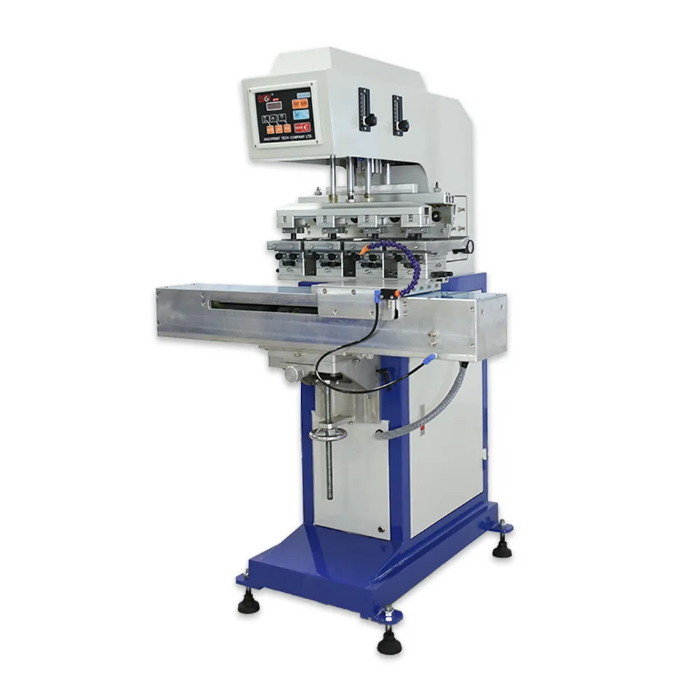
Many manufacturers mistakenly believe they can use a standard industrial setup for medical devices, only to face catastrophic failures during sterilization testing or regulatory audits. Conversely, industrial manufacturers may overspend on medical-grade precision they do not require.
The primary difference between medical and industrial pad printing lies in the strict requirements for biocompatible inks, the need for cleanroom-compatible servo-electric machinery, and the mandatory validation processes (IQ/OQ/PQ) required by the FDA and MDR.
This article provides a deep technical analysis of these differences, helping you navigate the complexities of ink chemistry, machine precision, and regulatory compliance to choose the right pad printing solution for your specific application.
II. Factor 1: The Chemistry of Inks (Biocompatibility vs. Durability)
The single most critical differentiator in medical manufacturing is the ink. While an industrial ink failure might result in a scratched logo, a medical ink failure can lead to toxicity in a patient or the loss of critical traceability data on a life-saving device.
Industrial Inks: Built for Aggression
Industrial pad printing inks are formulated for one primary goal: adhesion. Whether printing on a powder-coated automotive part, a golf ball, or a household appliance, the ink must bond chemically with the substrate to resist abrasion, weather, and solvents.
- Solvent-Based Formulations: Industrial inks often use aggressive solvents (thinners and retarders) to “bite” into the plastic surface.
- Aesthetics: High opacity and gloss are prioritized.
- Typical Applications: Automotive dashboards, promotional pens, electronic housings, sporting goods.
Medical Grade Inks: Built for Safety and Survival
Medical inks operate under a different set of rules. They must be safe for contact with the human body and capable of surviving the harshest cleaning environments known to manufacturing.
1. USP Class VI Certification
You cannot simply use “non-toxic” ink for invasive devices. You must use Class VI certified inks. USP Class VI is the highest standard of biocompatibility testing set by the United States Pharmacopeia. It involves testing the ink’s reaction (toxicity) when implanted into tissue or injected into the bloodstream. If you are manufacturing catheters, surgical handles, or implants, your ink supplier must provide certification that the ink formulation has passed these biological reactivity tests.
2. Sterilization Resistance
A medical device is useless if the markings disappear after the first sterilization cycle. Medical pad printing inks are engineered to withstand:
- Autoclave (Steam Sterilization): High heat and moisture that would cause standard inks to peel or fade.
- Chemical Sterilization (EtO): Ethylene Oxide gas is common for sensitive devices but can react with certain ink pigments.
- Gamma Radiation: High-energy radiation used for sterilization can cause standard inks to become brittle or change color.
3. Edible Inks
For pharmaceutical tablets or nutraceuticals, the ink is considered a “food ingredient.” These inks must be formulated from FDA-approved edible shellacs and pigments, distinct from both standard and Class VI medical inks.
Key Takeaway: Never use standard industrial ink for medical devices intended for bodily contact. Even if the ink adheres well, it may leach toxins or fail during sterilization, leading to immediate regulatory non-compliance.
III. Factor 2: Machine Precision and Drive Systems
The “heart” of a pad printing machine is its drive system—the mechanism that moves the pad and ink cup. The choice between pneumatic (air-driven) and electric (servo-driven) systems is often the dividing line between industrial and medical applications.
Industrial Machines: The Pneumatic Workhorse
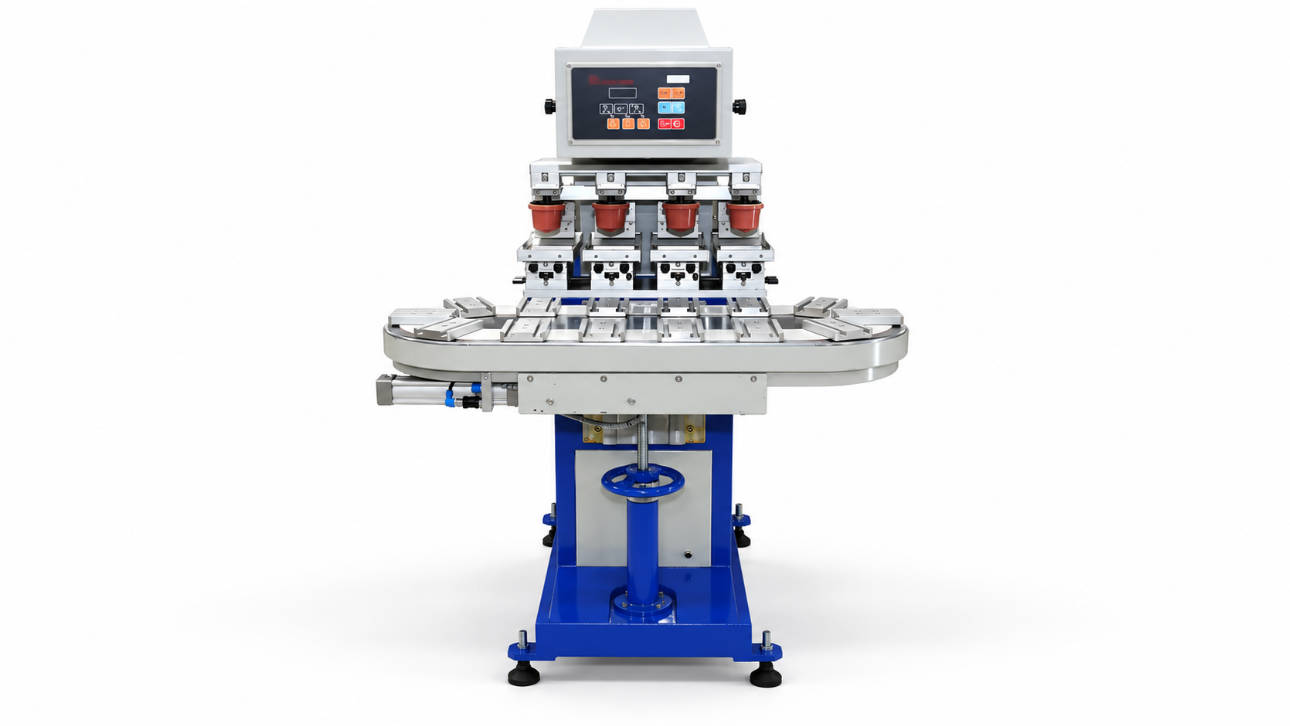
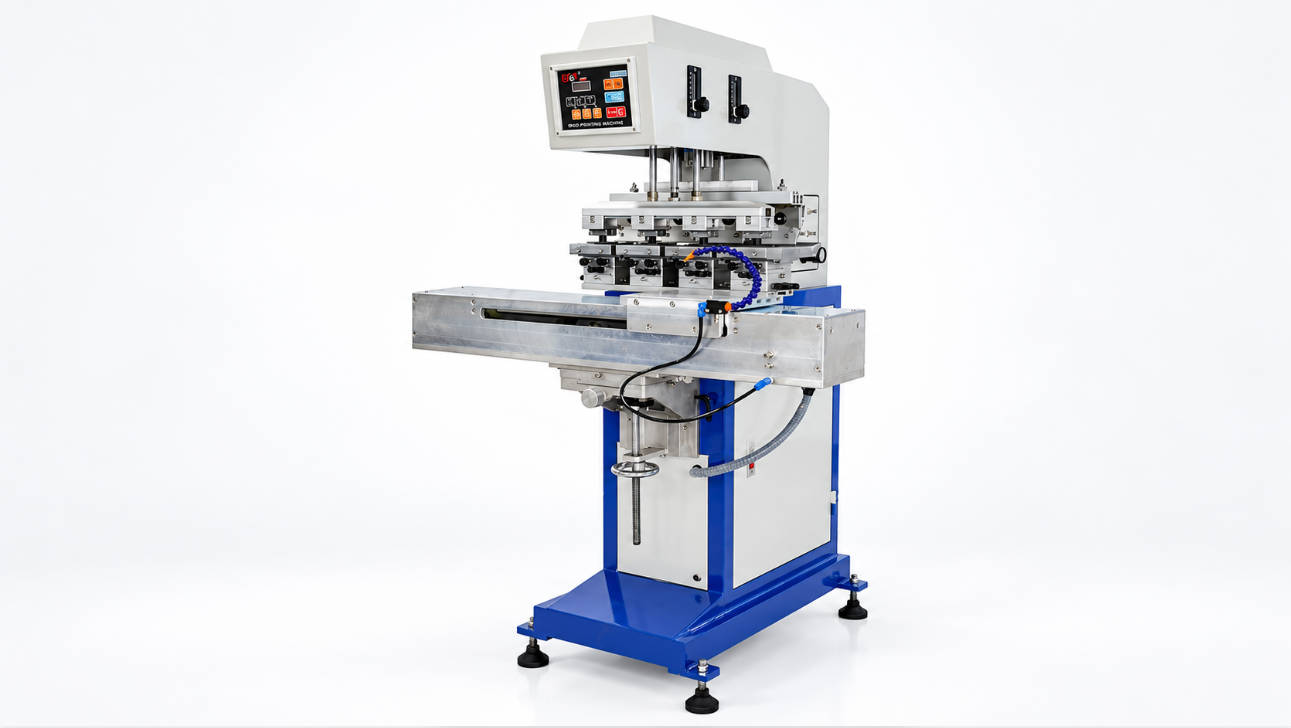
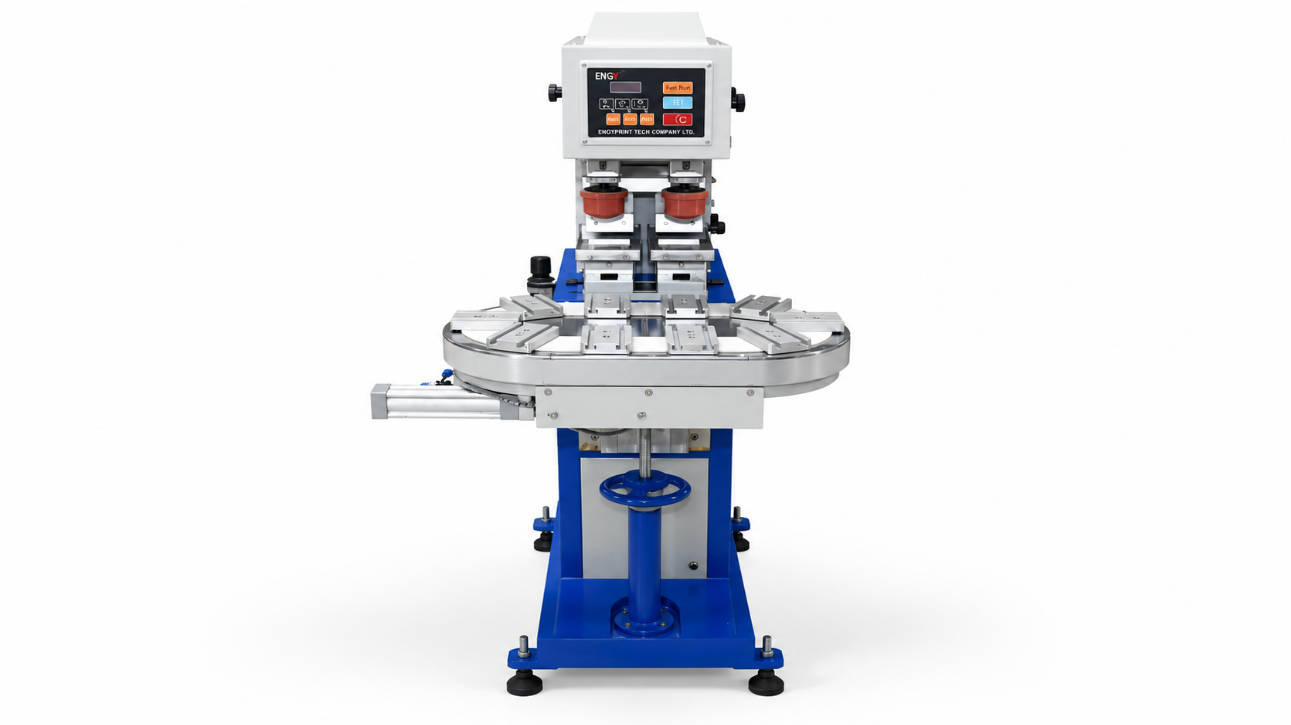
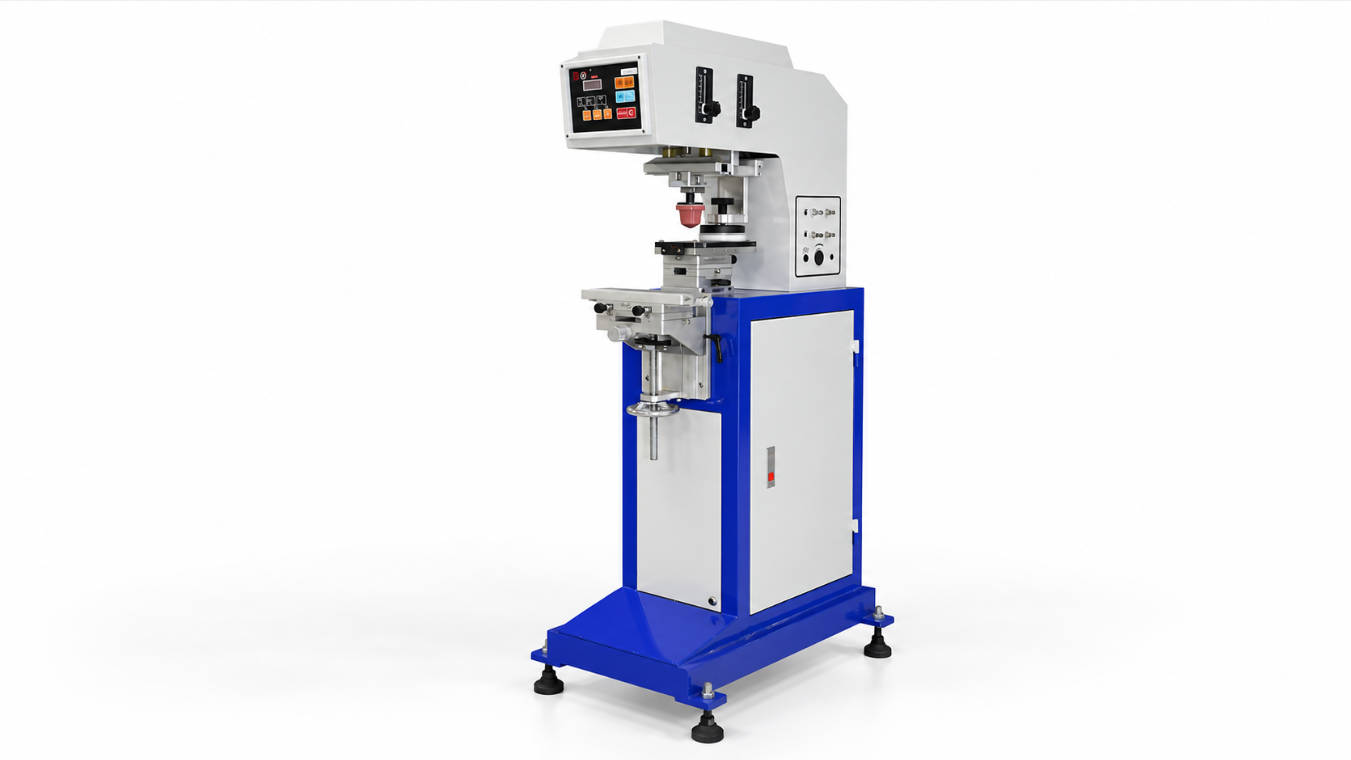
The vast majority of standard industrial pad printers are pneumatic. They rely on compressed air cylinders to move the pads up and down and the ink cups forward and backward.
- Pros: Lower upfront cost, robust, easy to repair, high clamping force.
- Cons: Compressed air is “dirty.” Exhaust air can blow dust and particulates onto the wet ink or the part. Furthermore, pneumatic cylinders are difficult to control precisely; they tend to hit “hard stops” at the end of each stroke.
- The Tolerance: Typically +/- 0.05mm to 0.1mm. This is perfectly acceptable for a logo on a drill or a toy car.
Medical Pad Printers: The Servo-Electric Revolution
In the medical field, the industry is shifting aggressively toward all-electric servo-driven machines.
- Cleanroom Compatibility: Servo machines do not require compressed air. This eliminates the risk of air exhaust turbulence contaminating a sterile environment (ISO Class 7 or 8 cleanrooms).
- Controlled Velocity: A servo motor allows you to program the exact speed of the pad at every point in the stroke. You can slow the pad down just before it touches the part to prevent distorting a delicate substrate (like a soft silicone tube).
- Micro-Printing Precision: Medical devices often require printing extremely small text (e.g., scale lines on a syringe or lot numbers on a stent). Servo-electric pad printing machines offer repeatability tolerances as tight as +/- 0.01mm, ensuring legibility on microscopic prints.
- Vision Inspection Integration: Because medical printing requires 100% quality verification, these machines are often integrated with high-resolution cameras. The stability of a servo drive ensures the camera captures a clear image every cycle, whereas the vibration of a pneumatic machine can cause false rejects.
IV. Factor 3: Regulatory Compliance and Validation (IQ/OQ/PQ)
For industrial manufacturers, buying a machine is a transaction. For medical manufacturers, buying a machine is the start of a validation process.
The Industrial Approach
When you buy an industrial pad printer, you install it, adjust the settings until the print looks good, and start production. If the print quality drifts, the operator tweaks the settings. Flexibility is the goal.
The Medical Approach: Validation is Mandatory
The FDA (in the US) and MDR (in Europe) require that manufacturing processes be “validated” to ensure they consistently produce safe products. This involves the “Three Qs”:
- Installation Qualification (IQ):
This documents that the equipment was received as designed and installed correctly.- Checklist: Is the power supply correct? Are safety guards in place? Is the manual available?
- Difference: Medical machine suppliers must provide detailed documentation packages to support IQ, which industrial suppliers rarely offer.
- Operational Qualification (OQ):
This proves the machine operates within its specified limits.- Test: Can the machine run at maximum speed? Does the emergency stop work? Does the temperature controller hold the correct value?
- Difference: This establishes the “window” of operation. You must prove the machine works at the extremes of its settings.
- Performance Qualification (PQ):
This validates the process under real production conditions.- Test: Running three separate production lots to prove consistency.
- Difference: Once PQ is established, operators cannot arbitrarily change machine settings. In medical pad printing, the parameters (speed, delay, pressure) are locked. Any change requires a formal Engineering Change Order (ECO) and re-validation.
UDI (Unique Device Identification)
Medical regulations now mandate UDI for traceability. This means the pad printing machine often needs to print a variable DataMatrix code or QR code that changes with every batch or even every single part.
- Industrial Standard: Static clichés (plates) are used for logos that never change.
- Medical Requirement: While static clichés are still used for fixed graphics, medical systems often integrate laser plate-making or hybrid digital systems to handle variable data for UDI compliance.
V. Factor 4: The Manufacturing Environment
The environment where the machine lives dictates its design and maintenance.
Cleanroom Compatibility
Medical pad printing often occurs in an ISO Class 7 or Class 8 Cleanroom.
- Machine Construction: Medical printers are typically built with stainless steel or anodized aluminum housings rather than painted steel (paint can chip and create particulate).
- Enclosures: Many medical systems are fully enclosed with HEPA filters to create a localized clean environment around the printing area.
Consumables: Pads and Plates
- Silicone Pads: Medical printers use specific “anti-static” silicone pads. Static electricity attracts dust, which is the enemy of medical printing. Furthermore, the silicone oil content in the pad must be controlled to prevent it from contaminating the surface of the medical device (which could affect downstream processes like gluing or coating).
- Cliché Plates: For high-precision medical prints (like the graduation lines on a pipette), manufacturers prefer laser-etched ceramic or high-quality steel plates over polymer plates. Laser etching provides a sharper edge definition required for tiny text that must be legible under magnification.
VI. Summary Comparison: Medical vs. Industrial
To help you visualize the differences, we have compiled the key technical distinctions in the table below.
Table 1: Technical Comparison of Pad Printing Systems
| Feature | Industrial Pad Printing | Medical Pad Printing |
| Primary Goal | Cost, Speed, Aesthetics | Safety, Traceability, Precision |
| Ink Requirement | Standard Solvent/UV Ink | USP Class VI / Sterilization Resistant |
| Drive System | Pneumatic (Compressed Air) | Servo-Electric (Clean Operation) |
| Tolerance | +/- 0.05 mm | +/- 0.01 mm |
| Validation | Not required | Mandatory IQ/OQ/PQ |
| Traceability | Batch numbers (occasional) | UDI / DataMatrix (Mandatory) |
| Environment | Factory Floor | ISO Cleanroom (Class 7/8) |
| Inspection | Visual / Random Sampling | 100% Vision System Inspection |
| Cost Factor | Low to Medium | High (due to validation & precision) |
VII. Conclusion: Making the Right Investment
The choice between a medical and an industrial pad printing machine is not merely a choice of hardware; it is a choice of risk management.
For Industrial Manufacturers:
If you are printing on consumer electronics, tools, or automotive parts, investing in a fully validated, medical-grade servo system may be overkill. A high-quality pneumatic or hybrid machine with standard industrial inks will provide the speed and durability you need at a competitive cost per part.
For Medical Manufacturers:
The cost of the machine is negligible compared to the cost of a product recall or a regulatory shutdown. You must prioritize compliance over initial capital expenditure.
- Ensure your ink series is USP Class VI certified and tested for your specific sterilization method.
- Opt for all-electric (servo) machines to ensure cleanroom compatibility and the precision required for micro-printing.
- Work with a supplier who understands the IQ/OQ/PQ process and can support your validation documentation.
Final Recommendation:
Before purchasing, conduct a comprehensive “substrate analysis.” Send your parts to the machine manufacturer to test ink adhesion under sterilization conditions. This small step can save thousands of dollars in wasted validation time later.
Related Reading
- Pad Printing Machine vs Screen Printing Machine
- What Are the Key Differences Between Polymer and Steel Cliche Plates
- Pad Printing vs. Laser Marking: The Ultimate Cost
- What Are the Key Differences Between Semi-Automatic and Fully Automatic Pad
- What advancements in ink formulation have revolutionized the capabilities